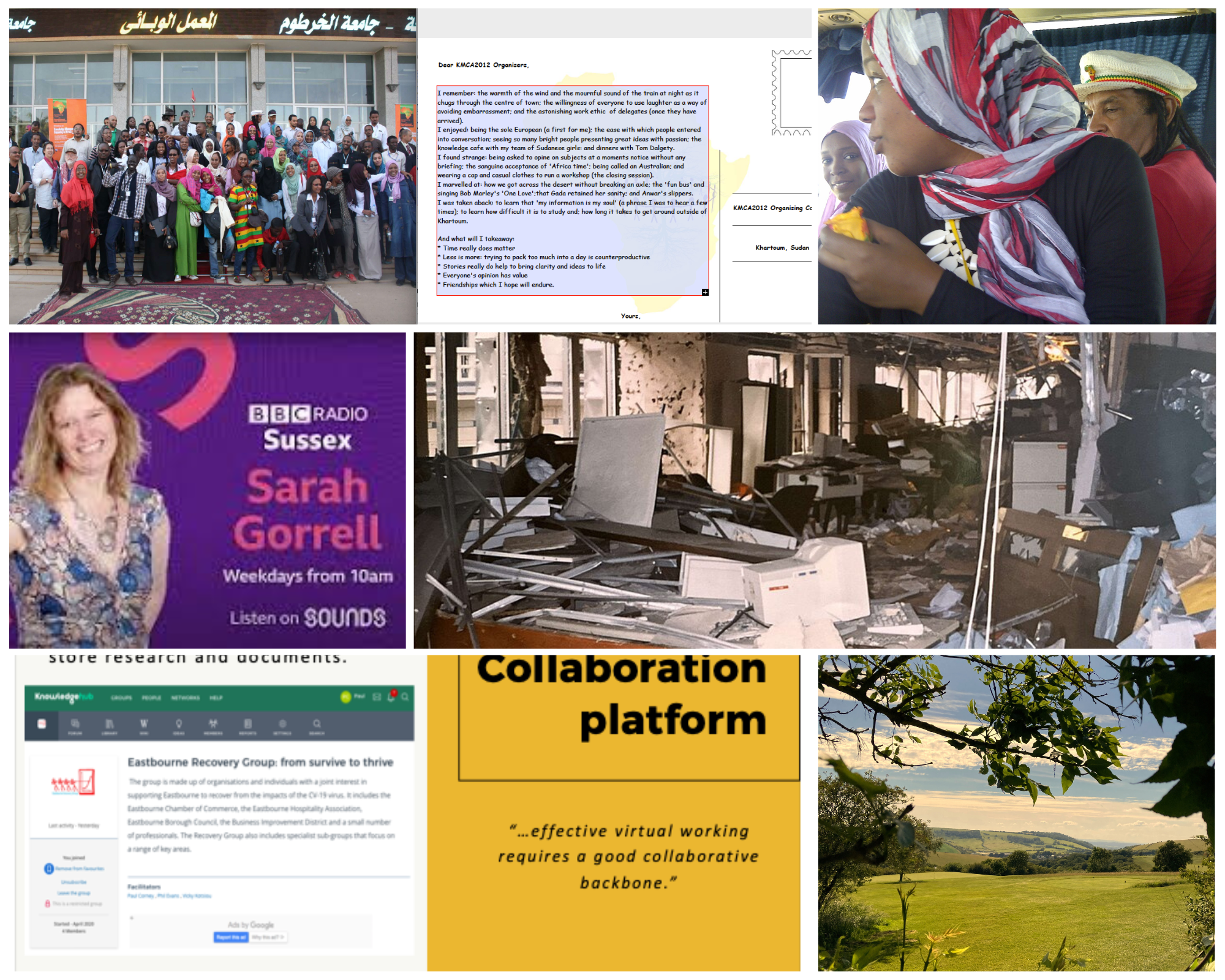
Is how BBC Radio’s Sarah Gorrell introduced me as her lunch guest a few month’s ago.
I’d been invited in to talk about my life and career. During a really entertaining wide ranging interview of just under 20 minutes we covered 50 years of work and community service.
Here’s a few of the topics we discussed.
It was a hugely enjoyable interview attracting a number of favourable comments from listeners.
I liked that Sarah asked
“What next for you, you’re obviously someone who never stops…”
Which gave me the chance to talk about Bees Homes Property Limited and the Japanese concept of “Omotenashi”; about thinking ahead to meet needs of clients before they are voiced.
We moved last year, a process that can best be described as wading through treacle. I lost track of the amount of time I spent listening to scratchy blasts of Vivaldi attempting to correct basic errors from service providers. Each time I was reassured my call was important, that they were experiencing unusually high demand, and that the call would be recorded for training and monitoring purposes.
It seems my experience of dealing with customer facing organisations is not uncommon. Miranda Green in an excellent FT Weekend piece entitled “Your call is important to us… please hold” quotes from a New Britain Project Report which notes the average Briton spends between 28-41 minutes a week battling inefficient customer service systems.
She says, “The 1.5bn hours that Britons spend each year dealing with personal admin leave many close to cracking up“.
The digital revolution and remote working was supposed to improve productivity. Has it or are customers now entangled in a web of endless options with faceless systems? Let’s examine.
I’m going to share a couple of unrelated stories with one common theme – each of the organisations invested heavily in client facing technology to improve service.
The Conveyancing Story:“I will send an email to see if we’ve received an email”
As part of the move I rearranged financing on a previous home. Our finance broker set everything in place and an offer was forthcoming from a lender (BMS) I’d previously used. This time they instructed a different conveyancing company (let’s call them Optimus Prime-OP).
All went well at first. An online tracking system was set up in our name; it allowed us to upload relevant documents and see how our financing was progressing.
The tracker system was updated with details of all communication. Great, we thought! There was no chain involved so they were predicting a quick completion. The mortgage offer was sent. And then….
I uploaded proof of ID and address on March 4th. They spotted an error (not of my making). Somehow, due to an input error during the application process I’d become 10 years younger. OP required authority from BMS to accept my passport Date of Birth as being correct.
On March 7th the lender emailed OP to give them that authority.
On 10th I rang OP for an update having checked the tracking system which was unchanged. I’m told “we haven’t heard from BMS” which surprised me. I asked the broker to double check. He did and confirmed the email address BMS sent it to was indeed an OP email address.
When I relayed that message to my case handler at OP the following day I am told, “That’s an admin email address which I don’t have access to.” I was further told “I will have to email them the admin team to gain access to it.”
By now it’s March 24th and my patience has worn thin so I escalate the request to a very helpful team member:
Good morning Mr Corney, thank you for your phone call. I can confirm that the email from BMS regarding your date of birth is not on the file, I can confirm that I have emailed the admin team in order to re-check the inbox…
Yet another round of Broker / Lender / Conveyancer discusssions ensue and I am promised a call by a Senior Legal Officer to discuss. No date or time is given.
As I was unavailable when they called (on March 25th) I get this message:
I have recently attempted to contact you to discuss the expression of dissatisfaction that has been raised on your file, however it appears you were unavailable. As an update on your file the issues surrounding your ID check have been resolved and your file is now at the final stages where we will perform a final review of the file to ensure that we have everything required to supply you with a completion date and you should be hearing from us within the next couple of days to discuss the possibility of completion for your file.
Completion duly took place before the Stamp Duty increase came into play on April 1st.
Rather than revisit my issues, here’s what a dissatisfied customer just posted on TrustPilot:
AVOID! AVOID! AVOID! A simple remortgage has taken 5 months! We ended up having to pay variable rates for 3 months. There is no sense of urgency unless you raise a complaint. There’s no one to speak to or email about progress. Everything is done via a very inefficient portal. I can’t believe — recommended them!
The Soccer Story: “Paying twice to sit in the same seat!”
I purchased three digital tickets for a Premier League fixture from a top ten club. One for me and two for a friend and his adult son. My friend downloaded his and his son’s and I mine. I’ll let “Kevin” take up the story:
The evening before the match, we discovered my son was unable to attend because of a last-minute appointment…
During the afternoon, I checked the wallet on my phone, only to discover that the ticket in my son‘s name had been designated as expired. I thought this may be my fault so I called the supporters’ line again and was advised that this was not so. I was told that the ticket was still valid and I should go to the turnstile on the evening, or the ticket office, if there was a problem. The three of us arrived at the ground and approached the turnstile. My ticket worked but the second did not. The steward very helpfully allowed me out, through a door to go along with my friends to the ticket office. We courteously explained what had happened and the attendant called for an assistant manager.
He asked if we could talk to my son to confirm that he would not be using the ticket. We managed to achieve this – only for —to then tell us that resale was not possible and we would have to purchase a ticket again. Reluctantly, I did so, paying a further £40 for the ticket, only for my friend’s wife to enter the ground with us and sit in the very same empty seat that we’d already purchased!
And here’s an extract from the reply:
…Once a ticket has been purchased, we are unable to make changes to it. All tickets are non-transferable and non-refundable and this is stated in our terms and conditions.
When anyone arrives at the ticket office on a matchday, of course we are immediately trying to find a resolution to a problem and to do our best to assist where possible. We need to have confirmation from the ticket owner before we process anything via their account – Once I had spoken to your son, I realised that the ticket exchange had recently closed and therefore my suggestion of reselling the ticket was no longer possible. The only alternative was then to sell Ana a ticket for the match.
I understand your frustration, however I hope you understand that we are not trying to be difficult, but must be consistent with our policies…
Where is the common sense in all of this? Having asked to speak to the ‘owner’, the offer to transfer the ticket was subsequently withdrawn because of an arbitrary computer deadline.
Contrasting other experiences to the Japanese practice/culture of Omotenashi; the pursuit of excellence in customer service by anticipating and exceeding customer needs, I bemoaned the erosion of a service culture across businesses due to a lack of empowerment at the front line.
Two years on I fear with the ubiquity of CRM technology we are at the point where the owner is now chasing the techonogical dog. No one seems to have authority or inclination to question processes that are manifestly dumb.
If business owners don’t empower front line management to make common sense decisions and override computer systems then how can they aspire to excellent customer service?
And finally
Lest we shrug our shoulders, recognise our impotence and accept this is the cost of progress, the New Britain Project report draws a correlation between quiet desparation and disaffection.
Voters are increasingly fed up with a system that wastes their time. The danger is that this frustration is no longer just background noise, it’s now shaping political behaviour. This isn’t just annoying, it’s political. If ministers don’t fix the systems people deal with every day, they risk losing voters to parties that want to tear the whole system down.”
Will “Kevin” go to that club’s matches again? I’m not so sure!
Will I go anywhere near OP again? I am sure – I won’t!
A few weeks back I was in Maastricht, a town synonymous with a 1991 EU treaty I’d point to as the beginning of the movement to take the UK out of the European Union by those on the right of the Conservative Party led by Prime Minister John Major. This observation, from Elisabeth Hill-Scott, a political commentator, struck home:
Major was also able to argue that the Maastricht principle of ‘subsidiarity’ meant that more decisions could be devolved to the national level
I vividly remember the fractuous nature of the ensuing debate resulting in the eventual resignation of Prime Minister Major. I mention that example to emphasise how words (and places) shape our perception and how ambiguity, while useful in getting political treaties over the line can be destructive in a business environment where a second language is the vehicle of communication.
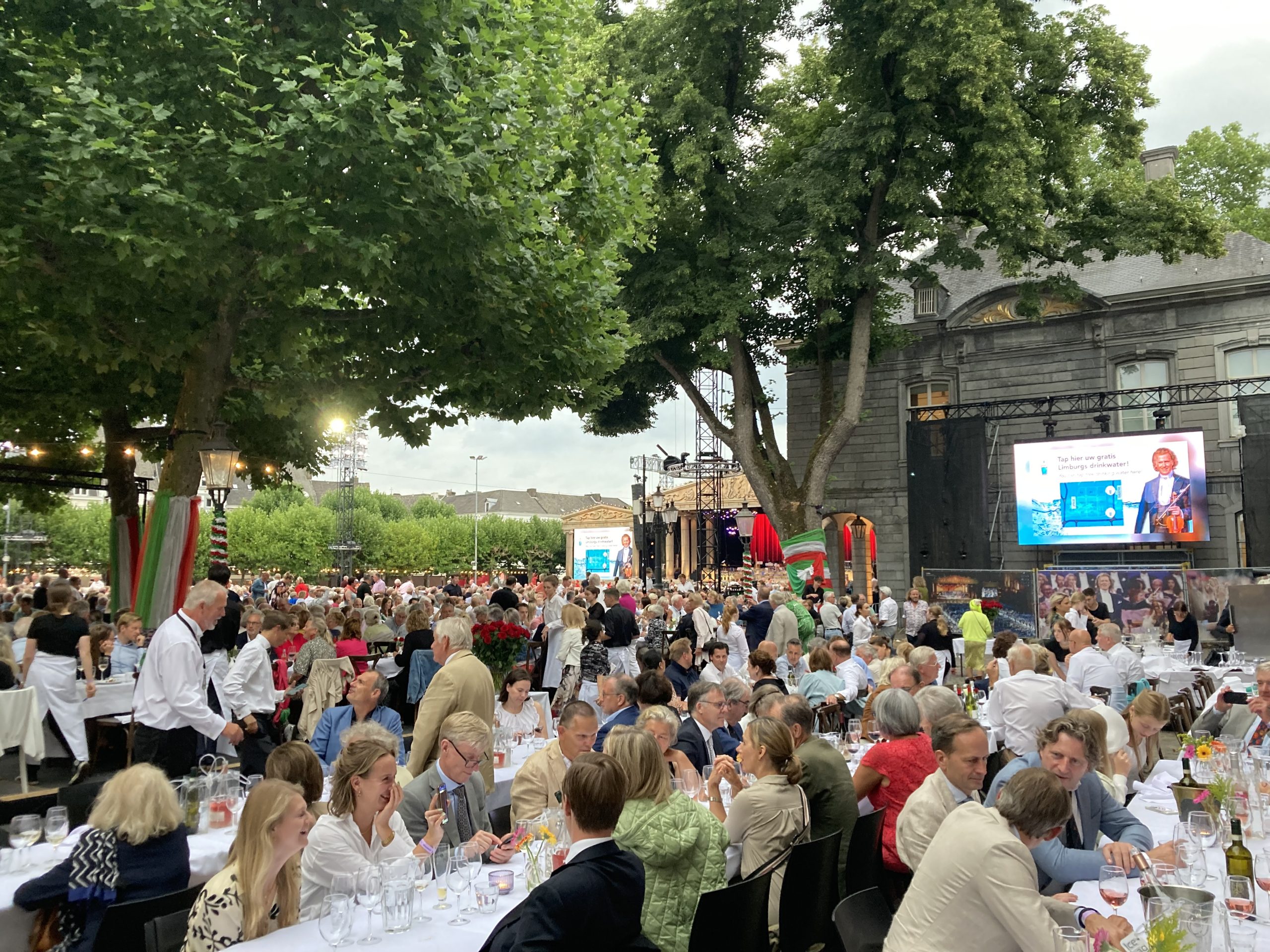
Back to July 2022. We were in Maastricht for my birthday to attend a twice postponed (due to Covid-19) concert by local boy made good Andre Rieu. Each year Andre and his orchestra occupy the town square in July for a series of open air dinner concerts. The audience is diverse, smart and multicultural. The lingua franca is English!
That we chose to travel via Le Shuttle on the day schools broke up for the summer term was poor planning though in mitigation when we originally booked the dates did not coincide. The additional presence of my 94 year old mother added to the sense of anxiety when, arriving on time for check in, we were told departures were being delayed by 3 hours! Our sense of frustration was exacerbated by the blame game that ensued with the UK Home Office castigating the French for the lack of border officials to check passports and the French opining it wasn’t them that changed the European travel rules. The truth, revealed by a Eurotunnel official, they were surprised by the demand and unprepared for the rush.
A gulf in perception
Apart from my wife Ana (who is Portuguese) and mother (who isn’t) we were joined by a Dutch friend Annette who lives and works in Germany and her German friend Gaby. The event was to prove a great backdrop to a series of conversations about perceptions, cultural nuances and miscommunication.
I’ll begin on the evening of the concert. Since my mother is no longer fleet of foot we needed to park as close to the main square as possible. An early arrival ensured we found an off road parking space. With no barriers, cameras or ticket machines, I was intrigued as to how parking fees were collected and non payment avoided. I was told people just come in and pay out of a sense of obligation.
A day later and the five of us are exploring Maastricht and surrounds. We noticed how the people who served us were smart, engaging and seemingly proud of their roles; and how respectful the clients were of them. Throughout our time there, eating or drinking proved to be a collaborative experience where the ‘server’ took pleasure in your pleasure.
There are staff shortages mainly due to Covid not a lack of interest. Being in hospitality is viewed as a career and not looked down on and seen as a retrograde step for those unable to get a real job!
Linguistic & cultural nuances
This got us onto the use of language. Surrounded by 3 people whose linguistic capabilities put mine to shame we discussed how the English tend to thrive on ambiguity (see Treaty of Maastricht interpretation above).
I shared my experience of managing the intergration of Dutch, German, US and English companies; how the word interesting is interpreted as a positive word by non English when it is quite likely to be a way of saying “not on my watch”.
Another word often used by native English speakers that can cause offence is tolerant. When describing how accomodating ‘we’ can be, I said we are tolerant. “You tolerate me?” was the sharp response! As a result I no longer use that phrase.
I first came across the phrase “Goat mouth” while conducting an interview with a President while on a Knowledge Management assignment in the Caribbean.
Slang expression for someone that has the ability to predict future outcomes (particularly unfavorable future outcomes that causes misfortunes)
Had I understood it at the time it would have put much of the remaining conversation into context. NB it showed the value of capturing (with the interviewees consent) the conversation and having it transcribed!
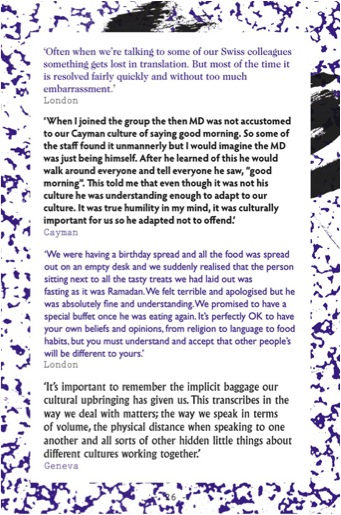
Finally, going back a decade, I am working on a project to improve collaboration and team working across a global organisation. Having surfaced a number of stories of behaviours and cultural nuances that separate and unite we create a “What makes us tick?” booklet that serves as a critical friend aimed at getting the team to reflect first and speak / write second.
And finally
You might be aware one of my prime interests is Bees Homes who sells beautiful homes.
The process of selling and buying a property in the UK is convoluted and alien to the majority of the rest of the world. Solicitors / Conveyancers are at the centre of the English process and their interpretation can derail a transaction especially when each has a different take of property & boundary law. When structural surveyors are instructed as they tend to be on older property purchases there is a need for careful interpretation of what their words really mean.
Here’s a true story:
A couple of friends were buying a wonderful but run down property commanding a magnificent view over Friston Forest. When they received the surveyor’s report they questioned whether they should go ahead with the purchase as it contained many comments of concern. Our friends who are practical business people decide to cut throught the caveats and legalese and ask a straight question:
“Are you aware the property has been empty for 4 years? If so would you buy it?”
The response: “No we weren’t. In that case in a heartbeat, all it needs is a little TLC”
Imagine then, selling a historic property to an overseas buyer who works for a parastatal organisation and prone to forensic interpretation of words. The propensity for misunderstanding and mistrust is great and requires the patience of Job. Phrases and words of professionals can be confusing to overseas clients and result in intransigent positions being adopted.
I suggest the English speaking world is privileged but lazy. Few of us speak another language yet we get offended when non native English speakers don’t grasp what we say or mean.
Here’s a mantra I developed many years ago to mitigate this issue. Taken from a post I wrote while helping a new multicultural management team come together:
Perhaps the most revealing was that nobody had English as his or her first language. We adopted this mantra as a way of overcoming potential misunderstanding:
‘I heard you to say…. and I understood you to mean….’
Further we agreed that whenever anyone did not understand a phrase or word they would seek clarification and record it on a white board along with a glossary of terms.