About Paul Corney

@pauljcorney #KM4GOOD I help people and organisations to make better decisions that improve the way they work

‘Pause & Reflect’ session vs. an ‘After Action Review’

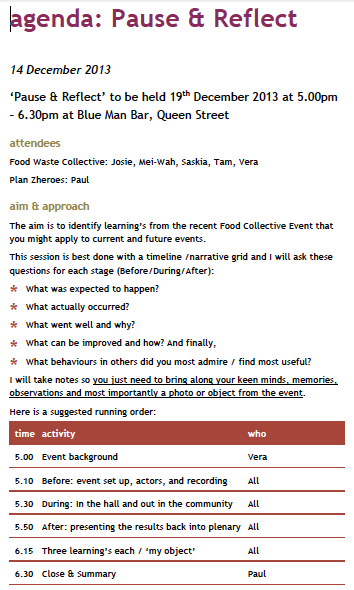
Pause & Reflect AgendaTonight (Thursday) I will be in Brighton on behalf of Plan Zheroes running a Pause & Reflect session with the Food Waste Collective. We are going to be taking a look at the recent event they held at Brighton University and which I wrote about a few weeks back – when a good deed is lentil shaped: why a group of Brighton based women deserve our support.

Since a previous posting about a Plan Zheroes Pause & Reflect session on a CSR Day we ran attracted some interest I decided to share with a wider audience how I go about setting them up

The agenda is time specific and requires the attendees to have thought in advance about an object or image that sums up the event for them. The other departure from the more traditional After Action Review process is that I try to get people to focus on the behaviours in others that really helped make the event work.  This appreciative inquiry technique is one I’ve found to be highly effective reflecting as it does on behaviours in a group environment.

the power of 3

I’ve always been a great believer in the principle that less is more especially when looking back at an event or decision. And I tried to get everyone I’ve mentored or coached to focus on ‘the power of 3’. Most people can remember 3 things and act on them.

Professor Victor Newman often tells a story about one of his early experiences going into an organisation and finding a lessons learned exercise came up with more than 200 ‘lessons’ which were noted down and taken away never to be acted upon.

3 ‘things’ is also a theme I apply in reverse brainstorming when getting people to consider how they can tackle ‘stuff’ that is broken.

capacity building and knowledge transfer

Tonight’s event is part of Plan Zheroes ongoing commitment to support volunteers outside of its core market. If we can equip others with basic skills and tools to improve the way they run events and interact with food donors and recipients fewer people will be facing food poverty and we will all be making better use of surplus food.

I am looking forward to the session.

‘your entire career is your exit interview’: embedding knowledge capture & retention techniques

This tweet, from this year’s KM Russia event, reminded me of an interview I had with a senior Asian banker a few years back.  Retiring, after three decades during which time he’d been pivotal in the regeneration of Asia after the crisis of 1997,  he was asked at his exit interview, ‘have you returned the stapler?‘ The sense of disappointment in his voice was palpable as he told me (I paraphrase), ‘you devote your life to an organisation and then puff, you are gone along with your sense of identity’.

It echoed a similar conversation with the former CEO of a major reinsurance group whose departure remains a source of unhappiness because his experience and network of contacts were not considered important enough to devote time and resource to by his successors who were taking the company in a new direction.

Fortunately many organisations are now making knowledge capture and retention part of the ‘way we do things around here’, recognising the need for effective processes throughout the life cycle of employees and projects. One such organisation is Her Majesty’s Revenue & Customs who employed us* to run a pilot programme capturing and exploiting corporate knowledge’ to equip senior business heads with tools and techniques they might use to capture and retain critical knowledge.

In previous posts I described the programme modules 1-3. Here I’d like to share with you modules 4 and 5.

HMRC’s Pilot Programme: : Modules 4 & 5 Analysing & Sharing

Analysing how to analyse and organise the material that has been captured
Sharing how to share the knowledge that’s been captured how to engage with your audience

Analysing (cataloguing and curating) the material captured is often overlooked, the assumption being that search will reveal all. The delegates were invited to listen to a couple of recorded interviews and consider how they might catalogue the material.

We accepted that not every piece of critical knowledge (defined previously as the knowledge HMRC would struggle without if it lost’) is likely to be recorded on voice or camera. However the process of thinking about how to catalogue material does provide a steer on the importance of structuring what you are capturing. We spend money on creating taxonomies which is another form of categorisation and cataloguing.

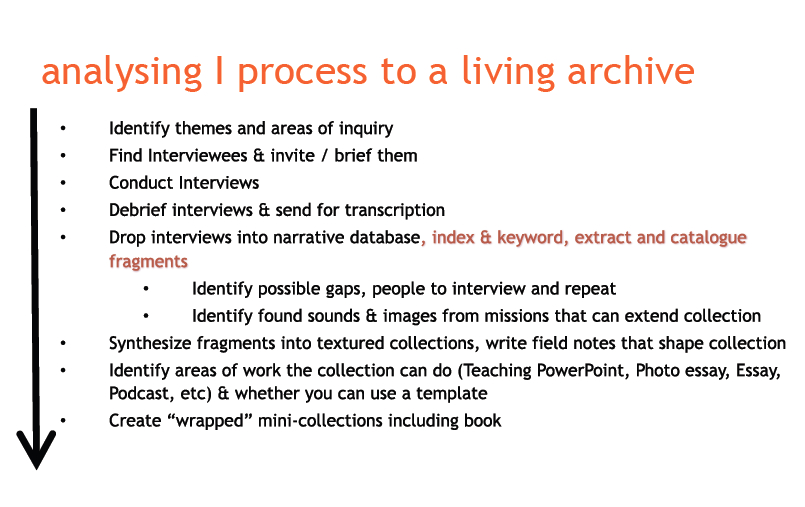
Here’s one example tablog 2ken from a piece of work featured in ‘making Knowledge Management work in your organisation’ (an Ark Group publication). It shows the process adopted for the creation of a Living Archive. Note the importance of the indexing or cataloguing process (in red).

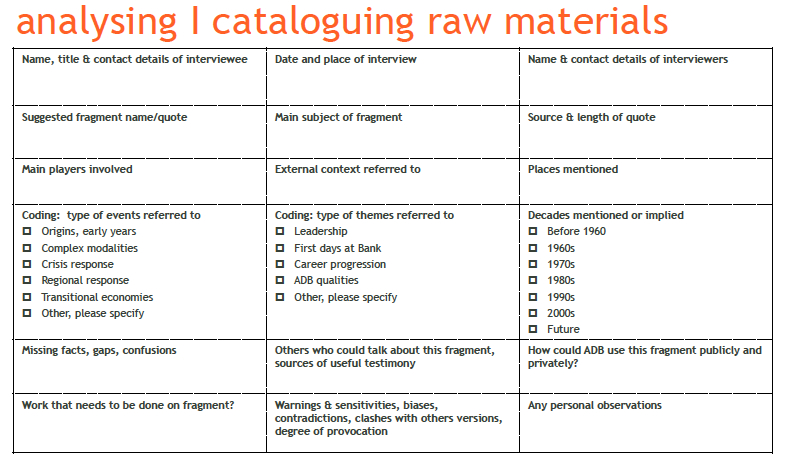
blog 3And here’s the cataloguing process that is referred to above and was shared in HMRC module 4.

In Sharing (Module 5)  we looked at numerous ways of engaging with the stakeholder community previously discussed and identified in Module 2. Our aim here was to illustrate that no one size fits all and that each person or group might respond differently.

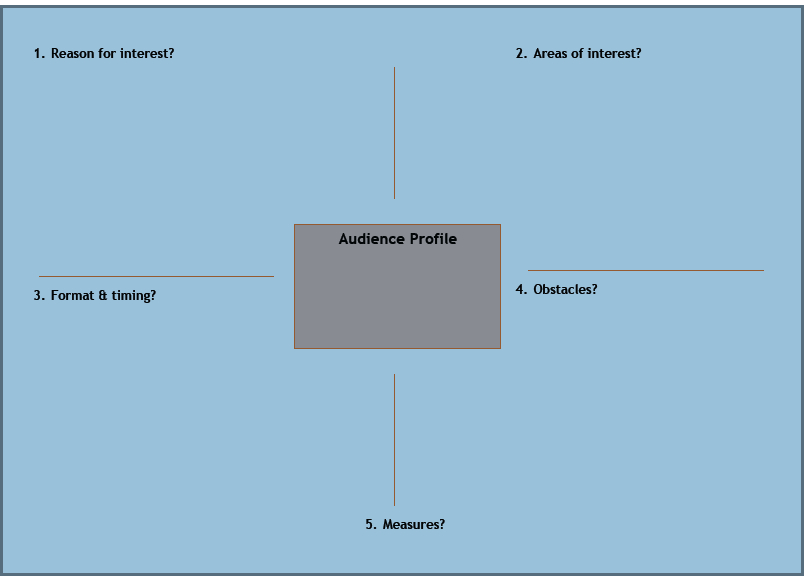
The delegates had to map the profile of the audience and then think about what might be the best method of engaging.

Blog 1Aside from examples of companies who have successfully use: Baton Passing, an Audience With, Fellows, Knowledge Markets, Dare 2 Share Fairs and Memoirs on Camera we discussed the (now discontinued) practice wherein a returning diplomat would complete a Valedictory Despatch after his or her tour of duty overseas ended.

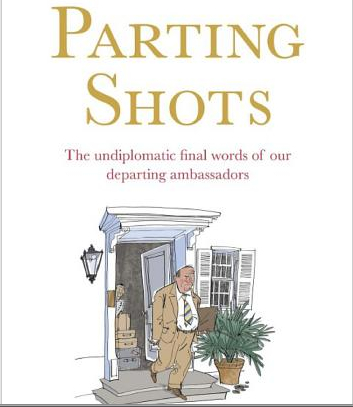
Parting ShotsAs in previous modules the delegates were asked to consolidate their learning ‘off line’ and as a way of consolidating all the exercises were given an assignment to be working on before we reassembled for the final session.  I will conclude this series of blog posts next time and look at how we evaluated the programme.

Parting Shots by Matthew Parris

*Sparknow and Knowledge et al worked in partnership to deliver this programme.

when a good deed is lentil shaped: stopping food waste in Brighton

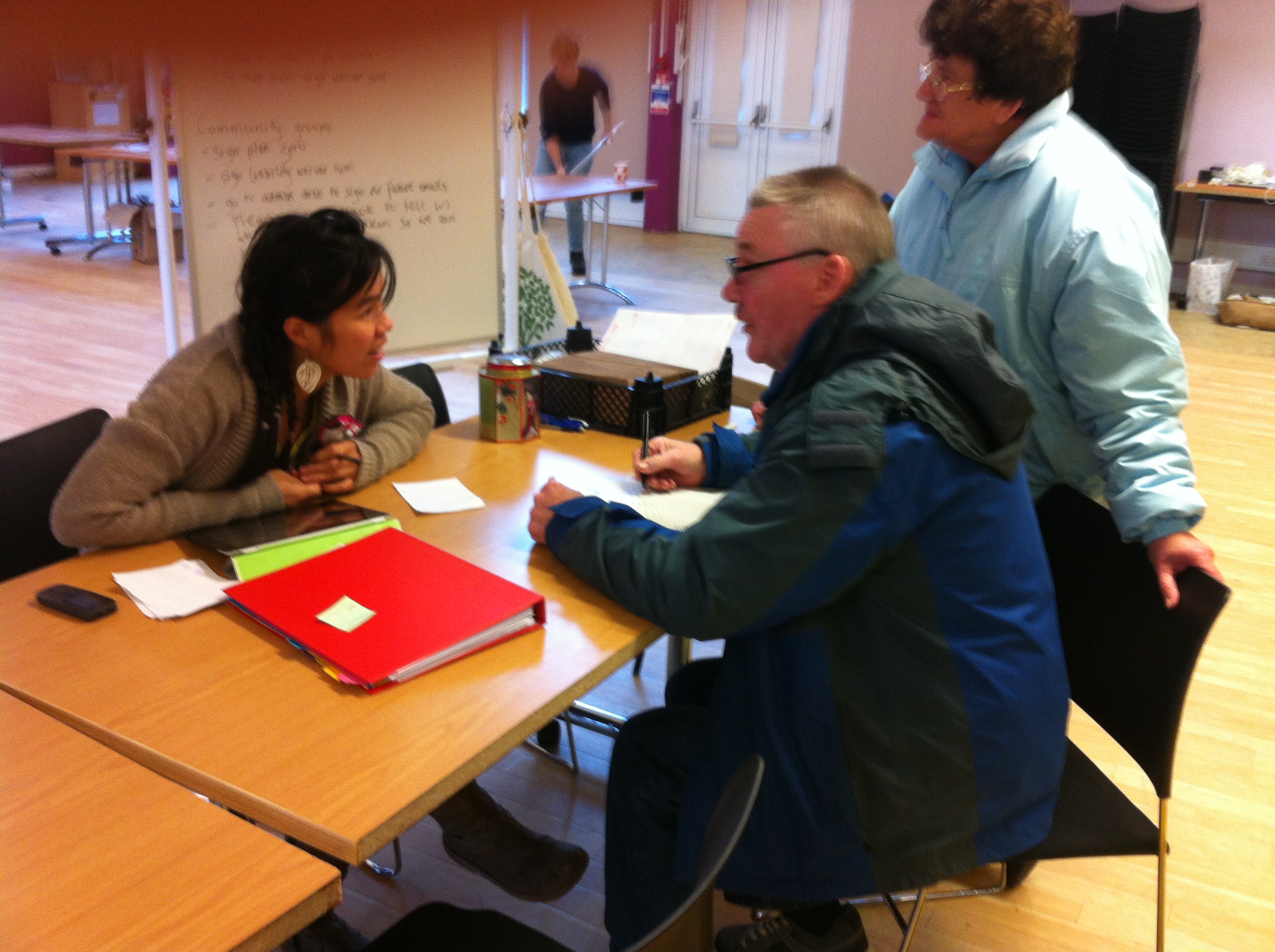
Vara Zakaharov of Food Waste Collective having a discussion about potential donors with a commumity chef

Vera Zakaharov of Food Waste Collective having a discussion about potential donors with a commumity chef from Emmaus Brighton.

Friday was one of those days that restored my faith in human nature.  I was in Brighton on behalf of Plan Zheroes supporting The Food Waste Collective’s 2nd food share event, held at University of Brighton’s Moulscoomb campus.

The impetus for this event came from a group of women who call Brighton their home: Vera Zakharov, Mei-Wah Tang, Caitriona Donahoe, Saskia Wesnigk-Wood and Josie Jeffery.

The timing could not have been more apposite: WRAP (Waste & Resources Action Programme) established as an independent not-for-profit company that aims to minimise resource use and divert priority materials from landfill recently published an intriguing report, the  WRAP Review of Waste in the Hospitality and Food Service Sector that looks at how inter alia the UK can make better use of surplus food.

It notes: Redistribution of surplus food so that it is still eaten before it becomes waste, is preventing food waste, e.g. sending surplus food to a charity.

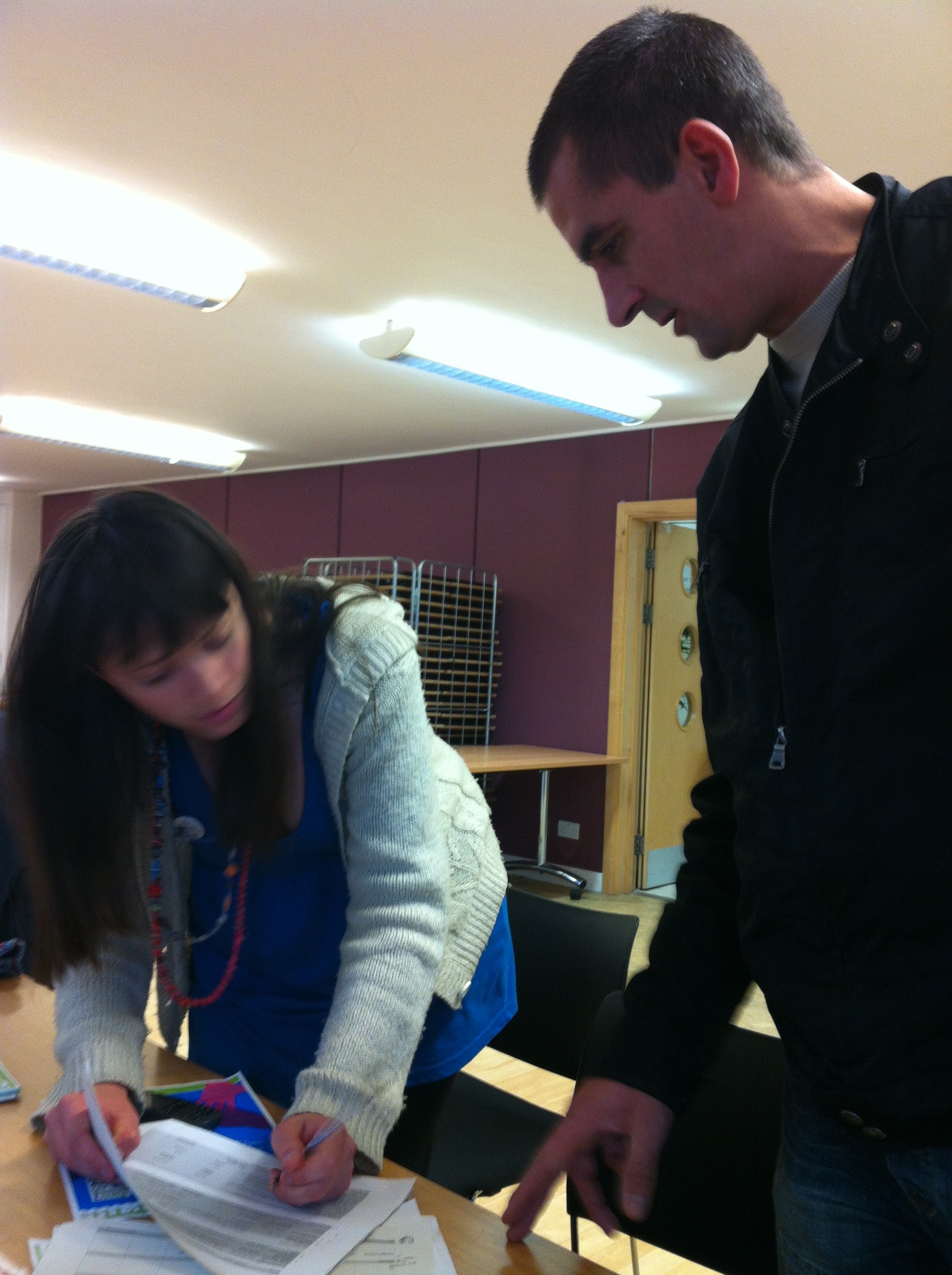
Mei-Wah Tang welcoming two members of a local charity and getting them to sign the PlanZheroes Charity Agreement

Mei-Wah Tang welcoming two members of a local charity and getting them to sign the PlanZheroes Charity Agreement

It was encouraging to see how many young people from many nationalities all getting together to make sure that fewer families are forced to make eat or heat decisions.

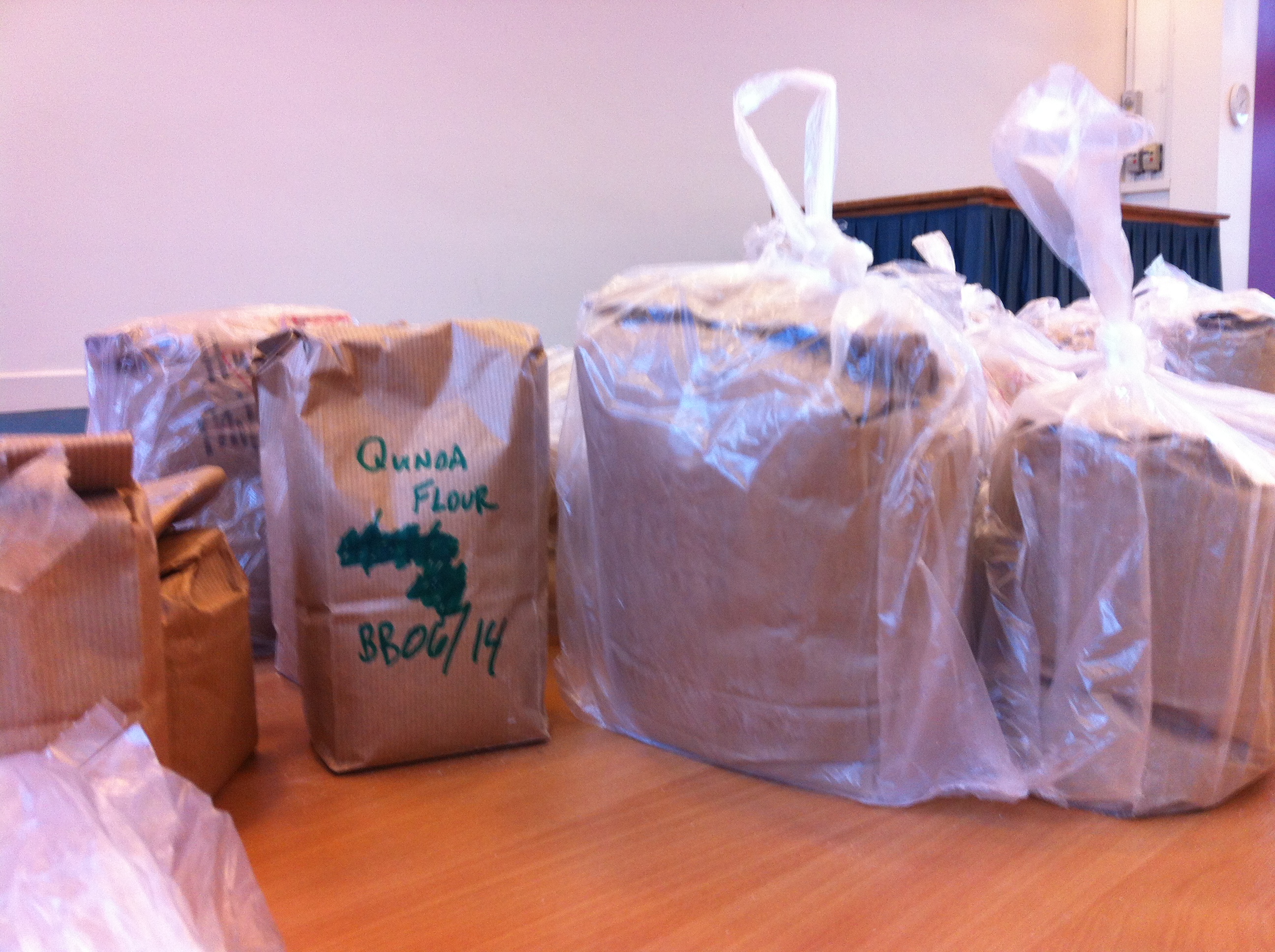
As a former Lewesian I was not alone, Pearl and Helen from the Lewes Food Bank were there showing the ‘young bucks’ how to bag up quantities of food into manageable portions.  This is a skill and one that can make a huge difference on the day in terms of reducing waste and saving time for volunteers.

Helen and Pearl from the Lewes Food Bank. Watch out for their bagging up video!

Helen and Pearl from the Lewes Food Bank. Watch out for their bagging up video!

So the ‘dynamic duo’ have both agreed to produce a video that shows others the tricks of the trade. I will provide the link in due course.

Pearl will be in addition establishing a link with Le Magasin in Lewes (the first donor to sign up there last year when I launched the Plan Zheroes intiative in Lewes) who have agreed to supply the Lewes Food Bank one of 3 in the town supported by Mayor, Ruth O’Keefe.
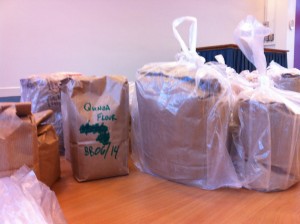
Some of Pearl and Helen's handiwork.

Some of Pearl and Helen’s handiwork.

I heard some wonderful stories of community engagement/ plaudits for Nathan of FareShare Brighton and of the superb work of Emmaus Brighton who grow and cook their own food in Portslade and note:

Research shows that for every £1 invested in a community, there is an £11 social, environmental and economic return, with savings to the benefits bill, health services and a reduction in crime reoffending.

Let me share one initiative just getting off the ground which I think deserves our support.

Sue Saunders of St Andrews School Hove is one of a growing number of parents who are concerned about the increasing levels of obesity among our young children.
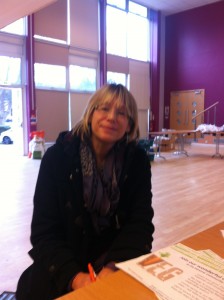
Sue Sanders, one of the St Andrews School, Hove's cookery tuition team is looking for a cooker.

Sue Sanders, one of the St Andrews School, Hove’s cookery tuition team is looking for a cooker.

She (and I) bemoan the growth of fast food, TV dinners and the lack of culinary skills among the population. Austerity and consumerism are forcing both parents to work which is impacting family time and conversations over food which is where much social interaction occurs.

So Sue and her team are attempting to teach school children basic cookery skills so they can develop a taste for and interest in good food. Sue was there to pick up ingredients and needs a small cooker so if anyone can help here’s her email address (reproduced with her permission): sussaunders25@hotmail.com.

Apart from the copious amounts of food that was shared, Vera, Mei-Wah and Josie managed to sign up 3 charities to the PlanZheroes food map and registered Food Waste Collective as donors.
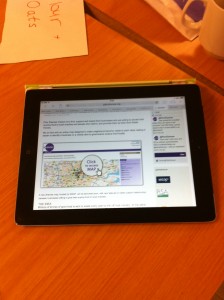
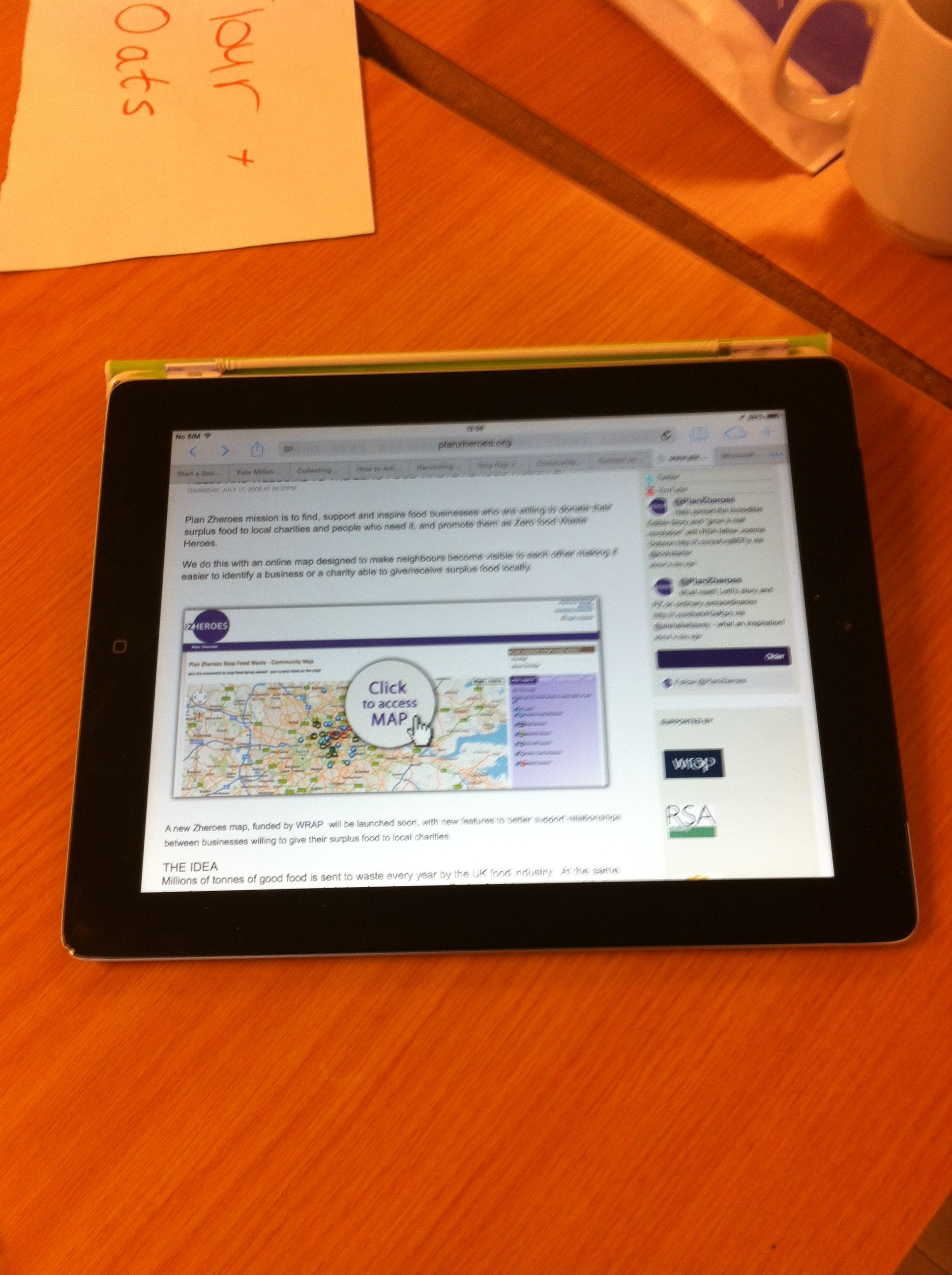
Plan Zheroes Food Map on Mei-Wah's iPad

Plan Zheroes Food Map on Mei-Wah’s iPad

Perhaps the most gratifying aspect of the visit was to see the enthusiasm among everyone who was giving up their time and skills to try and make a difference to the lives of people who are less fortunate.

At a time when immigration is in the spotlight it was noticeable that the volunteers came from a wide cross section of nationalities and ethnic background where food and community support are more of an ingrained part of the social fabric.

Plan Zheroes is delighted to have been able to support the Food Waste Collective.

scores on the doors

From Vera:

our end of event stats:

27 volunteers + 3 pallets of surplus food x 8 hours = 19 food projects and charities happily receiving much-needed food donations.

So far, since the first event in August, we have distributed over 3 tonnes of perfectly good, healthy delicious dry goods to local projects.

‘Nothing has changed and yet everything is different’: 10 observations from a special event at CILIP

Image

Yesterday I was at a special invitation summit to discuss the future direction of the Chartered Institute of Library & Information Professionals.  CILIP is undergoing a fairly dramatic repositioning under new CEO Annie Mauger and this was the first of a couple of attempts to broaden the debate with a wider constituency.

It was well organised (and run) by Martin White and Sandra Ward, two people whose names are synonymous with the words ‘Information’ and ‘management’, and whose best efforts had persuaded many thought leaders in the Information Management space to attend. Attendees were asked not to tweet and to follow The Chatham House Rule that states:

When a meeting, or part thereof, is held under the Chatham House Rule, participants are free to use the information received, but neither the identity nor the affiliation of the speaker(s), nor that of any other participant, may be revealed’

So (as a member of Chatham House and compelled to comply) here are my observations aided by a couple of pictures and slides published with the speakers permission.

10 observations:

‘Nothing has changed and yet everything is different’. Jean-Paul Sartre’s quote is apposite: 20 years on since my colleagues and I at Saudi International Bank were creating a one screen view of what we knew about a client (the forerunner of an intranet / CRM system) I suggest that despite all the gismos (technical advances) senior executives are still looking for reliable trustworthy information/intelligence – the synopsis they can trust, from people they trust. And don’t want to do self searching to find it. At the closing a wonderful story was told about a senior executive who has a team that provide abridged briefing notes and expected outcomes (in his native language) for every meeting.

People are still the important navigational hub and their knowledge networks vital. When they go their knowledge (and their networks) go with them. HM Government Knowledge & Information Strategy will make clear the importance of people and the public as the client and it will recognise that ‘who we know’ is as important as ‘what we know’ hence the investment in a Knowledge Harvesting Toolkit for KIM professionals (and training on Knowledge Capture & Retention).

We want measurements! Stories that amplify events and justification for Information and Knowledge team activity are hugely important but must be accompanied by statistics and measures which accounts in part for the increased call in the Public Sector for inventories of information and knowledge assets. In a world of data half a page of stats supported by a story is more powerful than two pages of prose.

We want certification! East, North and South of Istanbul there is a huge demand for education and certification.  Competency management is king and certificates from accredited organisations a way of enhancing career prospects. West of Istanbul people (especially the young) are just happy to be in a job and employers are increasingly demanding new entrants to be more self aware.

Apps are the future, websites are the past: Perhaps driven by a healthy scepticism of advertising and brochure ware websites dynamic content is key. This is presenting a challenge to the information industry who need to be more proactive in saying ‘read this and here’s why’. Ask yourself when did you last go to a corporate website and believe what it said – buying decisions are being driven by recommendations of people (and organisations) YOU trust. And Apps are making the process smoother as mobile replaces pc’s and tablets, laptops.

Fear is driving (in)action / lack of collaboration: the financial services industry has taken a bashing and the regulators are all over them extolling the virtues of a change in culture and trying to audit whether they have. Chinese Walls are getting higher so no Yammer or Jive to cross fertilise ideas and clients and silos will get more pronounced. In the Public Sector the rise of the SIRO (Senior Information RIsk Officer) as a board member suggests a greater and more visible role is emerging where risk aversion becomes a major driver of decisions.

Organisations are becoming hermetically sealed bubbles virtually impenetrable to anyone who is not of the same size. It used to be accepted doctrine that ‘no one got fired for hiring IBM’,  now the same applies with big consultancy firms. A vivid illustration was given: despite agreeing the scope of work with the client, being the best qualified and most experienced, formal sign off was not forthcoming for this internationally renowned consultant because ‘he is not …’ (three letters)!  

Modular competency acquisition the way forward/ Facilitation key: Many of the speakers and delegates commented on the need to be good at getting others to work well and be opportunistic. A role where the KIM professional, briefs, analyses and introduces, new processes, systems and ways of working. The idea of a modular incremental approach to competency development was lauded, perhaps in conjunction with business schools and Universities. As was the new CILIP Professional Knowledge and Skills Base, that the UK Government’s Head of KIM has been a strong supporter of.

IMG_1554KIM is here to stay: It was a common theme – KM especially is back (even if there is still ambiguity over what it is – especially in the North West).  This from John Quinn is lovely, a quote from a report in 1894 on the Department for Education’s use of knowledge:

 …failing to record the knowledge it obtains for future use and unable to obtain information as to what is being done elsewhere either at home or abroad…’

IMG_1553

To finish, a quote, from award winning Clive Holtham celebrating 25 years as one of the few to hold a Professor of Information Management title, ‘technology brings no competitive advantage’  – its an essential underpinning (my addition). Here’s Clive and his Intelligent Exploiter Framework – note the importance of ‘Mindset’.


And finally

Check out Full Fact a non profit making group that specialises in independent fact checking.  Despite a bit of a spat with UK Column a year back it has become a must go to site to check the veracitiy of ‘facts’ and ‘stats’ that appear in the media and emanate from the mouths of our politicians. Will Moy’s BBC Question Time piece ‘Will you point out when panellists are lying?’ is worth a read and his stories given a hearing.

‘…education, education, education…’ and the role of critical knowledge in government as seen from Whitehall

Our top priority was, is and always will be education, education, education. To overcome decades of neglect and make Britain a learning society, developing the talents and raising the ambitions of all our young people.

Prime Minister Blair, ahead of the 2001 General Election

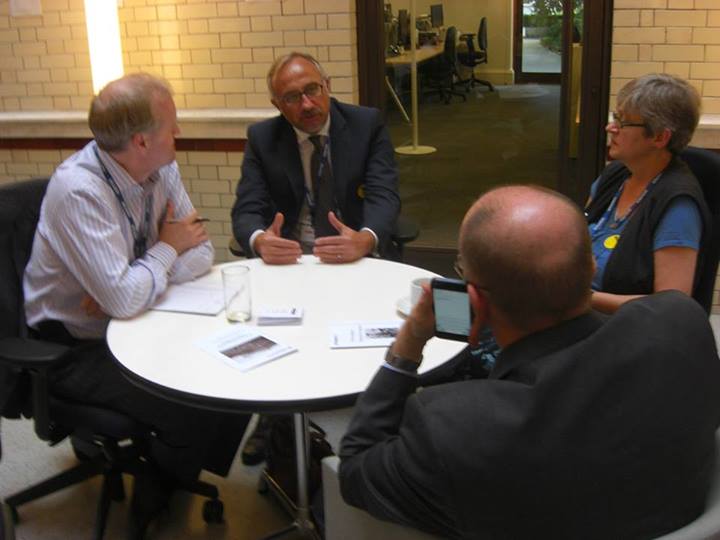
Paul at Cabinet Office 1It was an interesting and Westminster focused week. A chance to see first hand whether more than a decade on the aspiration of making Britain a learning society had been realised.

Monday, I was a guest at a Cabinet Office Knowledge Cafe facilitated by David Gurteen; Thursday, I ran a workshop* at the Department for Education on knowledge capture and retention.

At the Knowledge Cafe there was a nice mix of people from across the Civil Service. The 40 or so, assembled by Susan Chan of The Cabinet Office and hosted by Roger Smethurst, Deputy Director and Head of Knowledge and Information Management at the Cabinet Office were discussing:

How can we more actively share knowledge in the workplace?

The Knowledge Cafe format encourages conversation (it’s David Gurteen’s mantra) asking as it does for three rounds of conversation after an opening round of 2 minute introductions. For some the lack of any obvious outcomes is a source of frustration, for others its a liberating way of discussing a topic of interest and testing your own hypotheses.

I found myself in conversation about the diametrically opposed tasks of promoting voluntary transparency across government while protecting the exemptions of the Freedom of Information Act.

We discussed the difficulties of establishing Twitter dialogue and of being tied to SharePoint.   Everyone had a tale to tell about lack of handover time when being faced with a new assignment. Few seemed to have heard of Collaborate the internal government social media/chatline.  To a man (and woman) there was disquiet over the abandonment of the Local Government Agencies Community Network.

Yet the vast majority had concerns about potential loss of knowledge when organisations downsize and move to more flexible and generalist working.  This was a theme that was to resurface on Thursday.

‘I spent the morning waiting for a login…’

The dozen or so people who attended the 2nd of 3 knowledge management expert sessions held at the Department for Education were drawn from Policy, Administration and Delivery. My topic:

capturing and exploiting critical knowledge in Department for Education

An exercise I’ve found works really well when trying to get to the bottom of what critical knowledge looks and feels like is to ask people to think about a time when they needed to know…. Often mundane administrative issues (a good handover/briefing pack being rendered ineffective by lack of access to a system) get in the way!

Introductions SlideThis slide gives you the narrative.

A variety of frustrations were aired as well as great examples of good knowledge sharing practices. And yet so much revolved around the need for signposts and people acting as knowledge hubs – knowing who to go to being as important as knowing where to look.

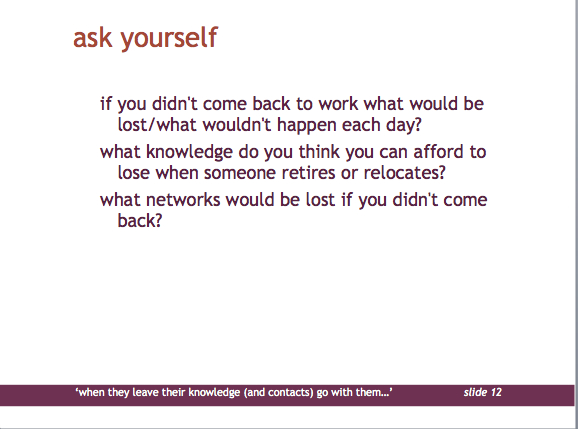
If I didn't come back tomorrow                                                           The discussion really came alive when the delegates split into three groups to work through one of these questions.  Some of the learnings:

  • Critical knowledge is often held at Grade 6 & 7 and these are neglected when it comes to knowledge capture. While Directors and Deputy Directors are adroit at managing, their domain knowledge is unlikely to be as detailed.
  • The narrative (context) surrounding critical knowledge is hugely important. By focusing on events and decisions it’s easier for this to emerge.
  • As the propensity for greater disclosure (authorised and unauthorised) increases so does the need for informal discussion – ‘An audience with..‘ sessions increases.
  • Reputation risk (from not drawing on previous experience) is viewed as a core issue.

takeaways from Westminster

Revision of the Government Knowledge & Information Strategy has sharpened the focus on the need for effective knowledge capture and retention.  That needs the active support and participation in the business areas (not just in the Knowledge and Information Management Professionals across government) for this to happen and for continuous knowledge harvesting to become ingrained behaviour.

There is still some way to go before Tony Blair’s vision is realised!

* informed by a programme run by knowledge et al and Sparknow for HMRC