About Paul Corney

@pauljcorney #KM4GOOD I help people and organisations to make better decisions that improve the way they work

‘…go and find work overseas…’

Pedro Passos Coelho’s exultations to his countrymen certainly made an impression.

I am in a taxi from the airport in Lisbon to Rua Damião De Góis at Sta Maria de Belem, where we have an apartment, and in conversation with the taxi driver (a Benfica supporter with a profound dislike of Ronaldo) who tells me about this now infamous line delivered in July by the Portuguese Prime Minister.

This is a country that is hurting – on October 1st fuel has risen again by 3c a litre, motorway charges are being universally introduced, many of the other austerity measures are biting, the country has been protesting (peacefully) and the train drivers are going on strike despite being among the better paid.

Pedro’s wife like many has a full time job (at one of the up market malls), the easyJet flight over was full to brimming and there is little evidence of the vast swathes of empty shops that characterise Athens. In the main people are well turned out and the women chic despite the average wage being €600 per month. People are polite and helpful.

It’s a strange feeling, being a student again after 35 years. I am here for a two week beginners course in Portuguese; a language everyone (including my wife who hails from Lisboa) tells me is difficult.  The Day One lessons are to confirm that assertion!

Maria Piedade my mother in law greets me warmly though our exchange is brief since her English is as good as my fledgling Portuguese.  A sumptuous meal is served: frying steak with a spinach, feta and nut mixture (I am already regretting the steak bavette I had at Cafe Rouge Gatwick); and morangos, accompanied by a lovely half bottle of Alentejo Branco wine. She declines the offer of a glass!

I attempt my first complement: Isto esta delicioso (‘this is delicious’) which is well received.  Feeling confident I throw in Gosto de morangos (‘I like strawberries’) which also strikes a chord. Off to an OK start then so I go for the home run excusing myself with an Estou cansado (‘I’m tired’) and go to my room to listen to the last hour of Europe’s Ryder Cup win over the USA.  Thank’s to Vodafone’s Euro Traveller deal it only costs £3 per day to hook up to my UK tariff which includes a big slug of ‘free’ Internet time.

I am awoken by a text from my wife Ana who says Maria (her mother) is very pleased I found her to be delicious! I feel like I’m Colin Firth in the scene from Love Actually when he proposes to his Portuguese wife to be.  In fact Ana is winding me up – she has a history – and my comments were accurate and not as misreported!

I slept well despite the sound of the tram clunking along nearby.  Our apartment just across from the Teju river is on the historic 15 tram route: it passes many of the ‘must see’ monuments and sights but when I leave at 7..45am most of my fellow passengers are off to work and dressed for mid winter even though its 15c and the forecast is 25c and sunny.

The tram is of the vintage variety and inadequate to cope with the demand. Some elect to wait for the much bigger modern version that will follow in 5 minutes (they alternate) but drawing on 25 years of commuting I leap on board and end up standing next to the driver for the duration of the 20 minute journey. I always wanted to drive a tram!

Alighting at the bottom of Avenida Liberdade I decide to walk not realising its uphill for the next 2 1/2 kilometres. Though hot when I arrive I time the walk to the language school to perfection and get there 2 minutes early.

Orlando is the teacher. A man in his mid 40’s with the bearing of someone who’s been there and done this many times over.  Despite that he does a good job at introductions. We are 8: two German men (career moves the driver for attendance); two Swedish woman (one a communications head of a golf travel business); a Finn; an American (Emily) from Boston; and two Englishmen (myself and Christopher who is a football supporter who wants to go to Rio de Janeiro for the World Cup and is learning the language in the hope that England qualify).

We are of varying ages and ability but seem to gel even though the others master the intricacies of feminine and masculine (O and A) and informal vs formal vs very formal (Eu vs Tu/Voce vs Snr /Snra) quicker than I do.  I stay behind after the morning to do homework, practice and try to comprehend why the former Portuguese colonies should be addressed differently (de) than say Suica (da).

Having finally mastered A Ana, e de Portugal. Entao ele e Portuguesa e fala Portuguese,Its 3 when I leave and its hot. A quick double espresso and cake (I realise I’ve not eaten anything all day) provide fuel for the walk back down Avenida Liberdade. I vow to sort out the Lisboa travel-card so I can travel on all transport.

Marques Pombal Metro station has a queue some 50 deep – I don’t do waiting!  So I go to the tourist information place at the end of Avenida Liberdade. Joao is helpful but it proves a fruitless visit. Nao (No) ‘the ticket you have is for the metro and rail only not tram and buses, you need to go to the Post Office up the road’.  I do that.  ‘You have 7 Metro rides but no we don’t sell the bus and tram ticket, you have to go to the kiosk’.

The Kiosk lady is lovely. €15 for 12 journeys and after a lovely walk through Praca do Comercio to the Teju river I am ready to board the train back from Cais do Sodre to Alges along with other ‘workers’ heading for their homes in the fashionable resorts of Estoril and Cascais.
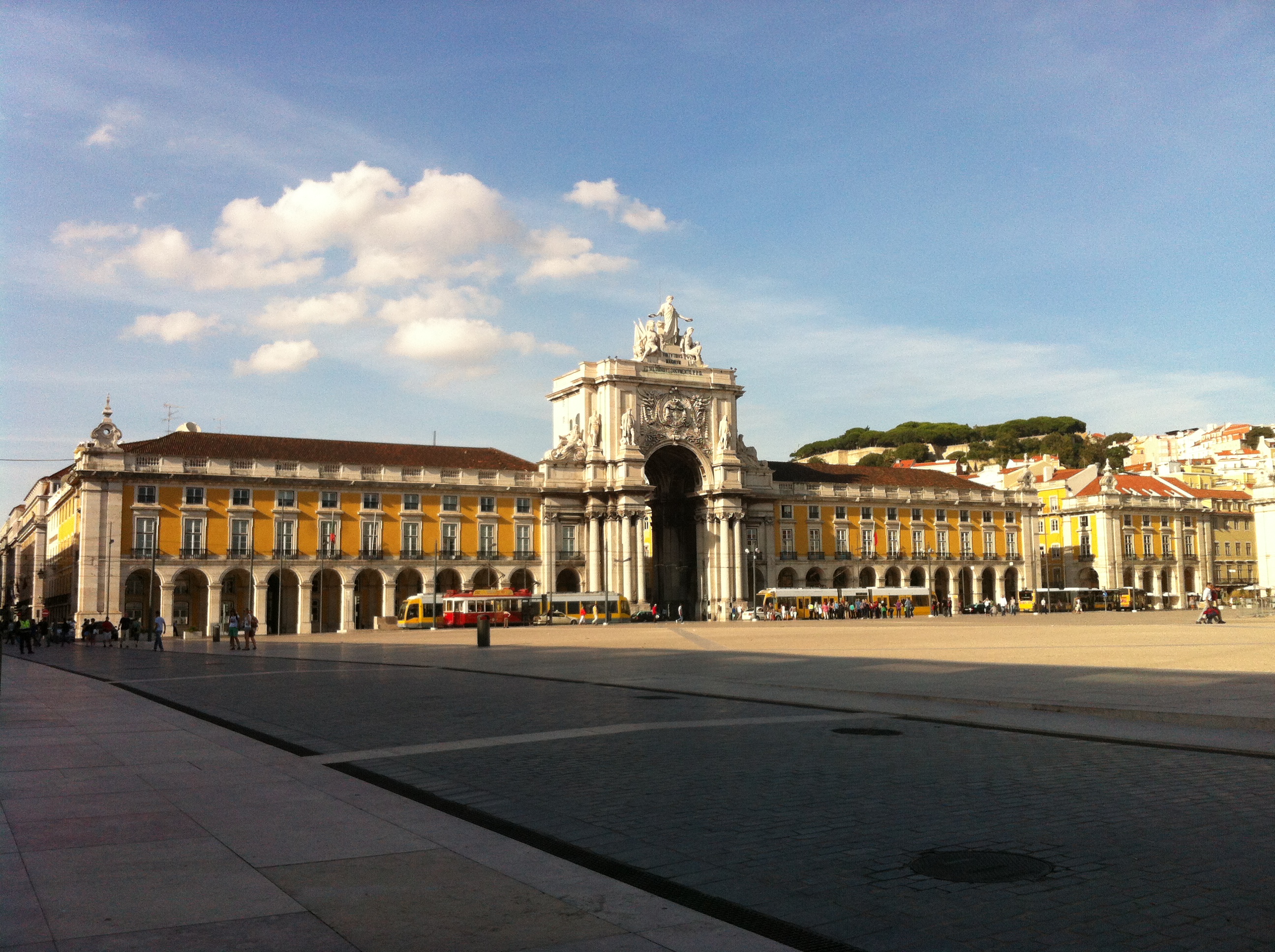
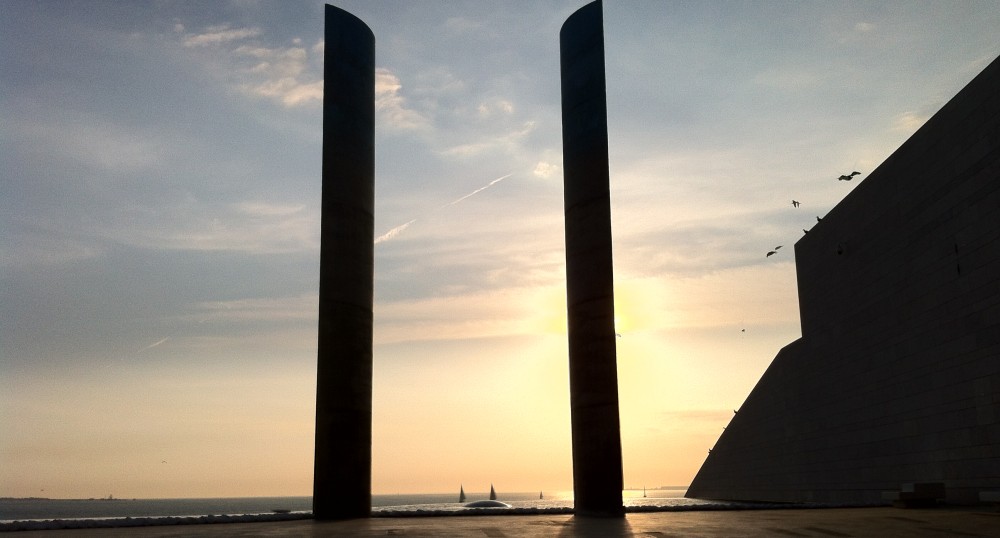
Praca do Comercio Lisboa


‘this is a theme which has reached its moment… there is definitely a need for this’

A quote from Ruth O’Keeffe District and County Councillor.

Thanks to many volunteer tweeters an account has been published of the inaugural Knowledge Cafe: making use of surplus food held at Le Magasin Lewes on Monday 24th September 2012. A fuller account of the meeting is available as a Storify record.

It was a chance to learn how London is using surplus food and feeding those who are struggling; to discuss how the PlanZheroes project has worked in London and to see if the conditions are right for it to work in Lewes and beyond.

Here are some of the highlights:

Summary:

Plan Zheroes (PZ) are the ‘community noticeboard’ of donors and recipients of surplus food. They are not for profit and a core priniciple is that they do not charge either for the acquisition or provision of surplus food.

  • In a way they are brokers providing a service that brings parties at all levels of the food supply chain into contact with each other through their interactive map.
  • There is a need in and around Lewes: an increasing number of people are struggling and this will be exacerbated by changes in benefits from April 2013. Yet surplus food exists and while great initiatives are already under way many people are unaware of what others are doing and can offer (where the Plan Zheroes map comes in).
  • ‘There is no pressure, we are just trying to make good connections work’.
  • One of PZ’s main ‘USP’s’ is its ability to come up with imaginative solutions e.g. getting chefs to treat surplus prepared food as potential ingredients for use in other dishes e.g. salmon into Quiche or fish pie and to teach people how to cook with ‘leftovers’.
  • Despite established supply and delivery chains typical business models do not cover surplus prepared food of the type that comes from catering, restuarants, pubs, cafes and hotels. It needs to be consumed within a 12 hour period.
  • Volunteers come in all shapes and sizes: to help spot ‘Zheroes’:establishments willing to donate food/ organisations who wish to receive food and engage those people with the map; to help with food distribution -getting it from the donor to the recipient.
  • Don’t criticise and don’t push.  ‘People take time, they work at different speeds and have different comfort levels.
  • The potential launch of a funded mobile app will improve real time access so both sides of the food chain will be able to post information that is acted on much quicker.
  • A number of good ideas for sourcing and delivering surplus food emerged.  Most of the people who attended were excited by the prospect of using the Plan Zheroes map to help connect donors with recipients: ‘let’s get food from A to B. The food is there, the Demand is there. Let’s help distribute!’

Background to the meeting:

This came about following a chance meeting between a resident of Lewes (Paul J Corney) with Maria Ana Neves one of the co-founders and inspirations behind Plan Zheroes a citizen led movement to help use surplus food in London.
After a 3 month awareness campaign (use of social media, direct and targeted mailings to schools, centres of worship, publicans, gp groups, charities, volunteer groups, restaurants and hotels), it was decided to hold an open evening (a Knowledge Cafe) to look at what Plan Zheroes had acheived to date in London; whether a need existed in and around Lewes and finally could a Plan Zheroes style operation work here.

It is important to note the tacit and often explicit support of Lewes District Council Officials, Councillors and Transition Town Lewes (a number of whom were at the meeting).

Plan Zheroes:
Maria Ana Neves
Knowledge et al team:
Paul J Corney (Catalyst); Ana Aguilar-Corney (Registration & Curator); Joe Offer (Curator)
Le Magasin hosts:
Frankie; Maddie; Joe; Cameron; Xavi
Attendees:
Cross section of volunteer groups, street evangelists, gp surgery heads, councillors, council officials, leaders of networks and business people. NB Names have been omitted to preserve anonymity.


when your footsteps can generate electricity

Imagine a world in which the steps you take are harnessed as an energy source.

That is the premise behind pavegen ‘renewable energy from footsteps’ one of a number of Royal Society of Arts (RSA) supported projects on display at an open evening I was invited to last night.

I was there to visit the Plan Zheroes exhibit (another RSA supported project) ahead of the forthcoming Knowledge Cafe: making use of surplus food I am running in Lewes in 10 days time with Maria Ana Neves an RSA Fellow and Plan Zheroes founding member.

What struck me about pavegen was its simplicity and potential.  In conversation I discovered it gives a 2 year payback based on a footfall of 250k ‘visits’ a day. That will generate enough energy to power lights and LED displays making it ideal for Shopping Malls and Railway Stations.

Why I am interested? 

  • A couple of years ago the golf club I’ve been chairman of took a very bold decision to invest in alternative energy sources and sunk a number of heat inducers into the overflow carpark. The electricity from that source actually powers the club including water, showers and heating and we put energy back into the grid!
  • Portugal, my wife’s homeland has among the highest per capita energy costs in the world and recently sold off its national power company in an auction to meet the privatisation constraints imposed under the austerity plan of the Troika.
  • Many countries (including Saudi Arabia which is setting up the King Abdullah City for Renewable Energy) are looking at ways of reducing their reliance on fossil fuels and generating energy from other sources.

For those of you who want to follow up, below is a snapshot of the promotional material

Pavegen and Plan Zheroes

from Oxford Street to Tottenham Court Road in a rucksack

I am in London ahead of the Plan Zheroes (re) launch at the Royal Society of Arts (RSA) and wanted to share a story that illustrates how effective it can be:A few weeks ago one of the leading department stores in Oxford Street signed the Plan Zheroes agreement to provide a charity in Tottenham Court Road with surplus food. The logistical challenge: how to get it there, quickly and at minimal cost.

PlanZheroes proposed a solution: use members of outdoor gyms who’d made themselves available to ‘run the food’ the length of Oxford Street to its destination in rucksacks on their backs.

With more than a week to go Lewes’ inaugural Knowledge Cafe on making use of surplus food is booking up fast. Thus far we have a mixture of: councillors; publicans; volunteer groups; charities; centres of worship; general practitioners; and opinion formers. The geographical spread is equally impressive: Lewes in the centre; Uckfield and Wealden in the North; Seaford and Newhaven in the South; Eastbourne in the East; and Hove in the West.

It’s promising to be an interesting evening. Le Magasin are going to be serving up some wonderful crostini, crudites and Mediterranean meats washed down with the odd carafe or two to stimluate conversation.

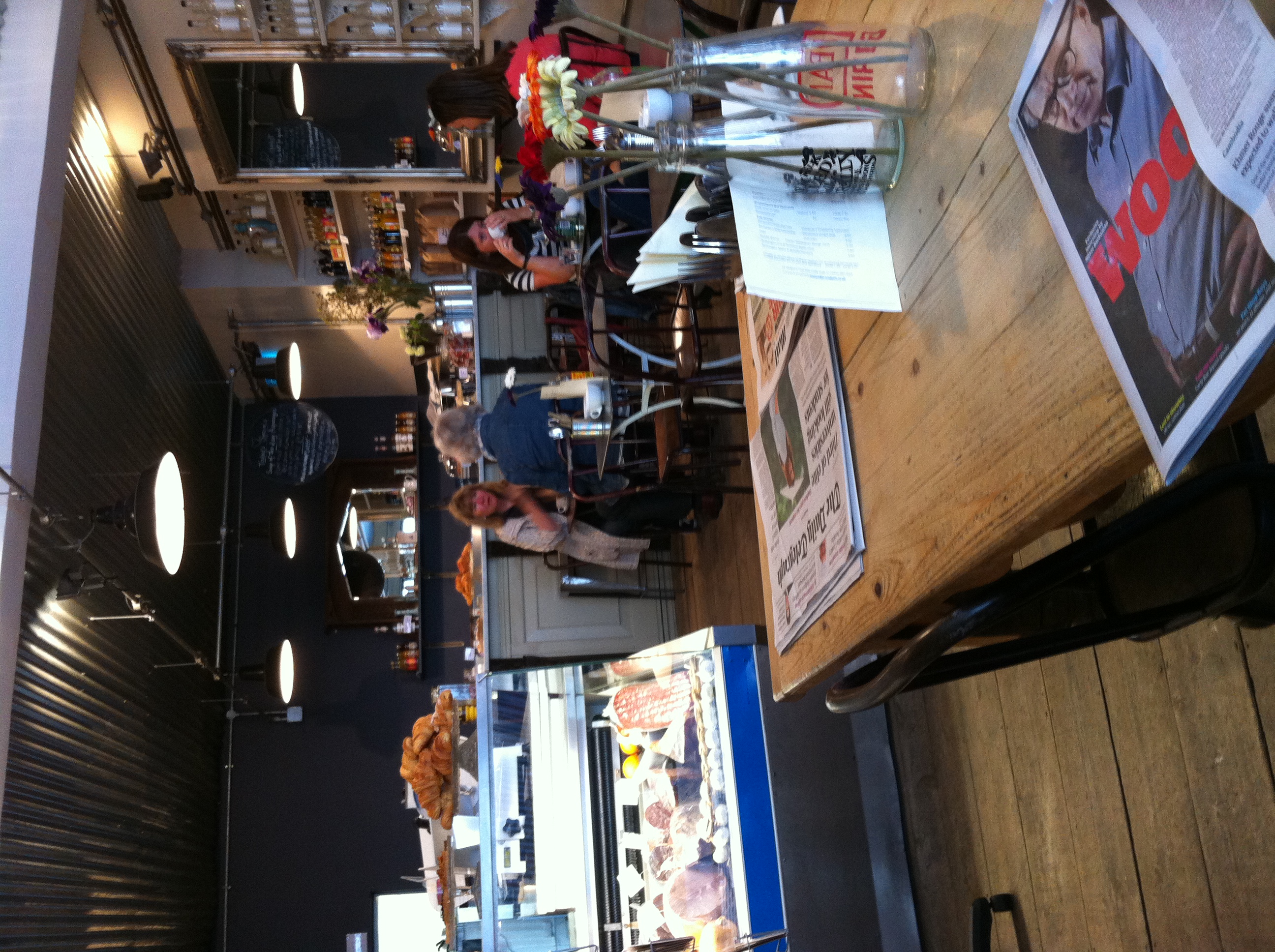
Knowledge Cafe venue

If you haven’t signed up yet and want to here’s the link: Knowledge Cafe: Making Use of Surplus Food

I was particulary delighted to take a very supportive call from Councillor Tony Nicholson, Leader of Lewes District Council; to have Ruth O’Keeffe and Ian Eiloart involved; and to have opened a very constructive dialogue with LDC officials all of whom have been keen to help.

At last night’s RSA event the Plan Zheroes exhibit was inundated with expressions of support and interest from the 200 or so invited guests.

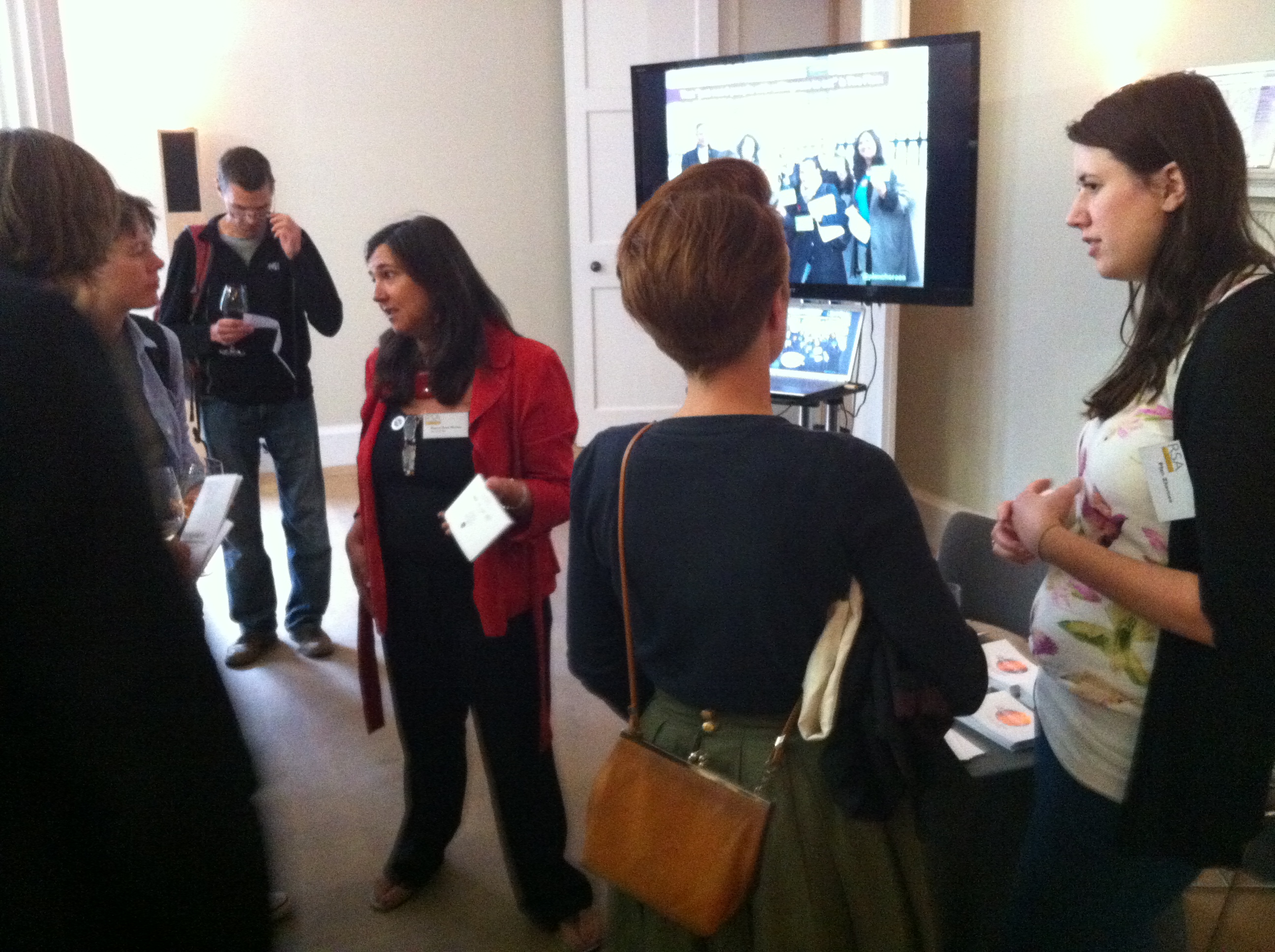
Maria Ana Neves answering questions from some of the many visitors to the Plan Zheroes exhibit at RSA Innovate evening

On the same subject.This quote hit me in an article I was reading last week on food waste in easyJet’s in flight magazine.

we have one garbage bin and 100 seats

What struck me is how through careful husbandry restaurateurs have been able to dramatically cut the amount they throw away; it also confirmed that food establishments do produce surplus food.

What a waste

See you on the 24th.

3 great toolkits and a facilitation tip for Knowledge & Information Management professionals

Toolkits are much in vogue. Three I’d recommend are:

While knowledge managers are not short of reference points or advice on how to go about things there is no one size fits all template to describe the role, where it sits and the skills to discharge it.

Yet so many km professionals in emerging markets are thirsting for the certification that goes with having completed training in an industrial discipline such as km. With few exceptions (KMI Institute in Washington being one) the km profession unlike CIPD or CIM has no recognised industry body. Those that might be closely related such as SLA or CILIP have not claimed the km space. Instead conference organisors award ‘gongs’ at their events and others rely on the MAKE awards to signify progress.

Most km discussions though tend to land in the same place: what does a knowledge manager do, where do they sit in the organisation, what are there crossover points (Organisational Development, Learning, HR, IT, Strategy, Communications/Marketing) and how do we measure impact? Success depends on individuals, the passion they bring, their ability to judge what to do and when and the way they present to/influence many stakeholders.

Here’s one example of good facilitation from France:


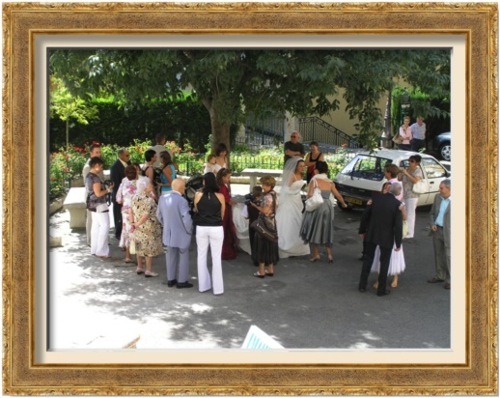
This picture, a typical wedding scene, shows the bride to be greeting all the guests before they enter the church for the ceremony. She introduces friends and family to each other so that there is no ‘bride and groom’ side of the church. People who have been introduced mingle and are more likely to converse at the wedding breakfast thereafter. This simple act of facilitation (a ingrained tradition) helps shape the event.

So while not every km professional can be a bride we can suggest that a core competence in putting the km tools to work is facilitation. Toolkits are vitally important but without the skill and processes to deploy them they are a wasted investment.

Its why perhaps CIAT‘s km team who are much admired have titles such as Leader, Capacity Strengthening and Knowledge Management Initiative. Theirs is a focus on helping to equip others in their organization; faciltation skills are a huge part of the core competencies they use to help others.