when your footsteps can generate electricity

Imagine a world in which the steps you take are harnessed as an energy source.

That is the premise behind pavegen ‘renewable energy from footsteps’ one of a number of Royal Society of Arts (RSA) supported projects on display at an open evening I was invited to last night.

I was there to visit the Plan Zheroes exhibit (another RSA supported project) ahead of the forthcoming Knowledge Cafe: making use of surplus food I am running in Lewes in 10 days time with Maria Ana Neves an RSA Fellow and Plan Zheroes founding member.

What struck me about pavegen was its simplicity and potential.  In conversation I discovered it gives a 2 year payback based on a footfall of 250k ‘visits’ a day. That will generate enough energy to power lights and LED displays making it ideal for Shopping Malls and Railway Stations.

Why I am interested? 

  • A couple of years ago the golf club I’ve been chairman of took a very bold decision to invest in alternative energy sources and sunk a number of heat inducers into the overflow carpark. The electricity from that source actually powers the club including water, showers and heating and we put energy back into the grid!
  • Portugal, my wife’s homeland has among the highest per capita energy costs in the world and recently sold off its national power company in an auction to meet the privatisation constraints imposed under the austerity plan of the Troika.
  • Many countries (including Saudi Arabia which is setting up the King Abdullah City for Renewable Energy) are looking at ways of reducing their reliance on fossil fuels and generating energy from other sources.

For those of you who want to follow up, below is a snapshot of the promotional material

Pavegen and Plan Zheroes
from Oxford Street to Tottenham Court Road in a rucksack

I am in London ahead of the Plan Zheroes (re) launch at the Royal Society of Arts (RSA) and wanted to share a story that illustrates how effective it can be:A few weeks ago one of the leading department stores in Oxford Street signed the Plan Zheroes agreement to provide a charity in Tottenham Court Road with surplus food. The logistical challenge: how to get it there, quickly and at minimal cost.

PlanZheroes proposed a solution: use members of outdoor gyms who’d made themselves available to ‘run the food’ the length of Oxford Street to its destination in rucksacks on their backs.

With more than a week to go Lewes’ inaugural Knowledge Cafe on making use of surplus food is booking up fast. Thus far we have a mixture of: councillors; publicans; volunteer groups; charities; centres of worship; general practitioners; and opinion formers. The geographical spread is equally impressive: Lewes in the centre; Uckfield and Wealden in the North; Seaford and Newhaven in the South; Eastbourne in the East; and Hove in the West.

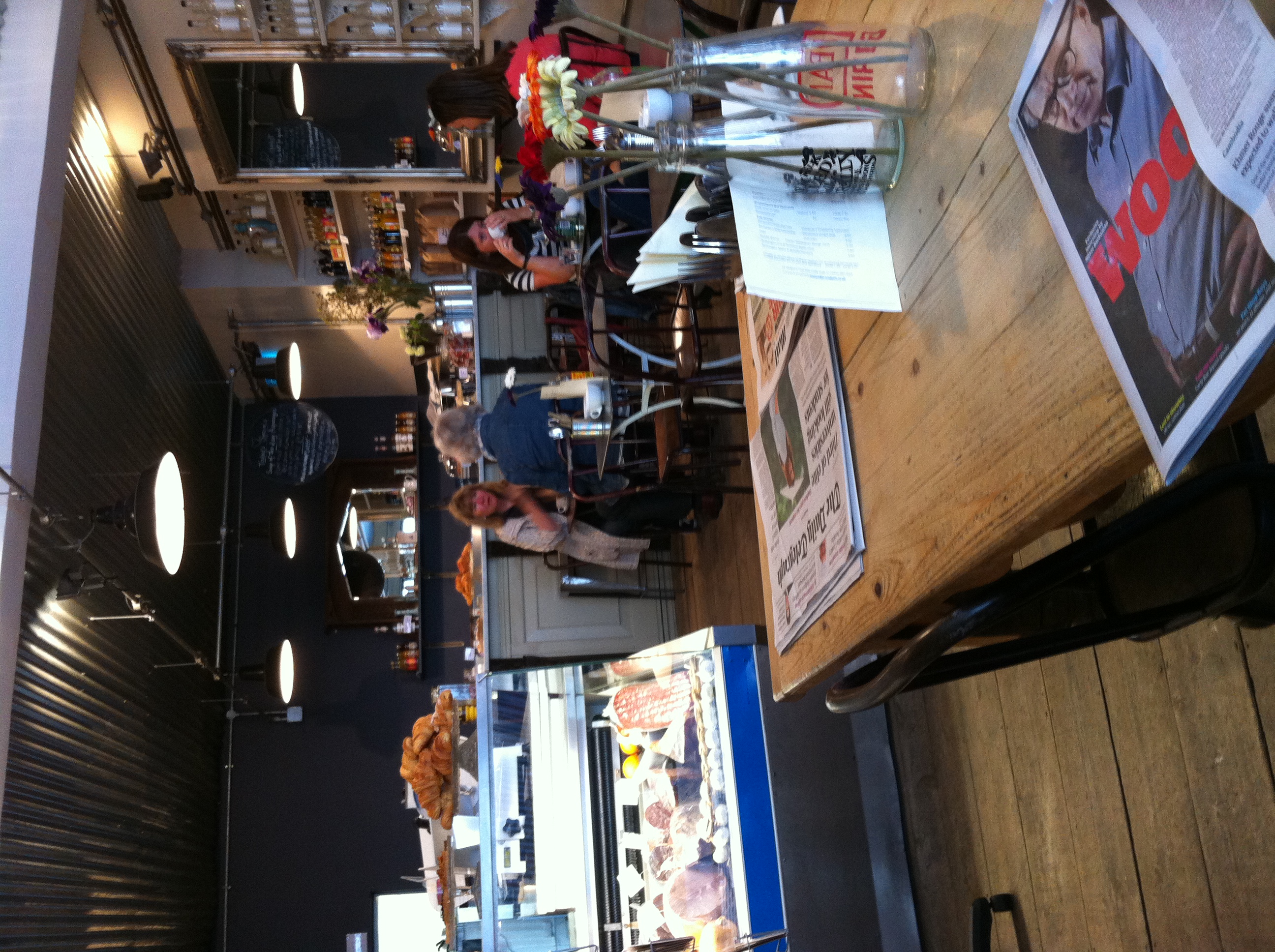
It’s promising to be an interesting evening. Le Magasin are going to be serving up some wonderful crostini, crudites and Mediterranean meats washed down with the odd carafe or two to stimluate conversation.

Knowledge Cafe venue

If you haven’t signed up yet and want to here’s the link: Knowledge Cafe: Making Use of Surplus Food

I was particulary delighted to take a very supportive call from Councillor Tony Nicholson, Leader of Lewes District Council; to have Ruth O’Keeffe and Ian Eiloart involved; and to have opened a very constructive dialogue with LDC officials all of whom have been keen to help.

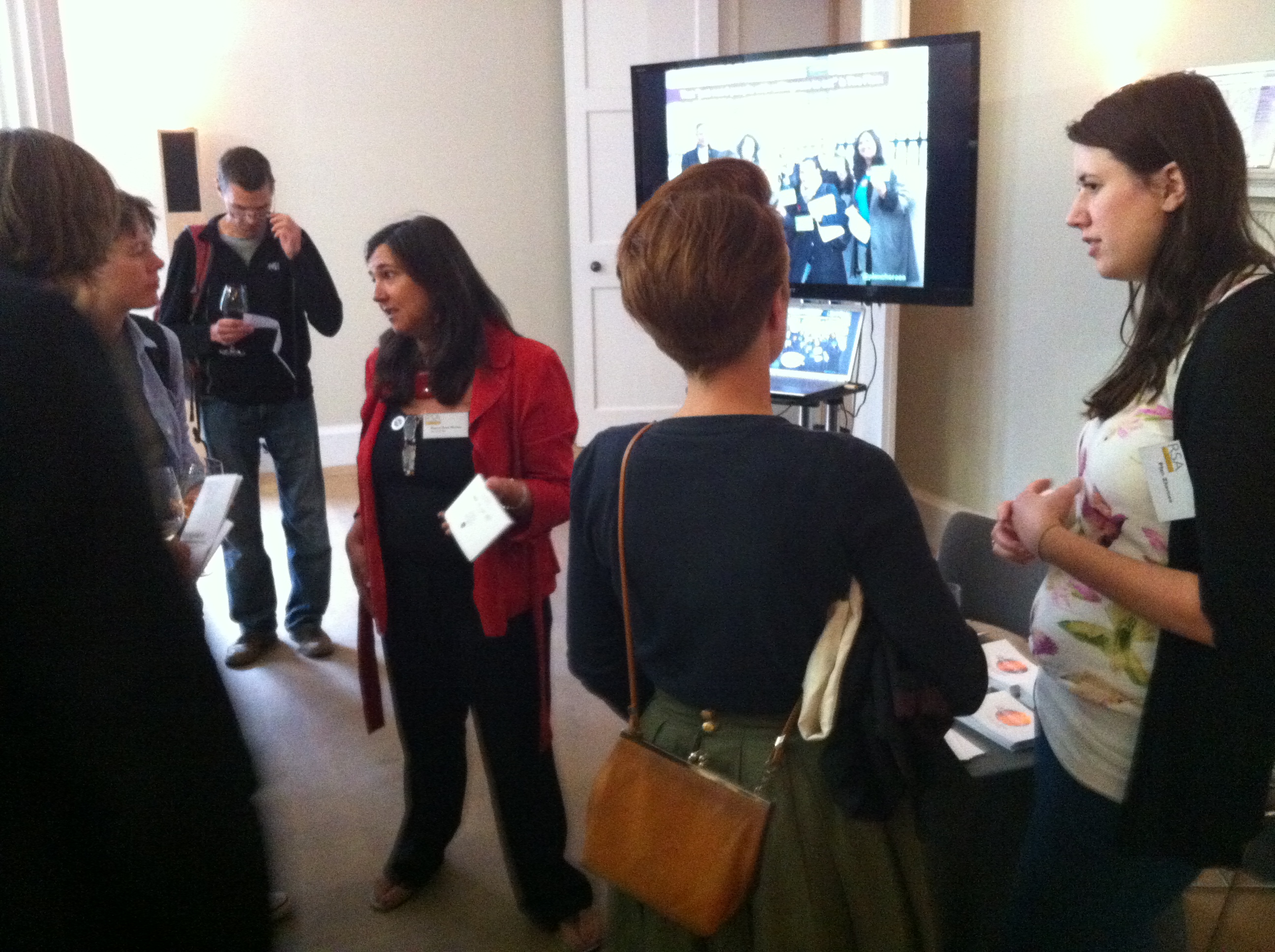
At last night’s RSA event the Plan Zheroes exhibit was inundated with expressions of support and interest from the 200 or so invited guests.

Maria Ana Neves answering questions from some of the many visitors to the Plan Zheroes exhibit at RSA Innovate evening

On the same subject.This quote hit me in an article I was reading last week on food waste in easyJet’s in flight magazine.

we have one garbage bin and 100 seats

What struck me is how through careful husbandry restaurateurs have been able to dramatically cut the amount they throw away; it also confirmed that food establishments do produce surplus food.

What a waste

See you on the 24th.

Using Storify to report on NHS Shaping our Future event

In 2010 following a visit (ironically as part of a WHO delegation) to Darfur I contracted Graves Disease; thanks to the excellent support and clinical treatment from all of the Doctors at St Andrew’s Surgery, Lewes and Dr John Quin Consultant Endocrinologist at Royal Sussex County Hospital, Brighton I’m nearly back to rude health.

So I made a commitment (to myself at least) that I’d find a way of saying thank you for these two years which is why I spent yesterday afternoon in Bexhill attending a consultation session on the future of the NHS in our county.

It also gave me a good chance to see how they they run sessions like this since my colleagues at Sparknow (and I) have undertaken similar working sessions in far flung places. Finally it gave me a chance to try out Storify as a way of consolidating the tweets I was posting as the event went on.

And for introducing me to its potential I have to thank Chris Heffer who is doing some really interesting things with social business at SAP. Here’s what I thought about using Storify:

+

  • simple to drag and drop content from social media stream
  • ability to write summary at the top of the account of the event
  • made me think about tweets as I had the container in mind when I was typing them
  • made me think about the audience who might read it
  • created in less than an hour
  • can be used to consolidate accounts of an event commercial, sporting or leisure

  • once you get over a page you start to lose interest
  • need editorial skills if a lot of stuff on a subject

See what you think. Here’s my Storify account of the afternoon entitled Shaping our future

10 memories of Darfur

This, written two years ago, still today provides vivid memories of the inaugural visit I made with Victoria Ward of Sparknow, Alim Khan and Archana Shah of the World Health Orgnisation (WHO) to Darfur.

image

1 | Of laughter and teamwork – the A team and the Super team – and the competitive spirit that emerges when you try and interview close to 100 people in 8 days in 3 locations; from the floor of a lounge; to the meeting room at HQ; to the Ministers office; to a small office in Darfur.

2 | Of the people who work in this industry and whether there are stereotypes? For some its getting the sand between their toes and the dust in their hair, for others its the smell of the earth after the rain has fallen. Its the battling against all the elements and the unceasing struggle to help the population survive.

3 | Of the security which is insidious and necessary.

4 | Of being inside a UN bubble which puts a cloak (and a barrier) around all its workers such that they become both the solution and the problem.

5 | Of feeling much more comfortable in primitive conditions rather than the opulence which is the Burj el Fateh and feels so out of keeping with the rest of the environment.

6 | Of the ubiquitous donkey without whom this society would not survive.

7 | Of goats which were far more prevalent in Fashar than Nyala and obviously Khartoum.

8 | Of the many moving stories we’ve heard and the metaphors and images many of which only emerged after much gnashing of teeth, more kind of an abrupt halt, because it’s so long since these people, so busy getting things to happen, have had a chance back to stand back ad look at the larger picture.

9 | Of the need for silence in interviews and also of creating the right atmosphere and space to encourage discourse and finally.

10 | Of feeling overwhelmed by the magnitude of the Darfur crisis and unable to see a clear answer to these questions – the what next? What will the impact be when the aid providers actually departs? Who will pay the Doctors, Midwives, Hospital staff? Who will provide the maintenance, medicines and facilities without which all the billions already committed will be waited? Without infrastructure such as roads, rail and most importantly water production facilities the outlook for the Internally Displaced Persons (IDP’s) will be challenging.

Stories that stick: from Takayama to London by way of Paris

It’s Sunday night and I’m on my way back from a day in Paris. My wife who is an interior designer has been at the annual Maison & Objet event at the Parc Des Expositions north of the city and was so enthralled she was late for our rendezvous; it’s pouring and visibility is lousy on the A26 as we rush towards the tunnel to make our 20.20 EuroShuttle.

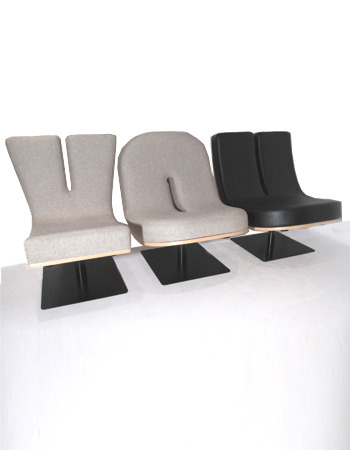
Its a strange backdrop to a conversation about what sticks and why.  I asked Ana to share with me some of the most memorable conversation and objects she saw (at Sparknow we practice what we preach even in our personal lives).  After some deliberation and expressions of delight that many innovative ideas had come from fellow Portuguese design companies, including how to grow an indoor plant wall, and an astonishing set of letter furniture used in corporate settings

she settled on an encounter with a gentleman by the name of Yoshio Kan from a village in Japan called Takayama.  Ana’s reasoning was as follows:

Of all the people I met and displays I saw, Yoshio stood out because he told me a story about the products his town makes and how they came to be at the event. It was a communal effort to get their displays to Paris in time. Built in wood in Takayama it shows how the village uses recycled materials such as broken crockery to make new objects; how they have responded to changing cultural tastes by using Kimono fabrics to manufacture bags and; how they use lacquered wood as a substitute for glasswear.  The display reflects the village and its culture and Yoshio was its storyteller.

That the story was the thing that stuck from a day of glitzy presentations and amazing art, furniture and textiles reveals the power of face to face conversations and of story in underpinning brand, in this case that of a village. Ana felt a sense of co-ownership and is more likely to use them as a supplier as a result.

Which leads me nicely onto an event run by Shawn Callahan of Anecdote, Sydney that’s being held in London on February 16th. Entitled Storytelling for business leaders it builds on some of the techniques I describe in the Yoshio story and having attended previous events Shawn has run I can wholeheartedly recommend his style and guarantee attendees will find it money well spent.

Oh and in case you are wondering we made the shuttle with 2 minutes to spare.

(Source: hida.jp)