‘Nothing has changed and yet everything is different’: 10 observations from a special event at CILIP

Image

Yesterday I was at a special invitation summit to discuss the future direction of the Chartered Institute of Library & Information Professionals.  CILIP is undergoing a fairly dramatic repositioning under new CEO Annie Mauger and this was the first of a couple of attempts to broaden the debate with a wider constituency.

It was well organised (and run) by Martin White and Sandra Ward, two people whose names are synonymous with the words ‘Information’ and ‘management’, and whose best efforts had persuaded many thought leaders in the Information Management space to attend. Attendees were asked not to tweet and to follow The Chatham House Rule that states:

When a meeting, or part thereof, is held under the Chatham House Rule, participants are free to use the information received, but neither the identity nor the affiliation of the speaker(s), nor that of any other participant, may be revealed’

So (as a member of Chatham House and compelled to comply) here are my observations aided by a couple of pictures and slides published with the speakers permission.

10 observations:

‘Nothing has changed and yet everything is different’. Jean-Paul Sartre’s quote is apposite: 20 years on since my colleagues and I at Saudi International Bank were creating a one screen view of what we knew about a client (the forerunner of an intranet / CRM system) I suggest that despite all the gismos (technical advances) senior executives are still looking for reliable trustworthy information/intelligence – the synopsis they can trust, from people they trust. And don’t want to do self searching to find it. At the closing a wonderful story was told about a senior executive who has a team that provide abridged briefing notes and expected outcomes (in his native language) for every meeting.

People are still the important navigational hub and their knowledge networks vital. When they go their knowledge (and their networks) go with them. HM Government Knowledge & Information Strategy will make clear the importance of people and the public as the client and it will recognise that ‘who we know’ is as important as ‘what we know’ hence the investment in a Knowledge Harvesting Toolkit for KIM professionals (and training on Knowledge Capture & Retention).

We want measurements! Stories that amplify events and justification for Information and Knowledge team activity are hugely important but must be accompanied by statistics and measures which accounts in part for the increased call in the Public Sector for inventories of information and knowledge assets. In a world of data half a page of stats supported by a story is more powerful than two pages of prose.

We want certification! East, North and South of Istanbul there is a huge demand for education and certification.  Competency management is king and certificates from accredited organisations a way of enhancing career prospects. West of Istanbul people (especially the young) are just happy to be in a job and employers are increasingly demanding new entrants to be more self aware.

Apps are the future, websites are the past: Perhaps driven by a healthy scepticism of advertising and brochure ware websites dynamic content is key. This is presenting a challenge to the information industry who need to be more proactive in saying ‘read this and here’s why’. Ask yourself when did you last go to a corporate website and believe what it said – buying decisions are being driven by recommendations of people (and organisations) YOU trust. And Apps are making the process smoother as mobile replaces pc’s and tablets, laptops.

Fear is driving (in)action / lack of collaboration: the financial services industry has taken a bashing and the regulators are all over them extolling the virtues of a change in culture and trying to audit whether they have. Chinese Walls are getting higher so no Yammer or Jive to cross fertilise ideas and clients and silos will get more pronounced. In the Public Sector the rise of the SIRO (Senior Information RIsk Officer) as a board member suggests a greater and more visible role is emerging where risk aversion becomes a major driver of decisions.

Organisations are becoming hermetically sealed bubbles virtually impenetrable to anyone who is not of the same size. It used to be accepted doctrine that ‘no one got fired for hiring IBM’,  now the same applies with big consultancy firms. A vivid illustration was given: despite agreeing the scope of work with the client, being the best qualified and most experienced, formal sign off was not forthcoming for this internationally renowned consultant because ‘he is not …’ (three letters)!  

Modular competency acquisition the way forward/ Facilitation key: Many of the speakers and delegates commented on the need to be good at getting others to work well and be opportunistic. A role where the KIM professional, briefs, analyses and introduces, new processes, systems and ways of working. The idea of a modular incremental approach to competency development was lauded, perhaps in conjunction with business schools and Universities. As was the new CILIP Professional Knowledge and Skills Base, that the UK Government’s Head of KIM has been a strong supporter of.

IMG_1554KIM is here to stay: It was a common theme – KM especially is back (even if there is still ambiguity over what it is – especially in the North West).  This from John Quinn is lovely, a quote from a report in 1894 on the Department for Education’s use of knowledge:

 …failing to record the knowledge it obtains for future use and unable to obtain information as to what is being done elsewhere either at home or abroad…’

IMG_1553

To finish, a quote, from award winning Clive Holtham celebrating 25 years as one of the few to hold a Professor of Information Management title, ‘technology brings no competitive advantage’  – its an essential underpinning (my addition). Here’s Clive and his Intelligent Exploiter Framework – note the importance of ‘Mindset’.


And finally

Check out Full Fact a non profit making group that specialises in independent fact checking.  Despite a bit of a spat with UK Column a year back it has become a must go to site to check the veracitiy of ‘facts’ and ‘stats’ that appear in the media and emanate from the mouths of our politicians. Will Moy’s BBC Question Time piece ‘Will you point out when panellists are lying?’ is worth a read and his stories given a hearing.
My chairman’s presentation looking at a decade of KMUK: the importance of managing for serendipity

It took me a while to think about what I was going to say to the first full house KMUK has enjoyed for many years as I detect a palpable sense of excitement among the organisers.

Over the last couple of months I’ve been at Social Business events in Lisbon and London and came away feeling that the phenomenal adoption of collaborative social technologies and the clever use of Big Data has the propensity to fuel the resurgence of Knowledge Management.

We live in a world now where: Philips have the ability to log when any light bulb is being switched on and where; testimonials and consumer recommendations (on sites such as Trip Advisor) are the most trusted form of advertising & marketing; the art of sales is about a long tail engagement (consumers publicly telling family and friends what they’ve done and bought); and in effect, performance improvements come from making the invisible visible. All of these characteristics are likely to be found in a knowledge driven organisation.

Its  reaffirmed in my mind: the importance of personal contact and facilitation; a  need to be clear about why this critical knowledge ‘stuff’ is being captured and harvested; the importance of the right environment (and culture); and the idea of focusing on Ambassadors / Champions especially in global organisations.

the address

Good morning and welcome to the 10th anniversary event of KMUK. I said in the event flyer that I thought there was a stellar speaker line up with MAKE winners and some of the most influential thought leaders in the Knowledge Management space.

Over the next two days you are also going to have the opportunity of spending time with your peers as well as engaging directly with the speakers in the breaks and at the speaker clinics. And for the first time at KMUK the opening Keynote will have two carefully selected respondents.

It promises to be an interesting and stimulating two days: a number of the speakers will be using KMUK as the launch event for ideas, techniques and groundbreaking partnerships.

There is a twitter hash tag KMUK and Ark will be consolidating all of the tweets into a Storify record of the event.

Back to 2003

It being the 10th anniversary, I want to take you back a decade to the last KM Europe held in the UK at Alexandra Palace in 2003. Many people wrote blog posts about the keynote speech. I’ve selected a few quotes:

  • …much of our current knowledge management practice is being locked into content management,
  • …we are all engaged in a constant process of sense-making, where we try to find the best available explanation for something based on previous experience rather than the perfect logical solution. This is why he favours “narrative management” and story-telling as more appropriate vehicles for knowledge sharing than replicating best practice
  • Conventional Knowledge Management has been too concerned with codifying explicit knowledge to aid replication, and with using categorisation (where we construct data around a framework), rather than exploration (where we construct frameworks around the data).
  • innovation springs from emergence in complex systems, which means that we should be “managing for serendipity” by creating the conditions for creative innovation to emerge.

Again it’s worth returning to what was said back in 2003

  • Too many people focus on managing knowledge rather than managing the channels through which knowledge flows. Just connecting or linking people can be a major knowledge management activity.
  •  … new tools now allow us to telescope five to six years of social networking down to five or six weeks, albeit with less  density. Such programmes aim to create linkages where no linkage currently exists and are particularly useful during re-organisations and activities such as merger and acquisition.
  • Attempts to engineer a network through design and allocation of staff to groups generally fail as they create artificial relationships that are not  sustainable. Self selecting social network stimulation replicates, but in a shorted timescale, a natural process.

At that event horizontal km software vendors were much in evidence as they had been at all of the previous ones.

  • Intranets were into their 2nd wave, people were struggling with enterprise search, decentralized publishing and SharePoint, some 2 years on from its launch, was competing with other document management systems and had yet to achieve the ubiquitous enterprise status it has today wherein in many in senior management say ‘we do km, we have SharePoint!
  • Android Inc was being founded and would become the largest mobile operating system inside a decade mirroring the dramatic growth of mobile smart phones.
  • WordPress too was launched bringing self-publishing to the masses. It has recently been the beneficiary of an exodus from Tumblr following its acquisition by Yahoo – more of them and Marissa Meyer later.
  • IBM were undertaking a 72 hours ValuesJam, for all employees in a debate about the very nature of the company and what it stood for.
  • The 2nd Gurteeen Knowledge Management conference was taking place – its themes: ‘knowledge, networking and communities’. And it was all about conversation. One delegate’s key soundbite: “Knowledge is not something you keep in your head, it’s a behaviour”’
  • In 2003 the book Knowledge Asset Management was published. It recognized critical knowledge as an asset to be nurtured.
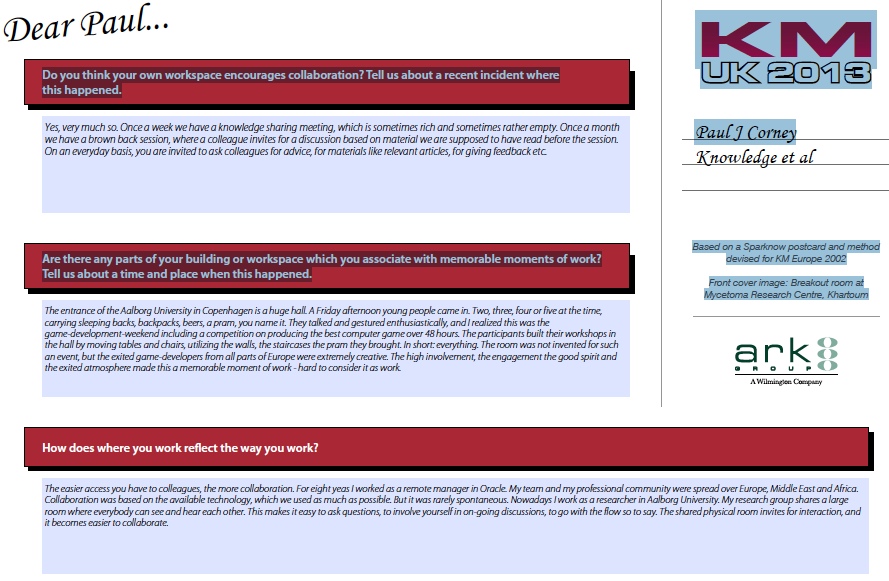
  • Also that year my colleagues and I at Sparknow were using the traditional techniques of a postcard as a prompt to ask delegates at KM Europe about their work spaces and what the new virtual world would do to the traditional office and ways of working. We collected but never published a number of very insightful comments.

when space matters – looking at workspace

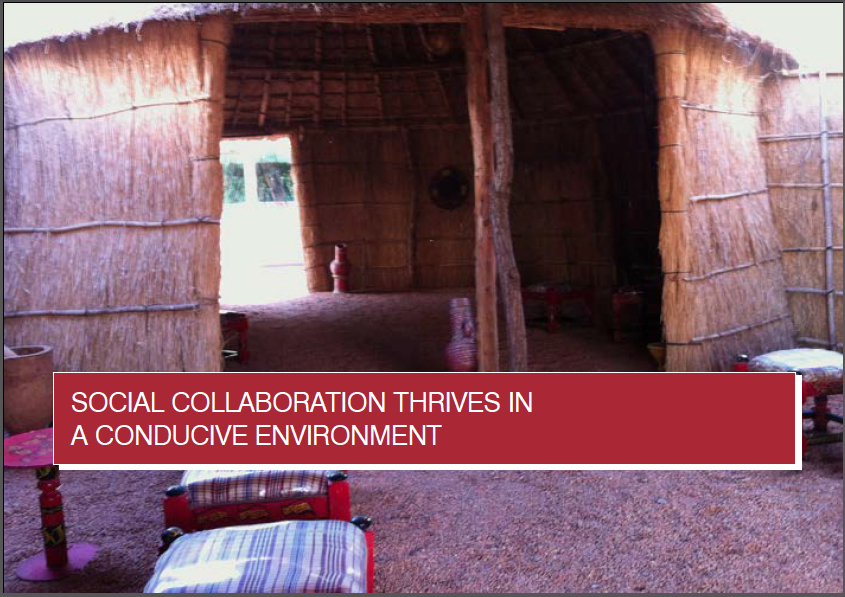
So since in my view worPostcard front coverkspace (physical and virtual) plays a critical role in all things Knowledge Management we decided to repeat the exercise a decade on and asked the speakers if they’d take first stab at answering the same half a dozen questions.

Postcard page oneI’ve collated their responses and contrasted them with some of those we had in 2002/3.  The report is available on line along with the conference proceedings. It would be great if you could add to the body of work by filling in your own and putting them up on the wall.

KMUK 2013

Social vs. Knowledge Management

You are going to hear a lot about community, collaboration, culture and change. Also context, champions, conversation and communication. Your challenge over the next two days is to work out when and how to harness the array of social tools and use them in context/ tandem with other initiatives. Here’s a really interesting and recent extract from a Gartner blog post:

  • Knowledge management is what the company tells me I need to know based on what they think is important.
  • Social media is how my peers show me what they think is important based on their experience in a way that I can judge for myself

Knowledge should be like water — free flowing and permeating down and across your organization filling the cracks, floating good ideas to the top, lifting everyone in the organization.

Knowledge management, in practice, reflects a hierarchical view of knowledge to match the hierarchical view of the organization.  Knowledge may originate anywhere in the organization, but under knowledge management it is channeled and gathered together in a knowledge base (cistern) where it is distributed based on a predefined set of channels, processes and protocols.

Social media looks chaotic in comparison. There is no predefined index, no prequalified knowledge creators, no knowledge managers, ostensibly little to no structure.

Where an organization has a roof, gutters and cistern to capture knowledge, a social media organization has no roof allowing the rain to fall directly into the house collecting in puddles wherever they happen to form.  That can be quite messy and organizations abhor a mess.

Last week I was an invited guest at the Dachis Group’s Social Business Summit.  A month previously I’d been helping to run a similar event in Lisbon at which social vendors presented their wares to a fictitious company.

Both events threw up so many crossover points with Knowledge Management and I shared a number of the tweets on the #KMUK twitter site. Here are a few sound bites to reflect on as you are thinking about it

  • Social interaction accounts for 50% of the performance of the team We are now consuming more content generated by each other than generated by media companies
  • Brands are a natural community of people identifying with each other, with a shared set of belief /Advocates are the ‘tribe’ who need motivation/incentives. – Employees are the most important and need empowering to do so
  • social helps to drive savings where knowledge management comes in’

The two that stood out for me and reappear as a theme this afternoon

  • A dead sale is one that’s not shared.  People must be incentivized to share.
  • Who can add value to the data?  Data will tend to migrate to where it will be most effective.

Paul J Corney

For KMUK June 2013

‘…a complaint is a gift’: engaging with customers & stakeholders

The British are uncomfortable with directness. It’s probably why one of my Saudi friends said he preferred dealing with the Americans and the French because he knew where he stood with them as they said what they meant. We tend to say ‘it was fine’ when asked if we enjoyed an experience or a meal when what we actually mean was ‘I wouldn’t serve it to my cat’. We avoid confrontation, write a bad review on Trip Advisor and congratulate ourselves on doing that and vowing never to return.

It’s also about confidence and I am reminded of the Michael McIntyre skit about the ritual of tasting the wine before accepting it to drink.  Few people have the knowledge or confidence to send it back. Here’s the clip.

Some good friends became so as a result of constructive criticism my wife and I once gave.  We’ve never just said that’s not very good, we’ve always tried to say how we might improve it.  Of course there’s a risk you get thrown out of a place and told you don’t know what you are talking about but by drawing out the positives (an Appreciative Enquiry technique I try to apply when giving feedback) your opinion is usually valued.

And yet if you run a customer focused service business such as a restaurant or hotel you need constructive feedback if you are to improve and Claus Moller got it right when he wrote the excellent book ‘a complaint is a gift’.

trouble in paradise

Having decided on 10 days r & r the last thing on my mind was a bout of constructive criticism.  However the majority of the people we met were so willing and genuine my wife and I felt obligated to spend time with the resort’s management when issues started to arise.

What follows is an edited extract from the letter they asked me for (I’ve removed any reference to names – it would be unfair) after the second meeting we had with the most senior member of the team on duty.

I am as promised documenting the ‘issues’ we’ve had during our stay as a way of hopefully helping you and the rest of your team to build on the solid foundations you have.  So I am going to describe each incident and then give you a few suggestions on behalf of us both as to how we think you might improve:

  • Friday 15th: The morning after check in we changed £300 at the front desk.  We had read on Trip Advisor that guests had been short changed in the past so we adopted a strategy of my wife ordering and me watching.  The amount due was 434 but we were given 430.  And we were asked to sign the receipt BUT were not given a copy until we asked for it.  Needless to say we challenged the person who apologised and gave us the remainder. We brought this issue to the attention of the representative that morning.
  • Sunday 17th: We ate in the upstairs ‘A la carte’ restaurant. We managed to get a booking for 9pm (we were told it was the only slot available). When we arrived it was sparsely populated.  The food was inferior to that served in the buffet and the wine (Spanish house white) was full of sediment.  When I drew it to the attention of the headwaiter his response was a shrug of the shoulders!
  • Tuesday 19th: A few days previous we’d purchased a bottle of Carmenere from the shop nearest to the nightclub. Along with crisps and biscuits it came to 12.50. On Tuesday afternoon I bought another bottle, with crisps, and was charged 13.60.  Again no receipt was offered. We returned to the shop and asked for an explanation: a mistake we were told. We asked to speak to the hotel manager (who was unavailable). Instead we had the pleasure of talking to you and are glad we did.
  • Wednesday 20th: The day of our wedding anniversary was spent in Havana with one of the local taxis. We had a superb day and ate delicious local food with them in the taxi at a spot where the taxi drivers buy food opposite the railway station. We’d booked into the downstairs ‘A la carte’ at 8.30pm and were looking forward to celebrating our anniversary in style. We arrived to find half a dozen guests only and ordered mixed tapas with two lobsters.  The Tapas was tasteless – I tried each and left most of it – and the lobster came coated in cheese accompanied by tinned carrots and peas.  We left without eating more than a mouthful each and went to the main area for dessert hugely disappointed that a special evening had been ruined.
  • Thursday 21st: Since the heavy rain on Tuesday our room had developed a nasty smell in the bathroom. That morning it was worse and we notified reception who promised to send someone down to sort it.  We returned that afternoon at 6pm to find the bath covered in excrement.  To the credit of the duty manager we were immediately relocated though obviously we had to repack and unpack and missed the reception you’d invited us to.

In your defence I should note the following:

The service in the pool bar, the piano bar and the buffet has been good: in the case of Vivian and Adimirys we have nothing but praise for their willingness to go the extra mile to provide exemplary service.

The facilities are good and the rooms perfectly acceptable especially those like 1182, which have been redecorated.

The manner in which you have dealt with our issues has been to your credit.

suggestions for improvement

Ana and I have experience in the hospitality and service industries. We are happy to give you some suggestions in the hope it might help turn what is a good product into a great one:

  1. Make both of the ‘a la carte’ restaurants places people want to go not places you give tickets away for.  How many people actually pay to go again having eaten there once? Stop serving canned vegetables such as carrots and peas and serve fresh food of a standard that is appreciably higher that the buffet.  And please employ staff that are as good if not better than the buffet area.
  2. In the buffet serve good Caribbean food as a permanent option using fresh ingredients: we believe you have a local head chef so serve curried goat and other food from around the region rather than doing themed nights that feature frozen food.  As an example Oriental Night had tasteless Sushi, frozen spring rolls and pasta not noodles.
  3. Staff training:
    1. Yours appears to be a culture where people who are in the front line in the restaurants don’t know how to deal with reasonable comments. For example, early in our stay we watched a Canadian turn up to eat in the same beach ware for breakfast and dinner.  When another guest and his party pointed this out to the duty manager in the buffet he had no idea how to deal with this.  Instead of politely pointing out to the offender that there was a dress code for the restaurant and that perhaps it might be better to sit on the terrace, the comment was ignored and the individual continues to turn up shabbily dressed.  The impact is hugely damaging since the party of 8 whose last night it was left with a very negative impression.
    2. My point: as you have dealt with our issues so should your staff.  Other businesses I have worked with have a weekly meeting where the stories of good and bad experiences are discussed and the favourite story chosen as an indicator of practices to be applauded/improved.  If you want more on this see the way Ritz Carlton uses stories to improve performance or go to www.sparknow.net (the business I used to run) to see how big corporations are changing behaviours and culture using the power of stories.

so what happened as a result?

The management circulated our letter to all heads of department and called a management meeting for the following day to discuss the ideas and suggestions.  Subsequently we received a thank you and the offer of a complimentary stay should we choose to return which one day I am sure we will.

The business takes reviews people write very seriously and to its credit uses them as a discussion topic in management meetings.  I know of other restaurateurs who shake when their smart phone alerts them to a new review as they’ve borne the brunt of unfair criticism in the past.

In today’s world service businesses cannot ignore criticism especially with social media tools available to the dissatisfied customer. They have to be willing to embrace it, be upfront and turn criticism into compliments and turn customers into brand advocates willing to give a more positive slant.

In our case I wouldn’t hesitate to recommend the venue or the way they dealt with our issues (and in fact have in my own Trip Advisor review).

IMG_0904

Importance of KM in Health: the story of Doctor Anwar and making use of what he and others know in Sudan

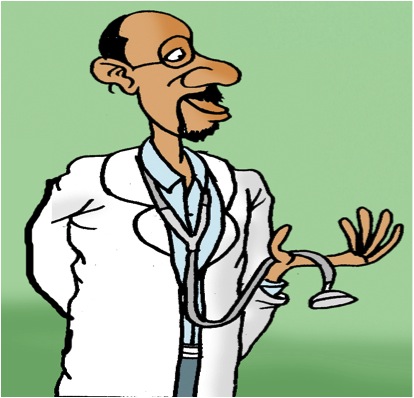
Meet Anwar, a Sudanese doctor. Just one of 5 fictional characters created by delegates at the Knowledge Management for Health in Sudan event I spoke at, helped plan and run.

Sudanese Doctor

Anwar

This exercise, Scenarios for the future, was set in 2020 and invited the 80 or so delegates drawn from across the whole of the health industry in Sudan to consider what a day in the life of each character might look like.  This was a new and warmly embraced concept in an environment where my information is my soul and much of the debate about the future takes place against a backdrop of uncertainty and increasing austerity where:

  • 2/3rds of all drugs are purchased ‘out of pocket’ not from health system
  • drugs are proportionately more expensive than in other domains
  • funds from external sources are available to assist with health informatics.

Having settled on a description of each character the delegates who were by this time in groups of 8-10 then set about imagining what their day might look like on January 1st 2020. A vivid imagination is required and was evident in the quality of the stories that were told by each group’s nominated storyteller.

The story of the Health Worker

Ismail’s story – Health Worker

I will in due course and with the organising committee’s permission publish the two ‘winning’ stories; yes we did do voting while the storytellers left the room.

One of Sudan’s leading pharmacists noted in a one:one conversation how important listening was and how difficult a technique this is for many to use when prescribing drugs.

By inviting each of the storytellers to play back the story to each of the other groups it was good to hear them say in the summing up that by the end they really felt they were the character.


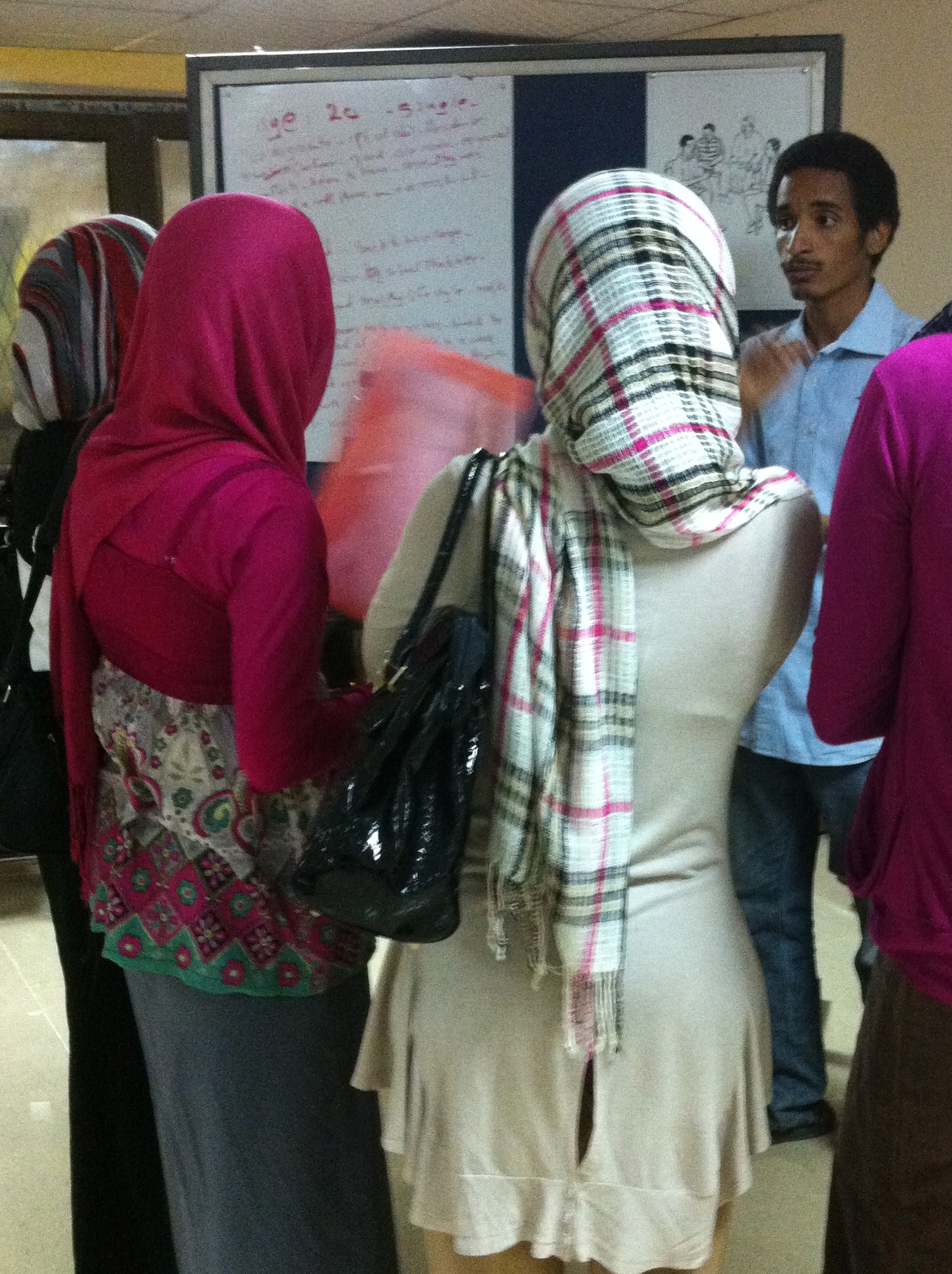
The previous day I’d invited the delegates to change the way they looked and think about issues and barriers.  Using when you change the way you look at things, the things you look at change exercise conducted in the best breakout rooms I’ve ever worked with, the delegates who are naturally loquacious soon grasped the concept of seeing the room through the lens of different professions.

Breakout room

Breakout room

This change of mindset was important: it allowed the subsequent round table (well round conference room) session that discussed:

‘What are the biggest issues we face in sharing knowledge and information about the health of our nation and how can we overcome them’

I’d invited each delegate to introduce themselves to three people they didn’t know. This worked well and encouraged a very frank discussion. The main issues highlighted were:

  • no systematic collection of information and limited understanding of its value
  • transparency of process (where do the figures go) and credibility of the data
  • lack of human resources to do the collection
  • limited statistical information to undertake scientific research on
  • ownership of data and the whole process – fragmentation
  • accountability to deliver
  • communication/awareness of what each organisation is doing – lots of ‘stuff’ is happening but there is a real risk of duplication of effort e.g. many of the disease control programmes are creating their own informatized information systems

Delegates recognised the tremendous strides being made by the Public Health Institute (one of the event’s sponsors and host of the official dinner) in developing professional public health administration programmes, the creation of a Data Dictionary and the publication of the first Annual Health Performance Review though many bemoaned the lack of official  support for research projects where Sudan has a prominent global position, Mycetoma Research Centre an example.

I came away from reflecting on a discussion I had around the event:

Its all about ‘informization’ – the ability to report from a health centre level with ‘point of sale’ data collected via PDA’s / mobiles as well as computers; about logistics management as a result to ensure supplies get to where they can do the most use.

This can be monitored by the minister, routine reports can be prepared showing which centre reported, which district has complete reporting, which state has complete and timely reporting and % of stock outs of basic drugs or vaccines etc.

And inspired by many of the presentations I’d seen on the morning of the second day from University of Khartoum’s research centre and of course the Public Health Institute who are reaching out to try and create greater awareness through public forum, newsletter and other events.

Perhaps the presentation that struck the biggest chord was from EpiLab
who have achieved impressive results in helping to reduce the incidence of TB and Asthma and whose research and community communication techniques are highly innovative. I loved the cartoons they developed on how to self treat and prevent the incidence of illnesses which were drawn up BY the local communities.  Their pictures and their words are published as guides for the nation and I know they will make them available so I can share them in future blogs.

It was an honour, a challenge but nevertheless great fun enhanced by the warmth of the welcome and a genuine sense of appreciation. Sudan’s people are among the most engaging and intelligent I’ve met. One anecdote from a conversation with a young professional in the communications business illustrates their dilemma:

‘…of the 95 people who graduated in my year a few years back 90 are now working overseas, the majority in highly paid good positions…’

In my address I acknowledged the support I’d had from many people in preparing for the event. They were: Ahmed Mohammed, Dr Alim Khan, Dr Anshu Banerjee, Ana Neves, Andrew Curry, Archana Shah, Chris Collison, David Gurteen, Dr Gada Kadoda, Dr Ehsanullah Tarin, Dr Madelyn Blair, Sofia Layton, Steven Uggowitzer, Victoria Ward

why should Sudan’s health industry embrace Knowledge Management?

A few month’s back during a Skype call with Dr Gada Kadoda a Professor at University of Khartoum she told me: ‘at last year’s KMCA Sudan many of the health industry delegates who attended expressed an interest in understanding what knowledge management might do for them. How might we do that?’.

Gada is one of those special people who when they pose a question you feel compelled to answer it. Which is why in a week’s time I am going to be back in Khartoum to participate in a two day Workshop on Knowledge Management for Health Care in Sudan.

Knowledge management in health is not new. The NHS Modernisation Agency was one of the early adopters and used a lot of Chris Collison’s thinking from Learning to Fly to build a pretty effective knowledge management operation with one of the first Chief Knowledge Officers in charge of it. Sudan’s health industry does not (yet) practice km in any formal manner so as part of the research for my presentation and the sessions I am facilitating I asked some of the actors in the NHS km story to reflect on more than a decade.  Here’s what they said (names omitted):

I have said on several occasions that when you multiply the number of employees by the years of professional learning,  the NHS is the world’s most knowledgeable organisation.  Or it should be.  With better networking, more curiosity, joined-up systems, a culture of improvement and leaders who value national above parochial, it would live up to its potential.

What I have seen is wonderful pockets of excellence – hospitals with a determination to improve, a passion for learning, and a curiosity which can even transfer lessons learned from Formula One pit teams to the operating theatres of children’s hospitals.  Pockets of excellence indeed, but in threadbare trousers.

—————————————————————–

The idea of KM in that particular agency of the Department of Health was to ensure that the knowledge produced by one team (silo) would reach other teams (silos), that the whole organisation had a sense of who knew what, and that we could reuse knowledge across the Service.

We had a team of people and a CKO…a CoP with members from all different teams in the organisation; knowledge audit and SNA that involved quite a few people across the org and which changed the way they perceived the work of the KM team. Yet …our work became too focused on documents and content creation disguised as gathering of lessons learned.

——————————————————————-

In my regular interactions with physicians in the NHS, a key frustration has always been the flow of information between doctors and commissioners. Differing agendas, treating patients vs cost-effectiveness, cause breakdown in communication. The problem usually arises from the discrepancies between the notion of an ideal patient and the realities of people walking into the clinic. Pharma is not particularly helpful in addressing this through the research conducted, however the shift in emphasis to real world data by health technology bodies such as NICE is creating a cultural shift in the sector.

A great story of information exchange relates to a melanoma patient who was being treated in London. The patient was a successful business man so he continued with his work. He was treated with a very new drug and experienced severe side effects while on a business trip in Switzerland ending up at a hospital there. Mismanagement of this drug’s side-effects can result in death. The Swiss physicians had never used the drug before, and most were not even aware of its existence as it is a specialist therapy. However, there was extensive global information exchange driven by the company, which meant that as soon as they saw the patient card which all patients on the drug were advised to keep on their person, the Swiss physicians were able to access a database of information and a 24 hour network of world experts in the condition. Luckily for the patient the KM network worked thereby saving his life.

The shift towards greater use of data and increased use of technology (from other industries) is where I hope much of the Khartoum health discussion goes. One of the leaders in Health Information Systems shared this quote:

‘In the next ten years, medicine will be more affected by data science than biology.’

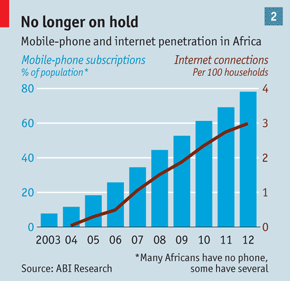
Mobile & Internet penetration in Africa

Mobile & Internet penetration in Africa

Today’s Economist article on the use of mobile technology in Africa is a timely reminder of the strides being made on that continent and how widespread adoption will present huge opportunities as well as challenges for the health industry there.

I am also  going to share this clip from Grey’s Anatomy (US TV drama) about the use of Twitter in an operating theatre. Though fictitious it gives as good an illustration as any I’ve seen about the potential benefits of using mobile technology to share knowledge and mobilise a global community in the same was as the story of the melanoma patient above does.

As the F1 season is nearly upon us I was really struck by this clip from the BBC which shows how the Maclaren F1 Team’s driver and car monitoring system is being adapted/used in a children’s hospital in Birmingham.

And yet for the Sudan health system to adopt some of these technologies (against a backdrop of isolation) there has to be a huge mindshift. I recall with chilling clarity a phrase uttered by a health professional at KMCA Khartoum last year in response to a question I posed as to the barriers to the sharing of knowledge: ‘my information is my soul’.

In an environment where:

  • sharing of information (let alone knowledge) can have serious consequences
  • admitting a lack of current knowledge can cause a loss of face and prestige
  • continuing medical education is not a core requirement for the right to practice
  • the major drug companies have no presence and sell via distribution channels
  • the physician is beyond reproach

we have our work cut out if we are to get positive outcomes from the event.  Its an exciting prospect.