Favourable first impressions of Iran despite ‘come back tomorrow with the fingerprint records…’

Our first contact with an official at the Iranian Consulate in Dubai in support of our application for a visa.

will we get in?

Nazim (aide de camp from the client’s Dubai office) has handed over our documents at 9am. A prominent Knowledge Management guru/practitioner and I (whose name I am omitting along with that of the client to protect confidentiality), have stopped there enroute to Tehran as there is no Iranian Embassy in the UK. We’ve been assured getting a visa would be straightforward and that the opening hours for visa applications of 8am to Noon would allow us enough time to get on the 18.45 Emirates flight from Dubai to Tehran.
IMG_1108

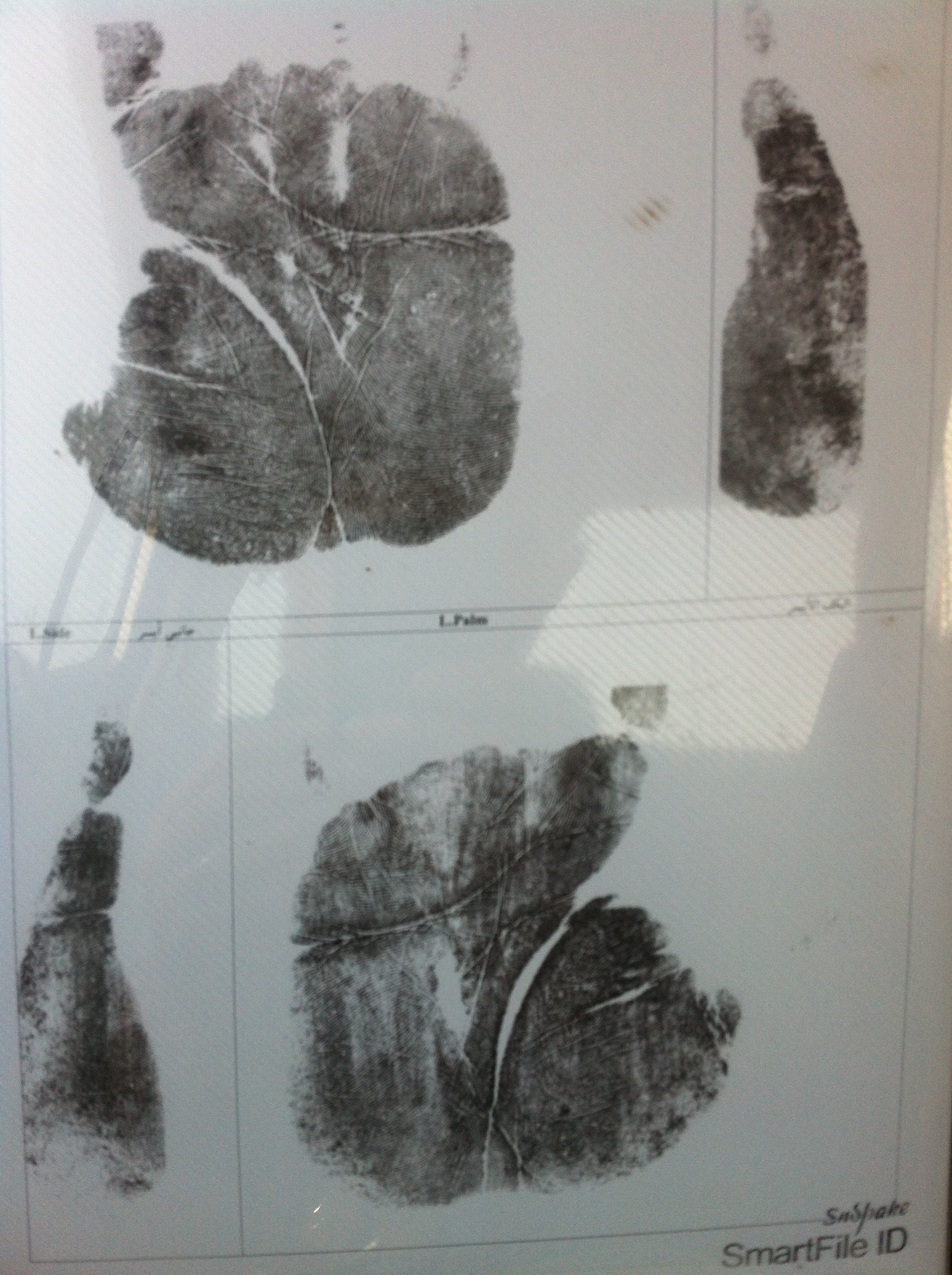
My hand /fingerprint

So at 7.30 am, having arrived barely 5 hours previously, we were collected and taken to Dubai CID for fingerprinting. This is not normal for either of us. It has been necessitated by the US’ imposition of such a policy for inbound Iranian visitors and as often happens in politics provoked a like for like response.  It proves to be a slightly amusing affair despite the officer in charge holding my hand a little too long for my liking while I am shown where to place my palms on the machine that is to record every detail of my hands not just fingerprints.

no insurance, no entry!

And so to the Consulate.  The official rejection is made in a manner that leaves little room for negotiation. And a new twist, we are instructed to get travel insurance.  This is in itself ironic as UK travel insurance is invalid as the UK Foreign Office issues advice warning UK citizens not to travel to Iran. So here we are being told to buy it otherwise we don’t get a visa.  Help is at hand, a colleague of Nazim’s appears from nowhere on a motor bike, collects our documents, including fingerprint records, and speeds off in the blazing sun (its by now 10.30am and 35c).
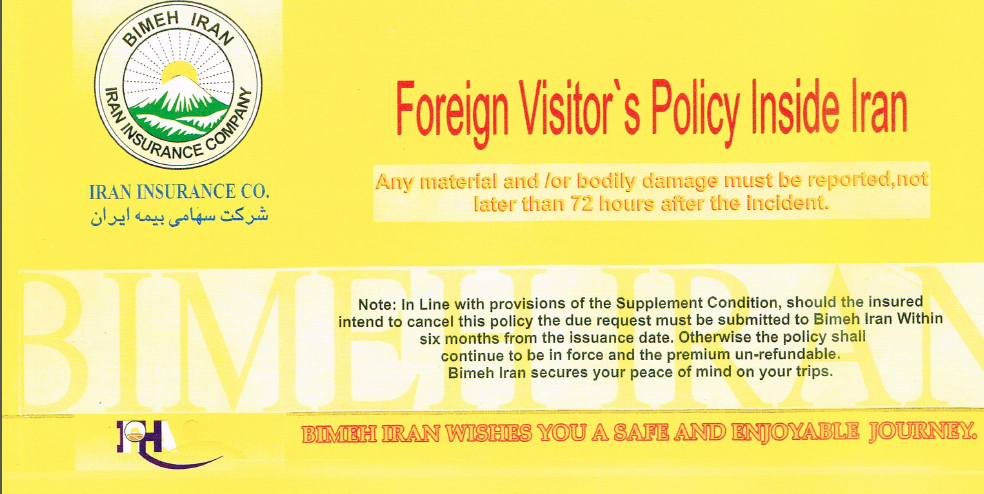
InsuranceHe returns smiling some 35 minutes later clutching a couple of policies issued by the Iran Insurance Company! Amid much backslapping off he goes having handed over our documents.  Nazim whose demeanour has changed from misery to euphoria marches up to the counter with the policy.

Come back tomorrow with the fingerprint records!

There is a problem, not all our documents were handed back. Nazim is now crestfallen. Its 11.15am, the noon deadline for visa issuance is approaching, and our records are zooming around Dubai on a motorbike. The likelihood of us getting to Tehran that evening are diminishing rapidly along with his career prospects. We have a packed four day schedule that kicks off tomorrow morning and involves many senior figures, Nazim is on the hook to deliver us to the departure gate with valid visas!

However once more ‘Insurance Man’ delivers. He is back in 15 minutes with our fingerprint documents and with much fanfare 15 minutes before cut off time all documents are submitted.  A visa is duly issued by a woman official dressed in an abaya and hijab not our first contact who is haranguing everybody attempting to submit a visa application.

Declining the tempting offer of a tour of Dubai (I put a marker down for a visit to the Burj Khalifa to watch the sunrise) we return to our temporary home the Le Meridien Hotel opposite the Dubai Creek Golf Course – its way too hot and humid to play golf – and final preparations for the packed week ahead.

Nazim tells us that they went to the Consulate to check everything the previous week and were assured all our visas were a formality. Within a week the fingerprinting and insurance requirements were added. And the official who gave the initial advice was now on holiday.

first impressions

As we begin our descent the fuselage mounted camera on the Emirates Airlines Airbus A330 shows little of the terrain but does reveal an airport some distance from the centre of Tehran, a city which we are to learn is home to some 14 million people.

Women put on cloaks and headscarfs and from now on physical contact (including the shaking of hands) in public between the opposite sexes is the exception rather than the norm.  We land in the dark at 9.50pm at Imman Khomeini International Airport, Tehran.

The airport is a solid structure; quite Easten Bloc in many respects with substantial columns and signage that pays little attention to aesthetics.The immigration hall has a low ceiling which adds to the sense of foreboding I always feel when entering a new country.

As we line up to put our luggage through a scanning machine I note the lady in front has two suitcases larger than her.  My offer to help is politely declined with a knowing look. My earlier fears prove groundless and we are out 30 minutes from touchdown having been met by a driver who instantly makes us feel welcome greeting us with ‘Asr bekheir’ (good evening).

Samand_LX_31Our’ car the Samand is ubiquitous throughout Iran and in its ‘satellite’ countries. Iran Khodro Company (IKCO) is the largest vehicle manufacturing company, having an average share of 65 percent of domestic vehicle production with annual sales in excess of 700,000 vehicles that includes a number of French names produced under licence.

As we are to discover, sanctions has served to increase the manufacturing base placing much emphasis on the need for innovation and creativity.  I am to discover that as a result the Stage-Gate Process – New Product Development methodology developed by Professor Robert Cooper is very popular (more of that in a future post) and proves an interesting touch point as I worked with them both a decade ago when helping to introduce the process into many clients.

The journey is eventful and takes 45 minutes. Driving styles mix aggression and faith. Right of way is negotiated though traffic signals are observed. The overwhelming impression is of too many vehicles: entry to the centre on certain days is dependent on your number plate.

Pedestrian right of way does not seem to exist and crossing the road is not for the faint hearted. It requires determination, cunning and luck.  Woe betide the pedestrian who deviates or stops mid way as vehicles swerve around you.
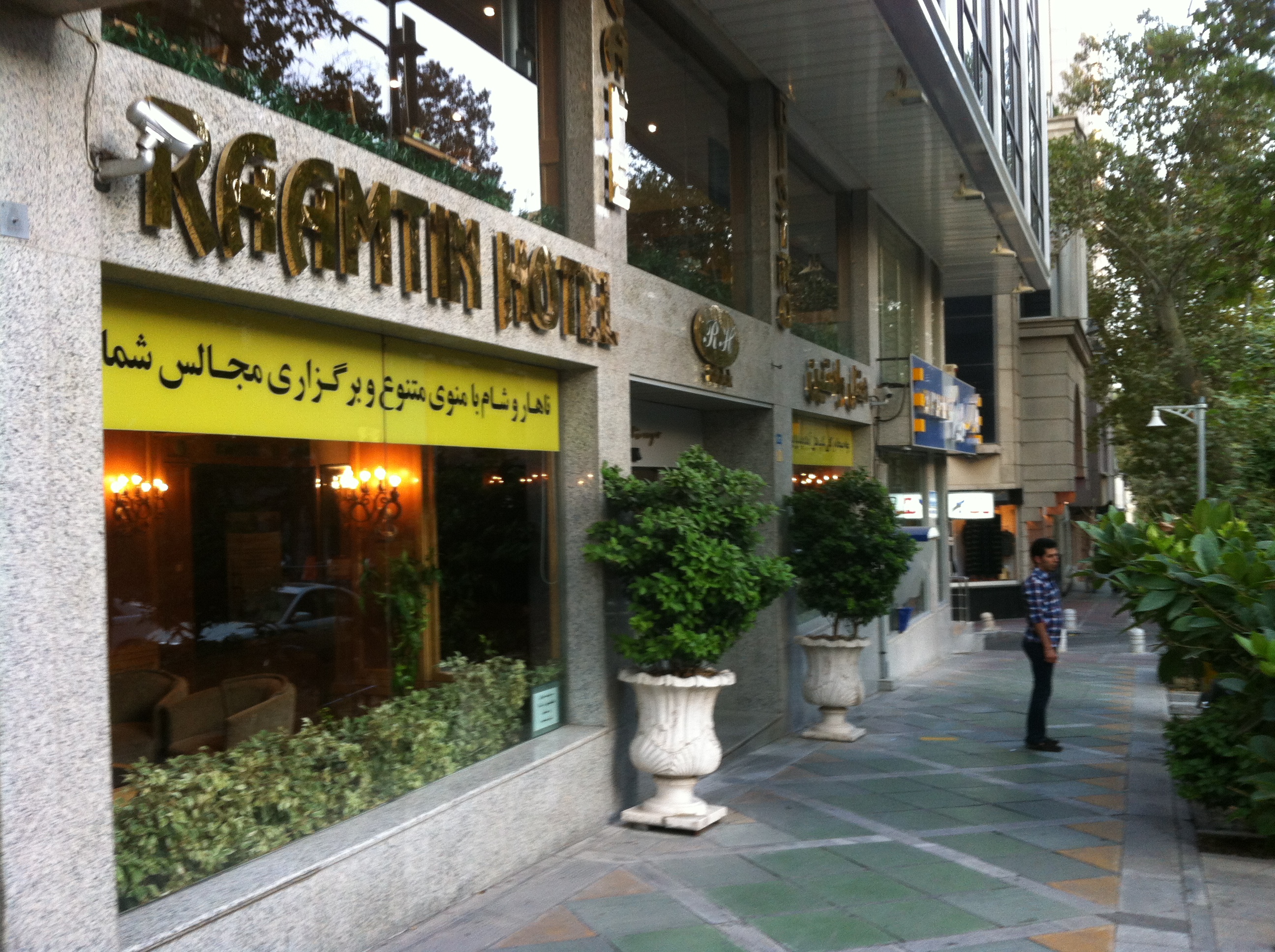
IMG_1206On arrival we receive a warm greeting from the receptionist at the Raamtin Hotel a boutique establishment with 70’s decor. The  hotel is situated on the main North – South route but is surprisingly quiet. Water runs down each side of the street from the nearby mountains that form a backdrop to the metropolis.

River by the road


Room 309 which also has a 70’s feel about it overlooks the tree lined road which has many pedestrians despite its steep incline. It feels European in many ways and first impressions are favourable.

capturing & exploiting corporate knowledge in HMRC: bombs, cakes and critical knowledge

The impending release of the UK Government’s Knowledge & Information Strategy has shone a spotlight on the need for all areas of government to capture, effectively manage and share the knowledge and information they create and receive…if they are to deliver a world class and publically accountable digital public service.

I wonder how many UK taxpayers associate HMRC with being at the leading edge of government practice? Yet a few months back 14 senior business people gathered for the first modules ran by Victoria Ward and I of a Civil Service Learning pilot programme* entitled capturing and exploiting corporate knowledge. 

The venue was Whitehall, London yet the delegates came from around the country and represented a wide variety of disciplines from across HMRC: VAT Directorate; Anti Money Laundering; Large Businesses Service; Corporation Tax, International and Anti-Avoidance (CTIAA); Specialist Investigations; Local Business Comliance: and Excise, Customs, Stamps & Money Services (ECSM).

in advance

We asked the delegates to:

…bring along an object. An image, document or small artifact that illustrates a memorable event with which you were involved during your last couple of years in the business. It might be a decision, a new piece of policy or a transaction.  We are going to ask you to talk about the object and use it during the exercises so please think carefully about what you might choose.

Here’s why: Objects stimulate conversations; people feel comfortable talking about them in environments where otherwise they might not open up. They reveal insights other techniques fail to unearth and so are effective as icebreakers and as triggers for more in-depth discussions on events and projects.

One of the core beliefs I’ve developed working with Sparknow is that, to be effective and valued, knowledge management has to be about helping to improve the decision making capacity of individuals, teams and organisations. Indeed it features in the opening sentence of the World Bank’s definition of KM:

…Knowledge provides insight for decision making…

So, much of early stage investigation into critical knowledge has to be around events and decisions and how knowledge has (or has not) informed them. Objects have proved to be a good way of facilitating those early dialogues and feature prominently in the work we do.

By combining timelines and objects to examine an event or decision in an Anecdote Circle we imagined this would act as a real stimulus in helping to place clarity around the concept of critical knowledge.

module one: Positioning

aims

  • understand the importance of critical knowledge to HMRC

objectives

  • able to identify critical knowledge
  • see how and why others identify and capture critical knowledge

Reassuringly people were prepared and had an object, an image or something in mind (this is often not the case). Here’s an extract from Victoria’s fieldnotes taken during the plenary debrief on the memorable objects session:

My object wasn’t that helpful, it was just a document…But it was a conversation starter, very simple very plain, a trigger… It brought a story to life and helped with focus

The Anecdote Circle helped the delegates identify the event or decision they wished to examine in more detail.

For that we invited them to use a tool, (worksheet) for conducting a more in depth (Deep Dive) type of discussion, Sparknow has christened the Narrative Grid.

Narrative Grid Worksheet

Narrative Grid Worksheet

Comments were broadly favourable and the Narrative Grid was to feature later in the programme by which time they were more attuned to its benefit and skilled in its application.

From looking at critical knowledge from an internal perspective we shifted to the external environment drawing on examples from the nuclear industry, the health industry and the regulatory industry to illustrate how they had set about identifying what critical knowledge was in their business and why they set about capturing it. A common theme running through each example, with which the HMRC delegates were able to empathise, was the need to mitigate risk especially around the departure of staff with considerable expertise and experience.

There was broad agreement that critical knowledge:

‘It’s the knowledge HMRC would struggle without if it lost’

And in working through examples the delegates were able to identify two compelling metaphors: bomb defusing and cake makingcolored_wires_bomb_cutter_3268

  • In defusing bombs the precise critical knowledge is knowing what wire to cut.
  • For recipes, it’s not just the recipe, ingredients, marinading, but how hot is my oven?

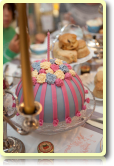
    Flower Bomb Cake by Madeline Ellis

    Flower Bomb Cake by Madeline Ellis


Module One ended with us providing the delegates with a set of references and reading. We also provided a link to an interview I’d conducted with Gordon Vala-Webb a promiment KM’er in Canada who was in charge of a project to capture and retain knowledge for a regulator at a time when many of its most experienced staff were about to retire and would impact them operationally. Gordon gives an eloquent explanation of how a large govenrment organisation tackled this and determined the knowledge they could least afford to lose. Here are a few snippets:

…we took a risk management approach and got each of the branches to fill in a risk assessment form as part of the annual business planning process… a high score would have resulted in the branch developing a risk mitigation plan… we provided guidance on different approaches which included videoing, interviewing, expanding procedure manuals…in some cases they kept the retiring staff on call…

…I believe if we had not had this program people would have been scrambling to keep operating…

More to follow on Modules 2 through 6 over the next few weeks.


*Sparknow and Knowledge et al worked in partnership to deliver this programme.

why the UK Government is seeking to capture and retain critical knowledge

As I write this an updated Government knowledge & information Strategy is being crafted.

Following the recognition of knowledge & information management (KIM) as one of the professions of government and building on Information Matters published in 2008 it represents another important milestone in the journey towards a more flexible workforce able to recognise, capture and retain that knowledge & information critical for its current and future business.

More on that in due course once the Strategy has been released.

turning the km & i vison into reality

Recently HMRC (through Civil Service Learning) commissioned Sparknow and I to run a set of pilot programmes on capturing and exploiting corporate knowledge. HMRC like all areas of governement face the threefold challenge of:

  • equipping new joiners with sufficient knowledge and information that they are able to hit the ground running (while making the most of the knowledge they are bringing to the organisation)
  • ensuring that when staff are reassigned they have sufficient time and access to the knowledge they need to transition into the new role
  • capturing the huge experience and knowledge (often tacit) from staff who are coming up for retirement, whose job may be dissapearing or who are leaving to pursue a career elsewhere.

In welcoming the participants our sponsor said:

This proposed programme…aims to make knowledge retention part of the engrained behavior and the way ‘we’ work. It should be a continuous process fuelled by the belief that everyone has something to contribute and much to learn from sharing knowledge.

Our challenge then: to develop an informative, participative and enjoyable set of interlinked modules that gives exposure to a dozen or so tools and techniques that will help to identify, capture and reuse what are often termed ‘critical knowledge assets. And find a measurement (we used Dr Donald Kirkpatrick’s Learning Evaluation Model) to assess the success of this capacity building initiative.

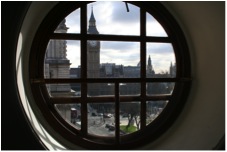
View from first training room

The view from the venue for modules one and two.
Picture by Victoria Ward

Over the next month I am going to be taking a more in depth look at the modules we ran and the areas that stimulated most interest among the dozen or so senior HMRC staff from different areas of the business around the UK.  So as ‘they’ say: ‘watch this space’!

when knowledge & information  flow

As part of the discussions leading up to the programme we developed a vision (a future story) of what an knowledge & information friendly environment might look like:

I’ve just returned from ‘an audience with…’ session with  John who is about to retire. It was different from the usual breakfast briefing – we got to learn about topics and events we’d identified as being of interest. Hearing those described by someone who’d been through it all was really insightful for a relative newcomer.

I relocated this year: thanks to Agnieska who’d built a bridge between my predecessor and me there were few surprises and I still see Jane for a regular catch up. I am much more aware of things that are going on, who I can go to and ask a question. Most importantly I now have a set of useful questions and the confidence to ask them in any situation.

I am keeping my Decision Journal: who’d have thought it but it’s  been immensely valuable as a prompt when having conversations.  And I am now a timeline convert and shocked my Director when I  used postcards on a timeline to share my regular update.

I do feel that should I leave it would be easier to pass on what I’ve learned in a more illuminating way. If only I’d begun it earlier – using objects as prompts has made sharing experiences intuitive.

The business has benefited: an idea brought in by a new staff member resulted in process improvements that improved collection rates; when Roger transferred to East Kilbride the transition time was much shorter as he was able to tap into the networks of his predecessor and the insights that emerged from the sessions with Priyanga prior to her departure helped shape the new set up in Southend. Whereas before we may have lost touch, now she still feels a sense of attachment and was at one of the recent breakfast events that are now open to alumni.


when Moscow and Bangkok meet: conducting a cross border/cultural debrief

A couple of weeks ago I was the fictitious CEO of a global insurance group listening to a presentation by a combined group of Russian and Thai delegates at a training programme. Their task was to convince me that my company should engage them and to do so they had to demonstrate knowledge and understanding of the approach they’d spent the previous 4 days learning about.

They had a few rules to adhere to:

  • The presentation was to last for a maximum of 50 minutes and minimum 25 minutes
  • Each person had to present for at least 5 minutes and no more than 10 minutes

Those familiar with both cultures will know that one is voluble and will openly debate, happy to occupy centre stage; the other more reserved preferring offline conversations with an aversion to open criticism.  After lunch my challenge was to conduct a debrief on this exercise with the group drawn from consulting and energy with a good to acceptable command of English.

I settled on using a timeline as a way of giving both groups a neutral object on which to focus.  I was trying to get them to recognise how differently groups from varied backgrounds and cultures can view the same exercise while concurrently acknowledging their very positive actions as a group. 

using a timeline as a catalyst for coming to an understanding about an event

Here’s the instructions I used:

  1. Please split into two groups Russian Team and Thai Team and take 15 minutes to:
    1. draw a timeline: from handing over to presentation
    2. now trace the steps and the chronology, noting down key moments/decisions as you saw them and who was involved
    3. were there any moments the group got stuck and if so how did you overcome them?
    4. when you’ve completed your sheet put it up on the wall
    5. then inspect the other team’s and note down any obvious differences

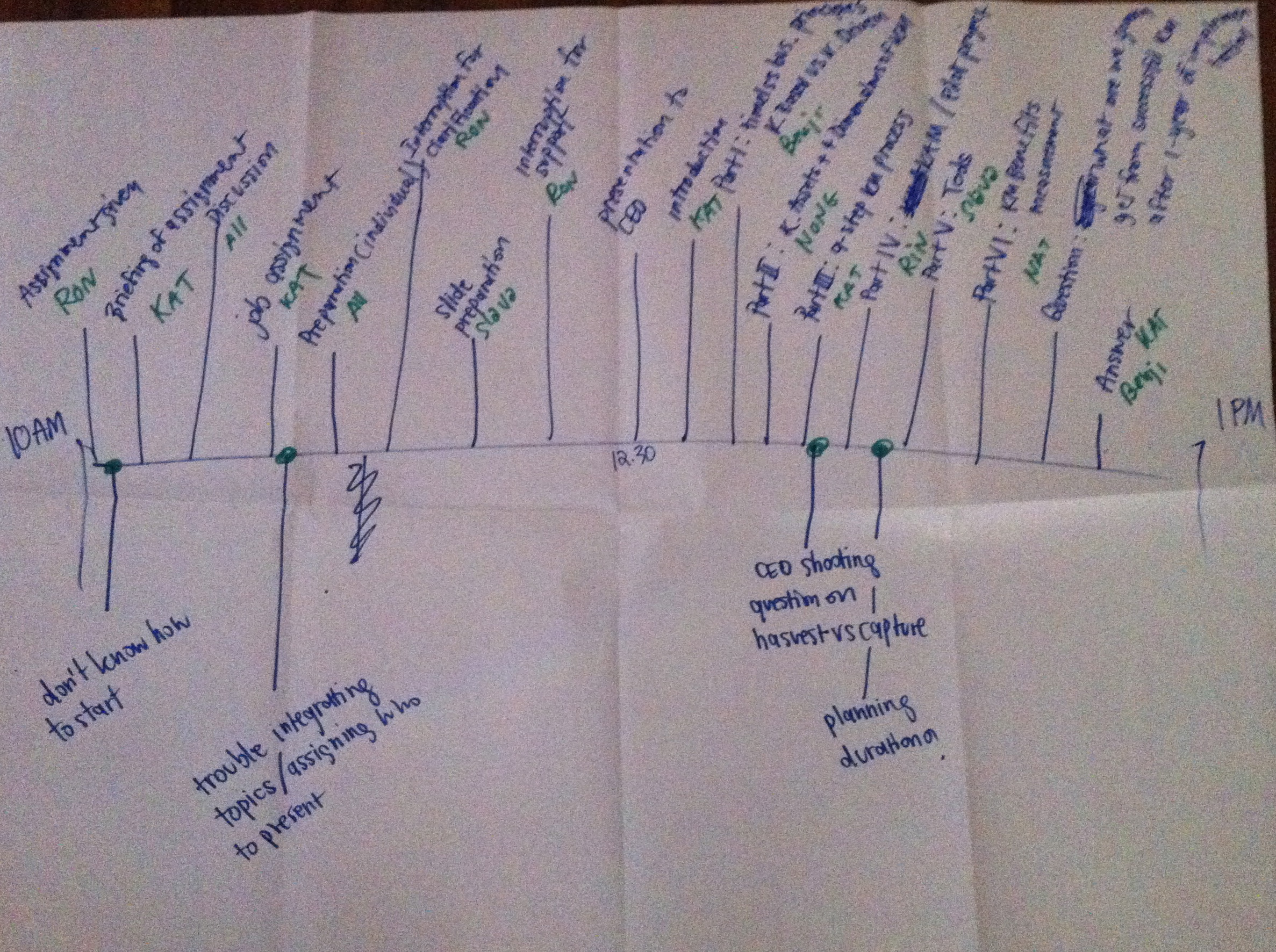
A key request was that ‘above the line’ they should record the key moments and ‘below the line’ the sticky (or difficult) moments. TimelineThe Thai team with their energy (engineering) background created a detailed forensic account whereas the Russian Team provided summaries for each of the headings above. The group found it very useful to discuss the difference in approach and outputs since it has real implications on the way to roll out new initiatives in a global organisation.

There was a lot of laughter (a good sign) when I invited them to split 50/50 Russian/Thai in pairs. I invited them to

  1. Get into pairs and discuss
    1. What is something that worked well in this activity?
    2. What is something that did not work well in this activity?
    3. What is something you would do differently next time?
    4. And finally, what behaviours did you find most helpful as you worked in a team for the first time.
  2. Back into plenary and capture each person’s comments.

Once we’d surfaced positive behaviours it enabled me to split the ‘teams’ and as a mark of progress I asked the listener to repeat back what their partner had said.

my takeaways

The formality of the timeline allowed both cultures to fully participate in their own way and  gave the less voluble Thais a mechanism to voice their feelings which otherwise might have remained hidden.

It re-emphasised the maxim that in a global business tailoring your messages to each audience is critical to get adoption.

And finally it underscored the idea that when undertaking a debrief it is important to always recognise and acknowledge the good behaviors that others adopt.

‘…a complaint is a gift’: engaging with customers & stakeholders

The British are uncomfortable with directness. It’s probably why one of my Saudi friends said he preferred dealing with the Americans and the French because he knew where he stood with them as they said what they meant. We tend to say ‘it was fine’ when asked if we enjoyed an experience or a meal when what we actually mean was ‘I wouldn’t serve it to my cat’. We avoid confrontation, write a bad review on Trip Advisor and congratulate ourselves on doing that and vowing never to return.

It’s also about confidence and I am reminded of the Michael McIntyre skit about the ritual of tasting the wine before accepting it to drink.  Few people have the knowledge or confidence to send it back. Here’s the clip.

Some good friends became so as a result of constructive criticism my wife and I once gave.  We’ve never just said that’s not very good, we’ve always tried to say how we might improve it.  Of course there’s a risk you get thrown out of a place and told you don’t know what you are talking about but by drawing out the positives (an Appreciative Enquiry technique I try to apply when giving feedback) your opinion is usually valued.

And yet if you run a customer focused service business such as a restaurant or hotel you need constructive feedback if you are to improve and Claus Moller got it right when he wrote the excellent book ‘a complaint is a gift’.

trouble in paradise

Having decided on 10 days r & r the last thing on my mind was a bout of constructive criticism.  However the majority of the people we met were so willing and genuine my wife and I felt obligated to spend time with the resort’s management when issues started to arise.

What follows is an edited extract from the letter they asked me for (I’ve removed any reference to names – it would be unfair) after the second meeting we had with the most senior member of the team on duty.

I am as promised documenting the ‘issues’ we’ve had during our stay as a way of hopefully helping you and the rest of your team to build on the solid foundations you have.  So I am going to describe each incident and then give you a few suggestions on behalf of us both as to how we think you might improve:

  • Friday 15th: The morning after check in we changed £300 at the front desk.  We had read on Trip Advisor that guests had been short changed in the past so we adopted a strategy of my wife ordering and me watching.  The amount due was 434 but we were given 430.  And we were asked to sign the receipt BUT were not given a copy until we asked for it.  Needless to say we challenged the person who apologised and gave us the remainder. We brought this issue to the attention of the representative that morning.
  • Sunday 17th: We ate in the upstairs ‘A la carte’ restaurant. We managed to get a booking for 9pm (we were told it was the only slot available). When we arrived it was sparsely populated.  The food was inferior to that served in the buffet and the wine (Spanish house white) was full of sediment.  When I drew it to the attention of the headwaiter his response was a shrug of the shoulders!
  • Tuesday 19th: A few days previous we’d purchased a bottle of Carmenere from the shop nearest to the nightclub. Along with crisps and biscuits it came to 12.50. On Tuesday afternoon I bought another bottle, with crisps, and was charged 13.60.  Again no receipt was offered. We returned to the shop and asked for an explanation: a mistake we were told. We asked to speak to the hotel manager (who was unavailable). Instead we had the pleasure of talking to you and are glad we did.
  • Wednesday 20th: The day of our wedding anniversary was spent in Havana with one of the local taxis. We had a superb day and ate delicious local food with them in the taxi at a spot where the taxi drivers buy food opposite the railway station. We’d booked into the downstairs ‘A la carte’ at 8.30pm and were looking forward to celebrating our anniversary in style. We arrived to find half a dozen guests only and ordered mixed tapas with two lobsters.  The Tapas was tasteless – I tried each and left most of it – and the lobster came coated in cheese accompanied by tinned carrots and peas.  We left without eating more than a mouthful each and went to the main area for dessert hugely disappointed that a special evening had been ruined.
  • Thursday 21st: Since the heavy rain on Tuesday our room had developed a nasty smell in the bathroom. That morning it was worse and we notified reception who promised to send someone down to sort it.  We returned that afternoon at 6pm to find the bath covered in excrement.  To the credit of the duty manager we were immediately relocated though obviously we had to repack and unpack and missed the reception you’d invited us to.

In your defence I should note the following:

The service in the pool bar, the piano bar and the buffet has been good: in the case of Vivian and Adimirys we have nothing but praise for their willingness to go the extra mile to provide exemplary service.

The facilities are good and the rooms perfectly acceptable especially those like 1182, which have been redecorated.

The manner in which you have dealt with our issues has been to your credit.

suggestions for improvement

Ana and I have experience in the hospitality and service industries. We are happy to give you some suggestions in the hope it might help turn what is a good product into a great one:

  1. Make both of the ‘a la carte’ restaurants places people want to go not places you give tickets away for.  How many people actually pay to go again having eaten there once? Stop serving canned vegetables such as carrots and peas and serve fresh food of a standard that is appreciably higher that the buffet.  And please employ staff that are as good if not better than the buffet area.
  2. In the buffet serve good Caribbean food as a permanent option using fresh ingredients: we believe you have a local head chef so serve curried goat and other food from around the region rather than doing themed nights that feature frozen food.  As an example Oriental Night had tasteless Sushi, frozen spring rolls and pasta not noodles.
  3. Staff training:
    1. Yours appears to be a culture where people who are in the front line in the restaurants don’t know how to deal with reasonable comments. For example, early in our stay we watched a Canadian turn up to eat in the same beach ware for breakfast and dinner.  When another guest and his party pointed this out to the duty manager in the buffet he had no idea how to deal with this.  Instead of politely pointing out to the offender that there was a dress code for the restaurant and that perhaps it might be better to sit on the terrace, the comment was ignored and the individual continues to turn up shabbily dressed.  The impact is hugely damaging since the party of 8 whose last night it was left with a very negative impression.
    2. My point: as you have dealt with our issues so should your staff.  Other businesses I have worked with have a weekly meeting where the stories of good and bad experiences are discussed and the favourite story chosen as an indicator of practices to be applauded/improved.  If you want more on this see the way Ritz Carlton uses stories to improve performance or go to www.sparknow.net (the business I used to run) to see how big corporations are changing behaviours and culture using the power of stories.

so what happened as a result?

The management circulated our letter to all heads of department and called a management meeting for the following day to discuss the ideas and suggestions.  Subsequently we received a thank you and the offer of a complimentary stay should we choose to return which one day I am sure we will.

The business takes reviews people write very seriously and to its credit uses them as a discussion topic in management meetings.  I know of other restaurateurs who shake when their smart phone alerts them to a new review as they’ve borne the brunt of unfair criticism in the past.

In today’s world service businesses cannot ignore criticism especially with social media tools available to the dissatisfied customer. They have to be willing to embrace it, be upfront and turn criticism into compliments and turn customers into brand advocates willing to give a more positive slant.

In our case I wouldn’t hesitate to recommend the venue or the way they dealt with our issues (and in fact have in my own Trip Advisor review).

IMG_0904