knowledge management I an old wine in a new bottle?

I was back in Khartoum for a couple of days at the end of March at the invitation of the Sudan Engineering Society and University of Khartoum.  They’d asked me to talk about knowledge management, research into the evolving role of the ‘knowledge manager’ and the implications for Sudan.

Apart from the honour of addressing 150 or so engineers, acadamics and ministers on Wednesday at the National Telecomunications Center, my presentation at the Faculty of Mathematical Science on Thursday was made at the end of the working day (so at the start of the Sudanese weekend) to a crowd of nearly 200 including families.  It brought home to me how keen the Sudanese people are to learn and exchange ideas especially since the Campus had only just reopened after a period of unrest.

Knowledge management as a formal discipline is in its infancy in Sudan. There are pockets of good practice albeit under different labels and many companies are following the well trodden path of focusing on technology such as an intranet as a way of storing ‘stuff’.  It’s not easy though operating in an environment which restricts access to software updates as an example. That said there is a groundswell of interest led by Dr Gada Kadoda who is mobilising a group calling itself the Sudanese Knowledge Society who are about to meet formally for the first time.
image

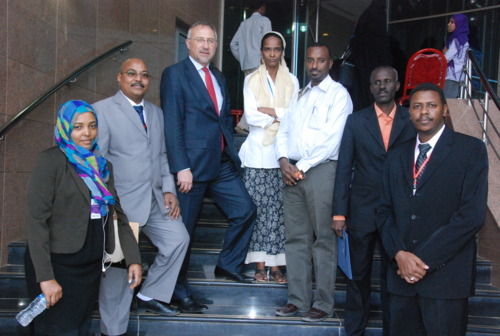
Photo Taken outside the National Telecommunications Center Khartoum with some of the founding members of the Sudan Knowledge Society

The Khartoum presentations prompted an interesting exchange with one of the participants who attended both. Here with his permission is an extract.

Hi Paul

Thank you. I have attended both sessions. All day on Wednesday and the Thursday evening session… Few years ago while I was working in the UAE, I came across The European Business Excellence Model and the work of Peter Senge at MIT ( The Learning Organization ). Is this KM a new Fad, old wine in new bottles or is it a real contribution to your management thinking? It seems to me I am getting mixed signals…. To this day I still remember Business Processes Reengineering, as advocated by Prof Michael Hammer at MIT
Best regards

Mustafa

The Rio Tinto video (about a Community of Practice) in my humble opinion is a Quality Circle drill, which was helped by the advance in ICT…

And my reply:

Dear Mustafa thank you for your kind words and the background.

You raise a number of interesting points, let me answer them in sequence:

  • Old wine in a new bottle: to continue the analogy, if it is then it is ageing quite well as some 10 years ago Professor T D Wilson at Sheffield University in a paper entitled ‘The nonsense of knowledge management’ wrote the following:

The inescapable conclusion of this analysis of the ‘knowledge management’ idea is that it is, in large part, a management fad, promulgated mainly by certain consultancy companies, and the probability is that it will fade away like previous fads. It rests on two foundations: the management of information where a large part of the fad exists (and where the ‘search and replace marketing’ phenomenon is found), and the effective management of work practices. However, these latter practices are predicated upon a Utopian idea of organizational culture in which the benefits of information exchange are shared by all, where individuals are given autonomy in the development of their expertise, and where ‘communities’ within the organization can determine how that expertise will be used. 

  • Yet today as our research has indicated people and organisations are organising themselves to make better use of what they know and if knowledge management is a convenient label to achieve that then who are we to complain.
  • Quality Circle vs Community of Practice: Yes and no would be my response.  However for me the concept of a quality circle is much more around a particular incident (yes that was highlighted in the clip) but the idea of a Community of Practice is that it represents an ongoing and dynamic resource. The bigger point here I think is that the engineers were able to post something onto the platform used to run the CoP and locate people who’d had the same experience.
  • As to BPR and the other management ‘fads’ I would say there is a difference.  I see km as a horizontal thread running across the organisation; its a way of doing if you like a common sense approach to improving the sharing of what people and organisations know.  BPR et al gave no consideration to the transfer of know how from experts about to depart or how to bring people who’ve just arrived in the business up to speed as quickly as possible. Where km falls down is that it is often put into a corporate siding – the place where communications, marketing and HR don’t want to tread and as a result does not have the institutional clout that more established disciplines have.

km has been written off many times and yet as research into the evolving role of the ‘knowledge manager’ has uncovered there are still a large number of people engaged in km type activity. Even with km in their job title (and many still don’t) they are having significant impact and reach across their organizations.

Yesterday for example I received a copy of the excellent Asian Development Bank Intersections digital newsletter and was drawn to an article entitled Ahead of the curve: the long reach of short tales by the Knowledge Management Center headed by Olivier Serrat which said

In 2010, ADB embarked on its most ambitious story-driven exercise yet. It launched the ADB Sustainable Development Timeline multimedia project, which currently hosts over 11 hours of sympathetic reminiscences and expertise rendered in video from 72 ADB staff. The material is broken down into 1–5 minute snippets covering a veritable plethora of topics, e.g., communities of practice, corporate governance, gender equity, forest conservation, knowledge management, renewable energy, sustainable infrastructure, etc. But, beyond these, the interactive platform also contains short documentaries of projects shot on location, sounds, B-roll footage, animations, graphics, voice-overs, videos, statistics, photo essays, etc. The product has been warmly received, both in and outside ADB, and augurs well for ready use in staff recruitment and induction, learning and development, conferences and other events, education, and external relations.

I am looking forward to continuing this discussion when I am at the 5th International Knowledge Management and Organizational Learning Summit in Bogota in May. More on that in a later posting.
a knowledge retention technique: importance of business trips and missions

By a stroke of serendipity (a meeting with one of the speakers while he was in London) I went to Khartoum early in the New Year to participate in an event run by University of Khartoum styled “Knowledge Management Capacity in Africa”.

It promised to be an interesting event since unlike a previous mission to Khartoum, Nyala and El Fashar I was to be based in one centre for the week. Also the list of practitioners and speakers is very heavily weighted in favour of the African continent and I was the sole European representative. An honour indeed!

I was asked to focus on a couple of topics: Missions and Creative Commons. More on the latter in a subsequent posting. Here’s a taster from the abstract I wrote with Victoria Ward for the event:

Missions are one of the key ways any development bank or agency can collect, disseminate and synthesize knowledge but the opportunities to do so are often overlooked or wasted.

Most of the processes are focused on producing a report (back to the office report- BTOR), managing risks and making decisions yet every component can be adjusted and fine-tuned or used in more than one way.

This presentation, based in part on a mission to Sudan conducted in 2010 by Sparknow working alongside the World Health Organisation (WHO), will examine a variety of mission collection methods and discuss how the ‘fire of the field’ can be brought back into an organization.

Imagine you are a bank looking to set up a new Islamic finance operation targeted at the private sector in West Africa. There are few peer groups you can look to for advice; it’s by and large unchartered territory. What are your options?

·       talk to the founding fathers of other Islamic institutions

·       undertake a scoping mission to the country

·       identify others in your own institution that have core skills you might draw on.

You actually do all the above but in addition you put in place a programme to ensure that you capture all the learning’s from this new venture; the nuances around operating ‘offshore’ from HQ; the peculiarities of the culture and the way things are done and; you create a missions guide and a mechanism for feeding back what you learn into your organisation. This charts Sparknow’s mission journey illustrated by some of the techniques we’ve found to be of value.

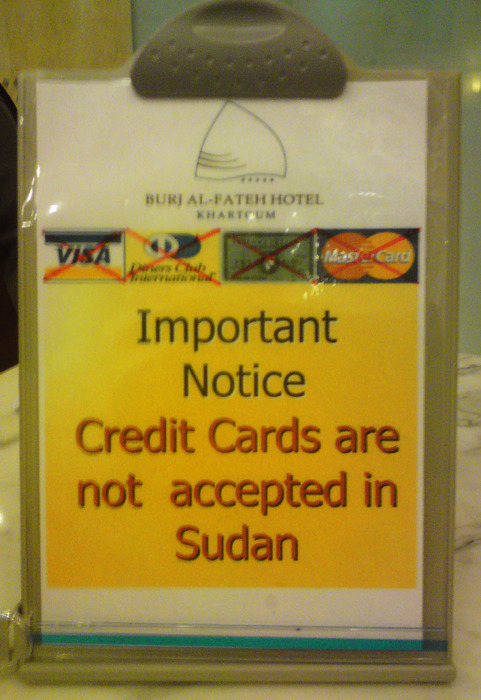
Oh and this time I am going to remember to take nice new shiny dollar bills and not my credit card.

image

using postcards for post event evaluation

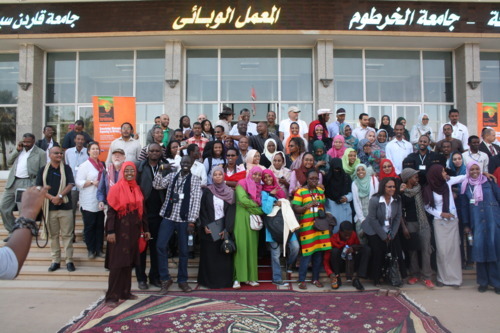
In January as avid readers of the Sparknow blog might recall, Sparknow attended the inaugural knowledge management capacity development in Africa event in Khartoum.  As part of the follow up to that event the conference chair and organiser Dr Gada Kadoda decided to use a postcard as a way of capturing some of the delegates perceptions. It showed a picture of some of the delegates on the steps of Freedom Hall Khartoum and an invitation on the reverse to submit comments and reflections.

image

What follows is her candid account of how the exercise went and the postcards used as prompts throughout the evaluation session which was held in Khartoum on February 25th.

In due course I will publish something on how Sparknow used postcards at last week’s Henley KM Forum and invite Victoria Ward who pioneered the use of this technique in Sparknow to post her reflections.

Evaluation of KMCA2012 Using Post Cards

By Dr Gada Kadoda

For conferences and workshops, a survey is traditionally used to measure satisfaction rates of delegates with the programme content, event organisation, etc. against set criteria and predefined scales, as well as allow for narrative comments for respondents to elaborate or make a suggestion. The results of these surveys are usually published as numeric percentages reflecting satisfaction levels along the various parameters considered in the survey. In as much as many of us are more comfortable with scales and their apparent clarity, one could argue that they avert expressiveness rendering them inaccurate to map a memory or a feeling of the past.

The speed by which we fill these surveys can bear witness to how much we engage our memory while filling the evaluation form for an eager organiser. However, a creative or participatory evaluation method like using post cards can not only measure the same parameters, but it will also empower participants by involving them into defining their own parameters and bring out their vivid memories, good or bad, of the event.

We recently used this method to collect memories about the Workshop on Knowledge Management Capacity in Africa that was held from 4 to 7 January, 2012 in Khartoum, Sudan. We distributed a send-a-postcard-to-KMCA call to our mailing list to write back to the organisers and as with post cards, senders are free to choose what they write. There was a low response rate (5%) which is in part due to delay from our side in sending out the call, a month after the end of the workshop!

Notwithstanding this unimpressive rate, in this article I will explore the parameters that came out from our use of post cards that correspond to some of those commonly used in after-event-evaluation questionnaires. Ratings can only be felt as you read through the selection of post cards quotes.

General event assessment (e.g. relevance of content, personal benefits or difficulties):

Thanks for the great job you did and KMCA2012 was very successful …” Walaa Mahdi (Graduate)

Thanks t all those behind that great event and I hope to continue and organise more helpful and full of knowledge events.” Abdelrahman Idris (Participant)

Good things about the workshop were the exchange of international students and the collaboration between professor, students and even business people, trust and joy moments between people, we open our minds to philosophy, anthropology and indigenous knowledge systems…” Tybian Zaroug (Undergraduate Student)

Now after attending this conference, I can talk about knowledge management to my friends and colleagues. In fact I realised that KM is very important to any scientist…” Samah Makawi (Undergraduate Student)

Actually I learnt a lot of things from this workshop in leadership and research and I am ready now to take bigger responsibilities, and as Mr. Paul said why not Sudan lead the world in KM, I totally support this and in our group on facebook KM friendship, we asked for ideas to be active and to establish a team work to achieve something in this country.” Iram Oshari (Paper Presenter)

The only problem that faced me all the time, it was a lot of interesting paper and presentations and we couldn’t reach them all.” Islam Elhadi (Graduate)

Programme rating (e.g. quality of content and activities, schedule and time keeping):

Thank you! It was a pleasure of mind to participate… I remember almost all the new ideas, the multidisciplinary yet united tribe of knowledge guards. What was most fascinating for me was the ideas on indigenous knowledge. What was striking, well, an anthropologist, a chemist, a philosopher and a political scientist … all using the same language … KM.” Omayma Gutbi (Participant)

I remember since we moved from Kassala and we entered the hall of friendship, the movement of the people inside the hall from session to session and the ongoing debate about the topics presented in the various sessions … I hope these efforts translate to reality to develop health, education, environment, government and business in Sudan and Africa.” Alzubair Hassan (Postgraduate Student)

Event organisation (e.g. information to delegates, quality of facilities):

Thanks for the great leadership and all your hard work, being at the airport for everyone, taking care of visas and all the other little things that made this such a success.” John Trimble (Keynote speaker)

I would like to thank you all for the well organised workshop. All activities were impressive.” Awadia Awad (Participant)

I found strange being asked to opine on subjects at a moment notice and without any briefing and the sanguine acceptance of Africa time.” Paul Corney (Invited Speaker)

 “Please make sure to document every single second during the workshop on video. As time goes, few things could be remembered, so documentation is a very crucial part for the future.” Anwar Dafalla (Invited Speaker)

Notable quotes from frequent conference goers …

A true international Conference …

My time Sudan was one of the most enriching experiences that i have had the pleasure and honor to partake of. Despite some late starts(!), the little hiccups and the waits, there was tremendous energy in the air and the people, all, including and especially the students, the faculty and the practitioners, many who were all three! The diversity of participants and thematic areas addressed in the “workshop” transformed and elevated this workshop into a true International Conference on Knowledge Transfer and Management. I learnt a lot, met many engaged and enthusiastic individuals, and was privy to participating in much intense and engaged discourse on empowering people and building Africa’s capacity.” John Tharakan (International Participant)

Exhilarating and free …

In so many ways, it was one of the most exhilarating workshops I have attended.  This was for many reasons:  the range and diversity of topics contained within a KM framework; the diversity of the participants—in age, nationality, gender, institutional affiliation and field, etc.; and the free nature of the environment.  This is in addition to some very stimulating papers.  As a Sudan Studies scholar of many years, I found I still had a lot to learn and was able to find myself in an area of study outside my field.  I was especially impressed with the presence of so many students and with their presentations the first day of the conference.  Including art and crafts was a tour de force and tied in very well with the goal of the organizer of considering all forms of knowledge and knowledge production.” Sondra Hale (International Participant)

There was even some post card poetry:

You set stone in stagnant water

You lead us in calm weather

You carried the truck and set road map for our thinking

Km is set as part our future mission and state vision” Elfatih Wadidi (Paper presenter)

Lastly …

What was “exhilarating” about using post cards is the freedom of expression it brings to the evaluation. These were personal benefit, good or bad things with event organisation, hopes for the future, etc. The post card writings space compel respondents to focus upon and articulate their main points which results in a meaningful rating. For example, a rating of high to a survey question on how well the event offered opportunities to meet people and exchange information, would miss opening minds to new interesting topics and perspectives, or a rating of low to programme scheduling would miss the “late starts, the little hiccups and the waits”.

In my view, post cards complement and do not replace the survey method and performance evaluations especially for regular events.  On the other hand, post cards are insightful and delightful. Remembering the workshop trip on the last day with as “I marvelled at crossing the desert without breaking an axle, the fun bus and singing Bob Marley” or “I will never forget Albajarawia sand under the moonlight”, bring vivid memories in all of us who were on that trip.

Thanks to Paul Corney for introducing us to this fun-to-use tool and many thanks to our delegates who sent us a post card. Thanks for your fine personal memories and articulate descriptions that we can tag to our evaluation report and own memories, it was better late than never!

Best wishes to all.

Gada Kadoda

using knowledge for competitive advantage: a graphic illustration from history

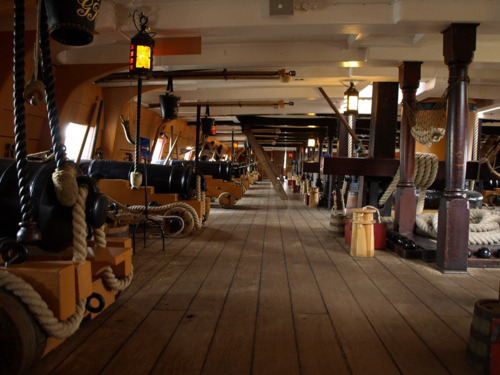
It being a lovely afternoon and with a guest over from Washington DC my wife and I decided to pay a visit to the Naval Dockyard at Portsmouth where some of Britain’s most famous warships have been restored and are on display.

I didn’t expect to find such a vivid example of how the application of what you know allied to an entrepreneurial spirit can make such a difference.

Here’s the background: By the time of the Battle of Trafalgar in 1805 the rate of fire from a cannon on the British Fleet was every 90 secs whereas for that of the enemy it was 5 minutes; a major factor in the competitive advantage of the British Fleet and the ensuing victory.

Here’s why:

Captain Charles Douglas, commander of the 90 gun ship Duke in 1778, had such great confidence in the efficiency of the flintlock for firing guns that he equipped his ship with them out of his own purse. When Douglas became captain of Lord Rodney’s flagship Formidable (90 guns) in April 1782, he demonstrated his superior rate of fire and hitting power in the victory over the French at the Battle of the Saints in the West Indies. Douglas’s son, Major General Sir Howard Douglas, improved the gun lock system by introducing a double headed hammer to house the flint. This made it unnecessary to change flints frequently during action as this new form of hammer could be turned through 180 degrees to engage the second flint.

What that quote omitted was that the French forces were the inventors of the original flintlock and indeed had trialled (without much success) its introduction to the fleet.

On the British side this became a grass roots incremental change programme spread by word of mouth that ultimately became ‘corporate’ policy. Individual Captains’ who were often quite wealthy paid for the enhancements to the guns on their vessels and were able to see significant improvements in productivity. By the time of the great sea battles of the late 18th and early 19th century most British ‘ships of the line’ were fitted with these devices with devastating impact.

It struck me as I walked around HMS Victory that today many organisations aren’t aware  of what others in different areas of their business do and are often not involved in the redesign of process. Indeed two of the recurring comments we hear are “I didn’t know they did that” or “yet another top down HO initiative we pay lip service to”.

This example spoke to me of the value of knowledge sharing and the need to engage rather than impose change.  I hope you agree?

image

flickr.com/4142/4737534619_aa7c70470e_b.jpg

‘…they must put something in the coffee…’ from KM Mid East

A quote in conversation with one of my fellow speakers at KM Mid East Abu Dhabi 2011.  We were talking about why people like working in her organisation; she herself has been there many years and now has a Knowledge Management (KM) brief.

That sense of pride was evident among many of the delegates I spoke to. It was borne out in the results of the Knowledge Survey conducted by Sparknow in advance of the event wherein the majority of people said they’d contribute for a sense of wider acheivement suggesting that monetary rewards are not motivators for knowledge sharing.

If I’m honest I was surprised by the number of people in the audience who put their hands up when I asked at the start of my address ‘how many of you are in a KM role?’ Over half of an audience of 120 plus drawn from across the region said they were.

image

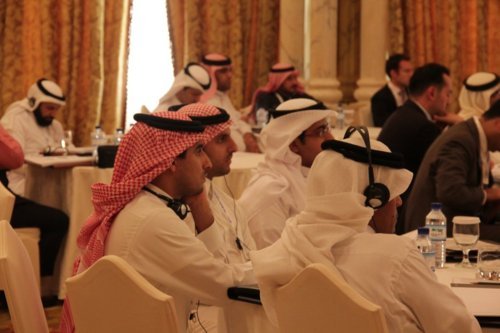
The event was a delightful mixture of formal and informal in a way the the Arab world excels at. Held in the splendour of the Intercontinental Hotel Abu Dhabi it brought together a mix of KM practitioners and wannabees.  The organisors will be posting speeches, videos and photos here; these are my observations on the people and customs and what might or might not work in KM.

There is great respect for the views and opinions of others and people are listened to attentively; delegates were happy to contribute personal experiences for this is very much an oral culture.  And we were reminded by one of the presenters that

the Koran pushes us for more knowledge

which would suggest KM is pushing against a door that is at least adjar.

The event was a reminder to me of how there is no one size fits all for a KM initative (KM ‘Project’ was fiercely debated and dismissed by the delegates). It was vividly illustrated a day later in a conversation I had in the offices of a government agency when it emerged that it is not uncommon for an employee to be called half a dozen times a day by his or her boss.  Contrast that to Western cultures where interactions usually take place via email or instant messaging. And the option of spending a day working at home to focus uninterrupted on a challenging issue is not one that seems to have permeated practices in the Gulf.

These were my takeaways for those running KM initiatives in the region:

  • An organisation’s culture is the sum of the culture of its individuals
  • Introducing financial incentives for sharing is counterproductive
  • The process of transferring knowledge between expatriate workers who still make up a large part of the workforce and nationall staff works best when additional time is built in at the end of a contract for that process to occur
  • More information does not make for better decisions; a case of paralysis by analysis?
  • Pictures stimulate conversation and brevity in written communication is preferred
  • Formal peer to peer dialogue usually requires approval of superiors which means informal ‘water cooler’ coversations often yield most benefit
  • Stories amplify KM and are readily understood as a way of exchanging lessons.

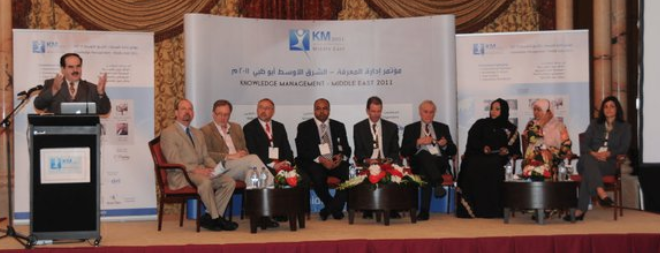
Here are some of the distinquished speakers (John Girard, David Gurteen, Dr Allam Ahmed, Luke Naismith, Zabeda Abdul Hamid plus yours truly)