Importance of KM in Health: the story of Doctor Anwar and making use of what he and others know in Sudan

Meet Anwar, a Sudanese doctor. Just one of 5 fictional characters created by delegates at the Knowledge Management for Health in Sudan event I spoke at, helped plan and run.
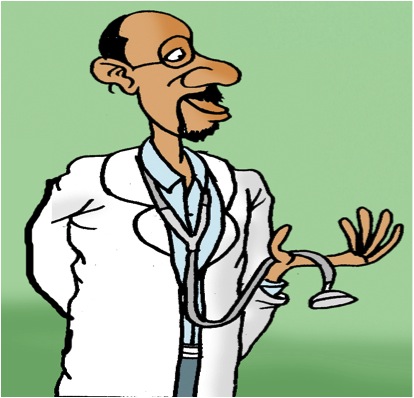
Sudanese Doctor

Anwar

This exercise, Scenarios for the future, was set in 2020 and invited the 80 or so delegates drawn from across the whole of the health industry in Sudan to consider what a day in the life of each character might look like.  This was a new and warmly embraced concept in an environment where my information is my soul and much of the debate about the future takes place against a backdrop of uncertainty and increasing austerity where:

  • 2/3rds of all drugs are purchased ‘out of pocket’ not from health system
  • drugs are proportionately more expensive than in other domains
  • funds from external sources are available to assist with health informatics.

Having settled on a description of each character the delegates who were by this time in groups of 8-10 then set about imagining what their day might look like on January 1st 2020. A vivid imagination is required and was evident in the quality of the stories that were told by each group’s nominated storyteller.
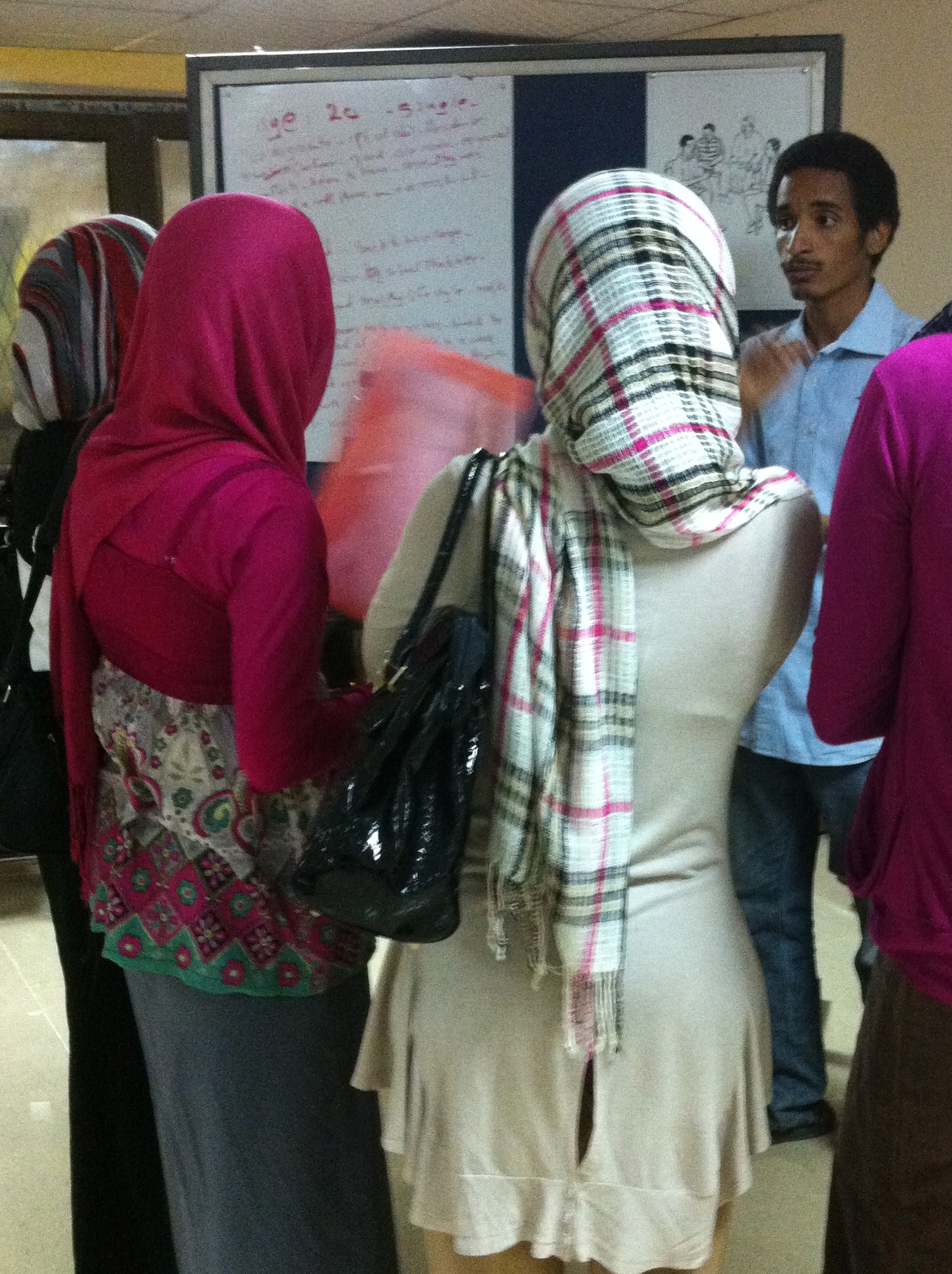
The story of the Health Worker

Ismail’s story – Health Worker

I will in due course and with the organising committee’s permission publish the two ‘winning’ stories; yes we did do voting while the storytellers left the room.

One of Sudan’s leading pharmacists noted in a one:one conversation how important listening was and how difficult a technique this is for many to use when prescribing drugs.

By inviting each of the storytellers to play back the story to each of the other groups it was good to hear them say in the summing up that by the end they really felt they were the character.


The previous day I’d invited the delegates to change the way they looked and think about issues and barriers.  Using when you change the way you look at things, the things you look at change exercise conducted in the best breakout rooms I’ve ever worked with, the delegates who are naturally loquacious soon grasped the concept of seeing the room through the lens of different professions.
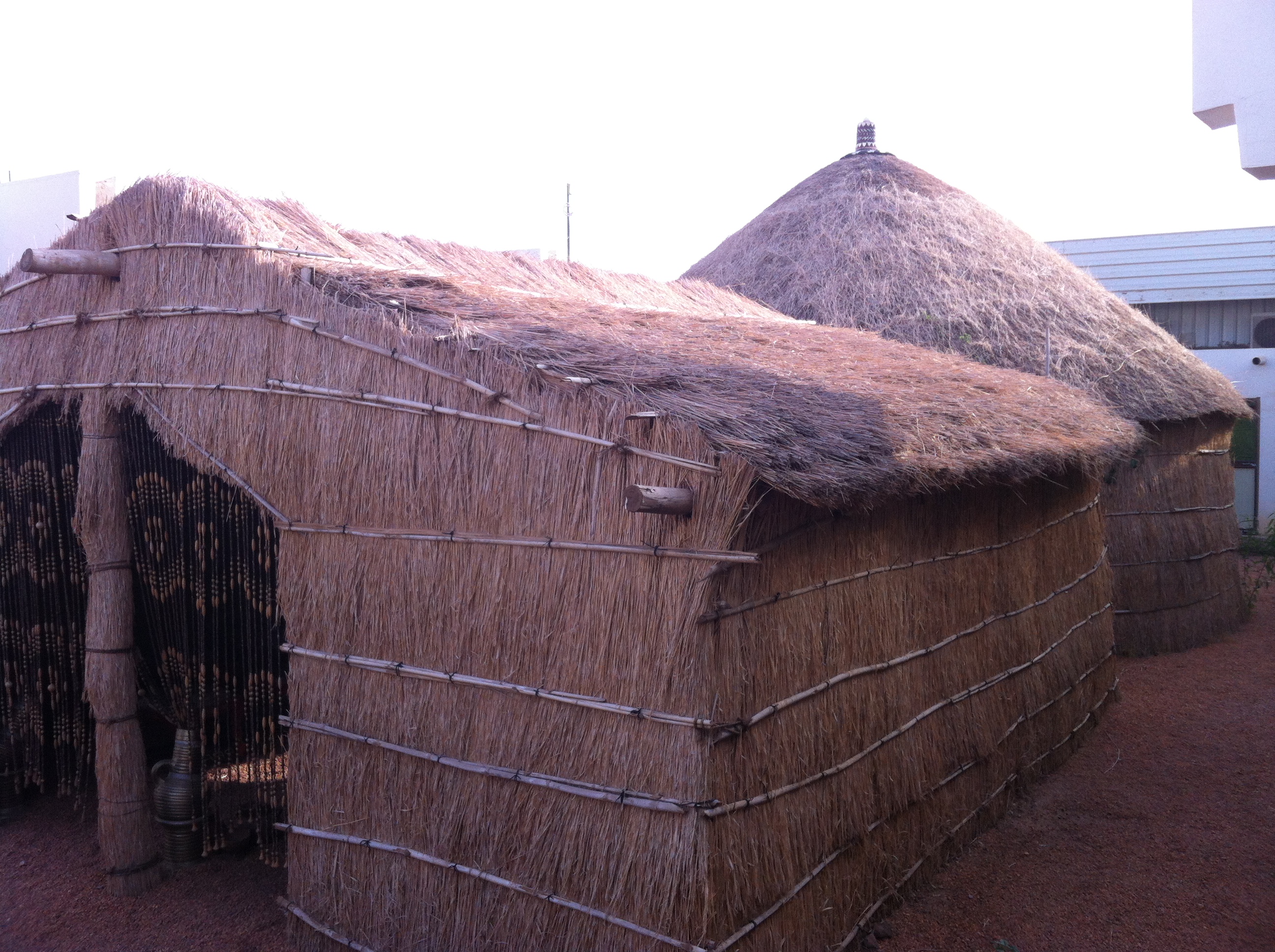
Breakout room

Breakout room

This change of mindset was important: it allowed the subsequent round table (well round conference room) session that discussed:

‘What are the biggest issues we face in sharing knowledge and information about the health of our nation and how can we overcome them’

I’d invited each delegate to introduce themselves to three people they didn’t know. This worked well and encouraged a very frank discussion. The main issues highlighted were:

  • no systematic collection of information and limited understanding of its value
  • transparency of process (where do the figures go) and credibility of the data
  • lack of human resources to do the collection
  • limited statistical information to undertake scientific research on
  • ownership of data and the whole process – fragmentation
  • accountability to deliver
  • communication/awareness of what each organisation is doing – lots of ‘stuff’ is happening but there is a real risk of duplication of effort e.g. many of the disease control programmes are creating their own informatized information systems

Delegates recognised the tremendous strides being made by the Public Health Institute (one of the event’s sponsors and host of the official dinner) in developing professional public health administration programmes, the creation of a Data Dictionary and the publication of the first Annual Health Performance Review though many bemoaned the lack of official  support for research projects where Sudan has a prominent global position, Mycetoma Research Centre an example.

I came away from reflecting on a discussion I had around the event:

Its all about ‘informization’ – the ability to report from a health centre level with ‘point of sale’ data collected via PDA’s / mobiles as well as computers; about logistics management as a result to ensure supplies get to where they can do the most use.

This can be monitored by the minister, routine reports can be prepared showing which centre reported, which district has complete reporting, which state has complete and timely reporting and % of stock outs of basic drugs or vaccines etc.

And inspired by many of the presentations I’d seen on the morning of the second day from University of Khartoum’s research centre and of course the Public Health Institute who are reaching out to try and create greater awareness through public forum, newsletter and other events.

Perhaps the presentation that struck the biggest chord was from EpiLab
who have achieved impressive results in helping to reduce the incidence of TB and Asthma and whose research and community communication techniques are highly innovative. I loved the cartoons they developed on how to self treat and prevent the incidence of illnesses which were drawn up BY the local communities.  Their pictures and their words are published as guides for the nation and I know they will make them available so I can share them in future blogs.

It was an honour, a challenge but nevertheless great fun enhanced by the warmth of the welcome and a genuine sense of appreciation. Sudan’s people are among the most engaging and intelligent I’ve met. One anecdote from a conversation with a young professional in the communications business illustrates their dilemma:

‘…of the 95 people who graduated in my year a few years back 90 are now working overseas, the majority in highly paid good positions…’

In my address I acknowledged the support I’d had from many people in preparing for the event. They were: Ahmed Mohammed, Dr Alim Khan, Dr Anshu Banerjee, Ana Neves, Andrew Curry, Archana Shah, Chris Collison, David Gurteen, Dr Gada Kadoda, Dr Ehsanullah Tarin, Dr Madelyn Blair, Sofia Layton, Steven Uggowitzer, Victoria Ward


Knowledge Cafe Tips: printers, posters and event management

I’ve been printer challenged: what seemed like a good idea a few years back to buy an all in one inkjet has turned into a logisitical nightmare as printer cartridge costs (at least Epson) have rocketed while I try to become greener, use recyled paper and print less. While social media and emails have an increasing role in raising awareness snail mail and hand delivered notices are still very important especially at this time with the avalanche of material that will greet returning vacationers. If not then why do so many corporates engage in poster campaigns in their offices to augment their online activities?

So having secured a date, venue, speaker and got an endorsement from David Gurteen I am going to run the inaugural knowledge cafe in Lewes to discuss a topic that’s been on my agenda for some time – helping to make use of surplus food – the Plan Zheroes initiative. And I’ve been trying out Eventbrite as the management tool for the registration.

For those who are new to Eventbrite it is a very simple free to use and effective tool that handles all the online administration of an event.  It took me less than a couple of hours from zero knowledge to setting up this event online and registering half a dozen people. See what you think? Knowledge Cafe:making use of surplus food

In case you are interested I’ve ended up buying a Brother Wireless All in One (though the reviews say it looks like a tank) that prints A3 as well as A4, essential to produce the worksheets that can often transform a working session.  Here’s one example from the work of my colleagues at Sparknow who excel at this kind of creativity in workshop design.


Picture taken by Julie Reynolds at a workshop run by Victoria Ward at The Whitechapel Gallery.


one of the truly great presentations: implication for knowledge workers

I was in Turkey on July 6th 2005 when Sebastian (now Lord) Coe stood up to address the International Olympic Committee (IOC) in Singapore at the start of what was to culminate in the games of the 30th Olympiad just ended in London. His speech was never shown on Turkish TV and as the ghastly events of July 7th were about to unfold in London, and I was dodging a bomb in Kusadasi at the same time, I missed it.

Seb Coe’s story, described by many as one of the truly great presentations given to the IOC is worth revisting now that London 2012 is a very vivid, fresh and warm memory.

I am indebted to Nick Davies who reminded me (and the audience at KMUK 12 back in June) of Seb’s words. Here’s an extract to give you a flavour:

When I was 12 ..I was marched into a large school hall with my classmates.
We sat in front of an ancient, black and white TV and watched grainy pictures from the Mexico Olympic Games.
Two athletes from our home town were competing. John Sherwood won a bronze medal in the 400m hurdles. His wife Sheila just narrowly missed gold in the long jump.
That day a window to a new world opened for me.
By the time I was back in my classroom, I knew what I wanted to do and what I wanted to be.
The following week I stood in line for hours at my local track just to catch a glimpse of the medals the Sherwoods had brought home.
It didn’t stop there. Two days later I joined their club.
Two years later Sheila gave me my first pair of racing spikes. 35 years on, I stand before you with those memories still fresh.  Still inspired by this great Movement.

The value of using images and stories as a presentational technique in business and especially knowledge management which often struggles with measurement and convincing sponsors of its relevance should not be underestimated.  The ability to inspire future generations by drawing on and bringing to life the experiences of others is at the heart of what is increasingly described as knowledge retention.

Let me know if this strikes a chord with you.

KMUK 12 closing: getting wet in the shallow end!

At David Gurteen’s Knowledge Cafe Monday run by Arthur Shelley, who coincidentally I interviewed as part of the ‘evolving role of our knowledge manager’ enquiry, I bumped into Adrienne Monteath-van Dok of Plan International who was one of the speakers at June’s KMUK event.  Adrienne said she’d enjoyed the closing session I’d facilitated and that I should share the mechanics with the wider community – so here goes.

If you recall I’d used a ‘swimming pool’ exercise as an ice breaker to promote dialogue and I returned to the same theme to create a sense of animated closure.

I’d left up the six ‘stations’ round the room:’changing room’; ‘poolside’; diving board’; ‘shallow end’; ‘deep end’; and ‘bar’. This is how the 25 minute session was conducted:

I began by describing each of the ‘stations’ :bar = had lots of experiences/war stories and in a position to raise a glass to congratulate or commiserate.

I invited each person to return to the position they’d assumed the previous day. NB ‘newcomers’ had to choose their station at this point as well.

At this point as delegates moved around the room there was a lot of reacquainting and an audible buzz.

The delegates were then asked to consider three questions (and remain standing):

  • What surprised you at KMUK?
  • What are you going to take back to your organization?
  • How do you feel at this point?

I invited them to share the answers with the person next to them.

I concluded the exercise by walking round the room with a roving microphone; each delegate I approached was asked to give a rapid fire answer and to pass the microphone onto a person of their choosing.

This took about 5 minutes culminating in a very positive response (in the shallow end) from a delegate who said what he’d heard over the two days made him believe that far from being dead and in contrast to the feeling he took away from KMUK 2010 KM (in whatever guise it appears) is very much alive. He felt re-energised as indeed did I.

Many events end on an exhausted low note; from the feedback KMUK 2012 wasn’t among them.

insiders view on knowledge in the Middle East

In 2011 I spoke at the inaugural KM Middle East event about a knowledge survey we created for the event and drawing on recent diagnostic work and the knowledge management strategy and implementation framework it spawned.

image

photo | Tom Spender

One of the tools Sparknow has used before as a way of raising awareness of, testing the receptivity for and measuring the impact of, a knowledge initiative is an online questionnaire. We usually keep it to about five sets of questions and ensure it takes no more than five minutes to complete – about the length of time it takes to drink a cup of coffee!

It often kicks off a diagnostic process and provides useful pointers/insights into what an organization understands knowledge management to be as well as highlighting ‘the way we do things around here’ through snippets and anecdotes.

KM Mid East seemed like a good opportunity to stimulate a debate through an online questionnaire: knowledge management roles are beginning to appear in quasi government organizations and some recognize that the way ‘stuff’ is stored today will impact on its potential reuse. And this is being conducted against the following backdrop:

  • Libya has descended into a civil war.
  • The outcomes of the Bahrain protests are by no means clear.
  • The Saudi authorities have just handed out over $37bn in pay rises and improved conditions to its inhabitants having reportedly adopted rough tactics with protesters.

The response from within the region’s commercial organizations has been to take a good look at disaster recovery, contingency planning and risk evaluation; assess their value of portfolios. Few would instantly associate this ‘burning platform’ moment with knowledge management but it’s totally relevant. In fact it’s what got me into this business two decades ago when a bomb blast took out the paper records my organization had and I led an ambitious programme in a Middle East focused investment bank to capture what we knew and make it available for reuse electronically. It was our attempt to create a one-screen view of a client and the forerunner of what today people call intranets.

So what has emerged from the Sparknow Knowledge Survey?

  • The majority of respondents were from government organizations.
  • Most people felt lessons learned were best examples of knowledge sharing at work.
  • The spectre of poor records management looms large.
  • Learning and by implication knowledge transfer are the areas many people believe KM should be addressing.
  • While cash incentives are attractive carrots for some to share knowledge the majority wanted recognition and a sense of ownership in the outcomes.
  • Unsurprisingly given the astonishing technological revolutions this region has been witness to, most answers to the question ‘the thing I always carry with me to help with knowledge…’ focused on technological solutions.