Our first contact with an official at the Iranian Consulate in Dubai in support of our application for a visa.
will we get in?
Nazim (aide de camp from the client’s Dubai office) has handed over our documents at 9am. A prominent Knowledge Management guru/practitioner and I (whose name I am omitting along with that of the client to protect confidentiality), have stopped there enroute to Tehran as there is no Iranian Embassy in the UK. We’ve been assured getting a visa would be straightforward and that the opening hours for visa applications of 8am to Noon would allow us enough time to get on the 18.45 Emirates flight from Dubai to Tehran.
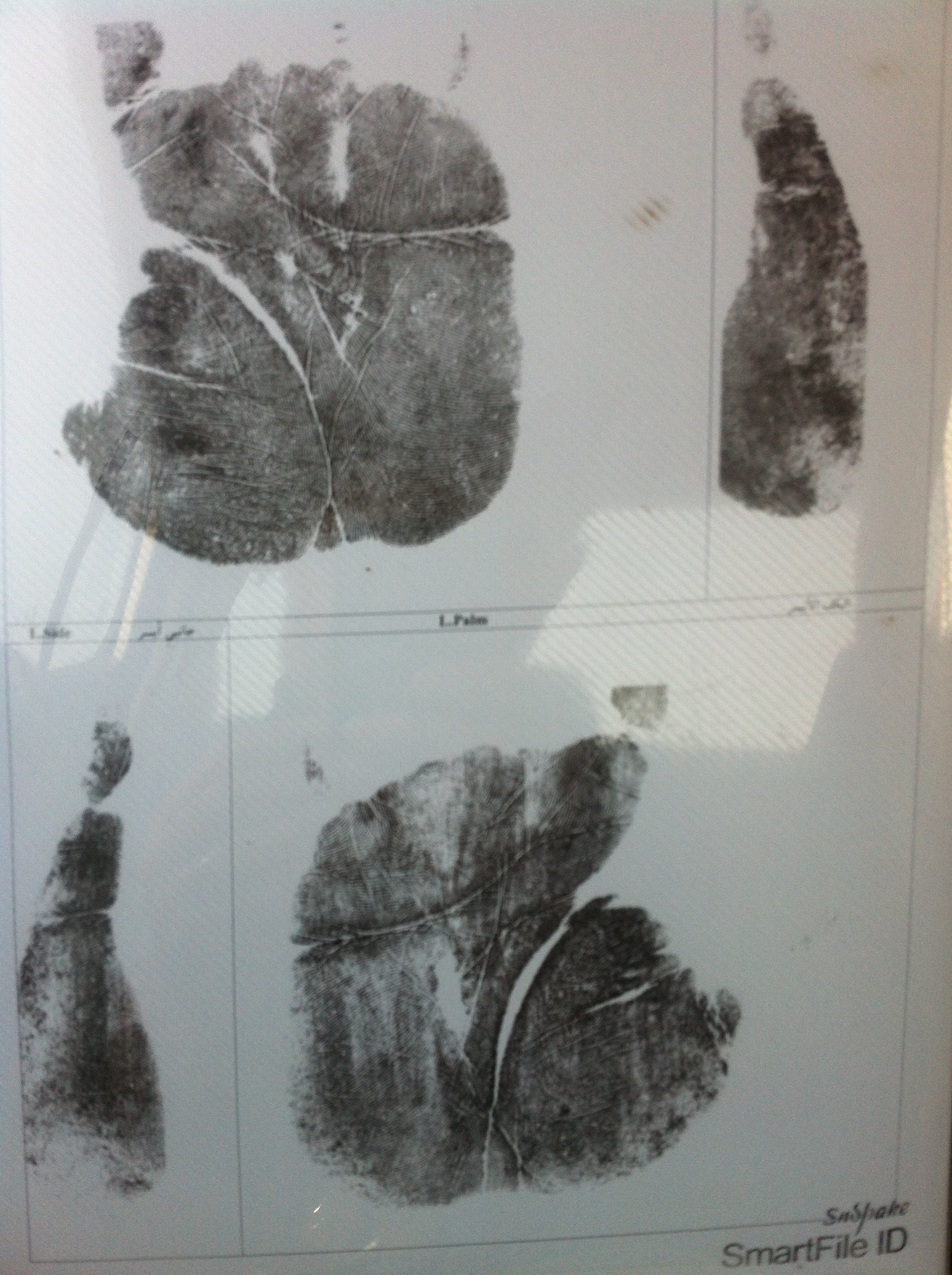
My hand /fingerprint
So at 7.30 am, having arrived barely 5 hours previously, we were collected and taken to Dubai CID for fingerprinting. This is not normal for either of us. It has been necessitated by the US’ imposition of such a policy for inbound Iranian visitors and as often happens in politics provoked a like for like response. It proves to be a slightly amusing affair despite the officer in charge holding my hand a little too long for my liking while I am shown where to place my palms on the machine that is to record every detail of my hands not just fingerprints.
no insurance, no entry!
And so to the Consulate. The official rejection is made in a manner that leaves little room for negotiation. And a new twist, we are instructed to get travel insurance. This is in itself ironic as UK travel insurance is invalid as the UK Foreign Office issues advice warning UK citizens not to travel to Iran. So here we are being told to buy it otherwise we don’t get a visa. Help is at hand, a colleague of Nazim’s appears from nowhere on a motor bike, collects our documents, including fingerprint records, and speeds off in the blazing sun (its by now 10.30am and 35c).
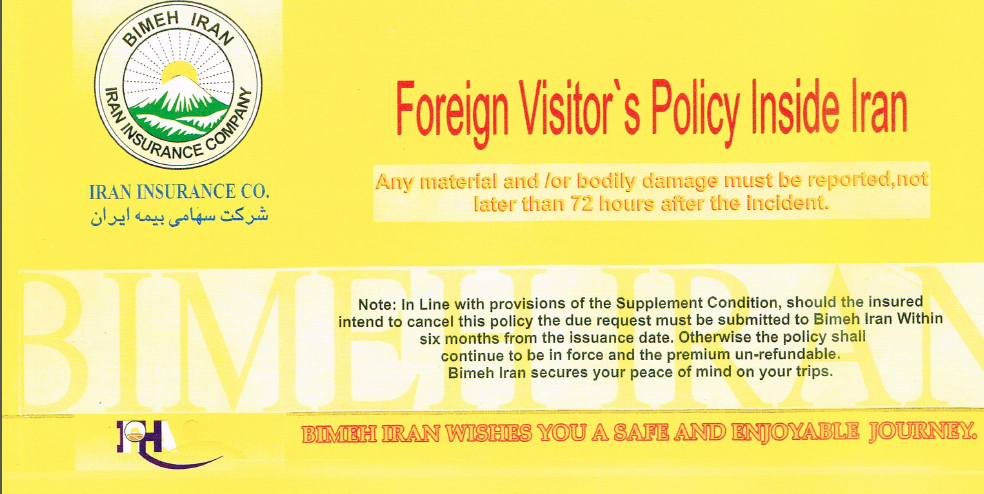 He returns smiling some 35 minutes later clutching a couple of policies issued by the Iran Insurance Company! Amid much backslapping off he goes having handed over our documents. Nazim whose demeanour has changed from misery to euphoria marches up to the counter with the policy.
Come back tomorrow with the fingerprint records!
There is a problem, not all our documents were handed back. Nazim is now crestfallen. Its 11.15am, the noon deadline for visa issuance is approaching, and our records are zooming around Dubai on a motorbike. The likelihood of us getting to Tehran that evening are diminishing rapidly along with his career prospects. We have a packed four day schedule that kicks off tomorrow morning and involves many senior figures, Nazim is on the hook to deliver us to the departure gate with valid visas!
However once more ‘Insurance Man’ delivers. He is back in 15 minutes with our fingerprint documents and with much fanfare 15 minutes before cut off time all documents are submitted. A visa is duly issued by a woman official dressed in an abaya and hijab not our first contact who is haranguing everybody attempting to submit a visa application.
Declining the tempting offer of a tour of Dubai (I put a marker down for a visit to the Burj Khalifa to watch the sunrise) we return to our temporary home the Le Meridien Hotel opposite the Dubai Creek Golf Course – its way too hot and humid to play golf – and final preparations for the packed week ahead.
Nazim tells us that they went to the Consulate to check everything the previous week and were assured all our visas were a formality. Within a week the fingerprinting and insurance requirements were added. And the official who gave the initial advice was now on holiday.
first impressions
As we begin our descent the fuselage mounted camera on the Emirates Airlines Airbus A330 shows little of the terrain but does reveal an airport some distance from the centre of Tehran, a city which we are to learn is home to some 14 million people.
Women put on cloaks and headscarfs and from now on physical contact (including the shaking of hands) in public between the opposite sexes is the exception rather than the norm. We land in the dark at 9.50pm at Imman Khomeini International Airport, Tehran.
The airport is a solid structure; quite Easten Bloc in many respects with substantial columns and signage that pays little attention to aesthetics.The immigration hall has a low ceiling which adds to the sense of foreboding I always feel when entering a new country.
As we line up to put our luggage through a scanning machine I note the lady in front has two suitcases larger than her. My offer to help is politely declined with a knowing look. My earlier fears prove groundless and we are out 30 minutes from touchdown having been met by a driver who instantly makes us feel welcome greeting us with ‘Asr bekheir’ (good evening).
‘ Our’ car the Samand is ubiquitous throughout Iran and in its ‘satellite’ countries. Iran Khodro Company (IKCO) is the largest vehicle manufacturing company, having an average share of 65 percent of domestic vehicle production with annual sales in excess of 700,000 vehicles that includes a number of French names produced under licence.
As we are to discover, sanctions has served to increase the manufacturing base placing much emphasis on the need for innovation and creativity. I am to discover that as a result the Stage-Gate Process – New Product Development methodology developed by Professor Robert Cooper is very popular (more of that in a future post) and proves an interesting touch point as I worked with them both a decade ago when helping to introduce the process into many clients.
The journey is eventful and takes 45 minutes. Driving styles mix aggression and faith. Right of way is negotiated though traffic signals are observed. The overwhelming impression is of too many vehicles: entry to the centre on certain days is dependent on your number plate.
Pedestrian right of way does not seem to exist and crossing the road is not for the faint hearted. It requires determination, cunning and luck. Woe betide the pedestrian who deviates or stops mid way as vehicles swerve around you.
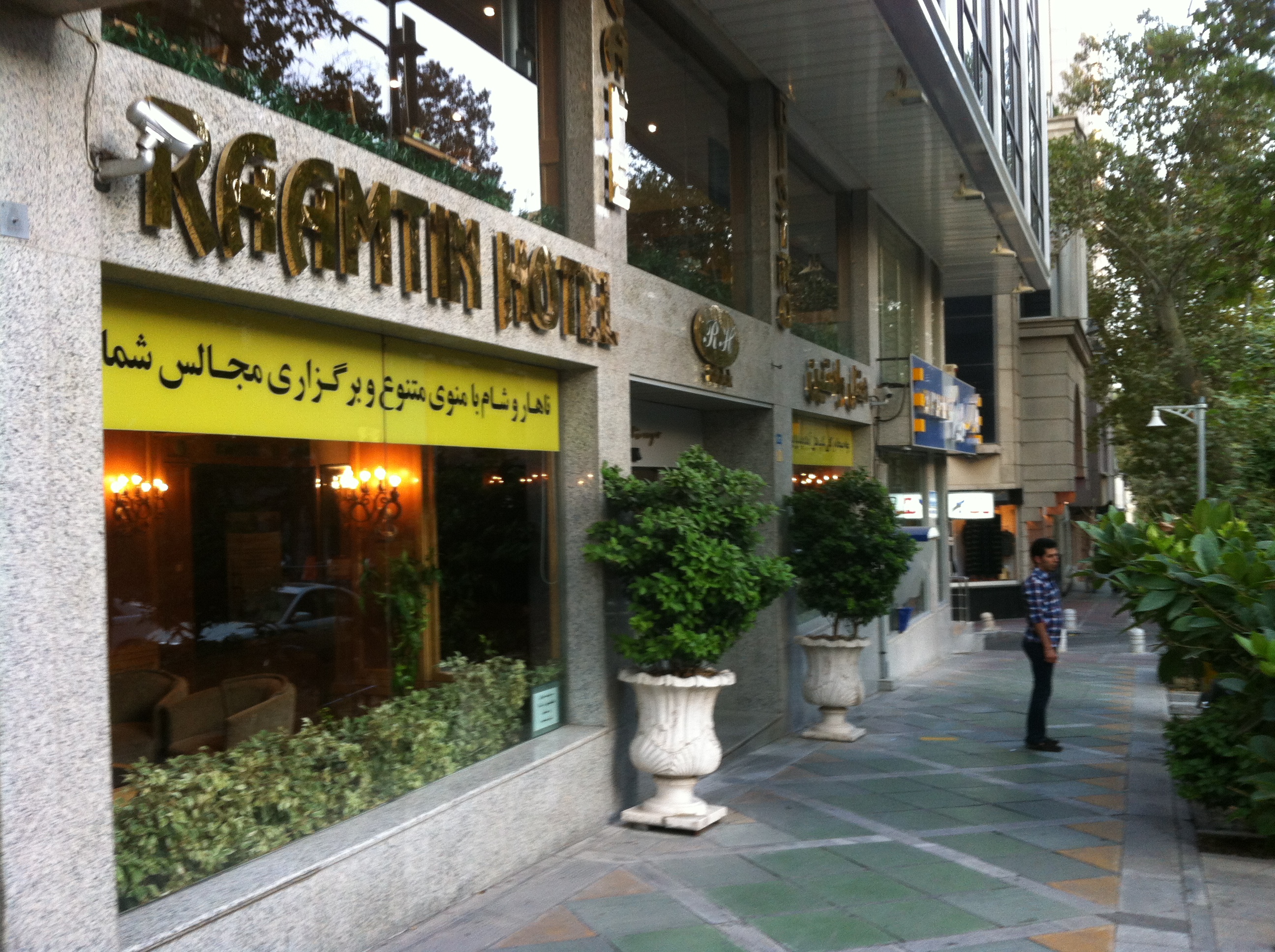 On arrival we receive a warm greeting from the receptionist at the Raamtin Hotel a boutique establishment with 70’s decor. The hotel is situated on the main North – South route but is surprisingly quiet. Water runs down each side of the street from the nearby mountains that form a backdrop to the metropolis.

Room 309 which also has a 70’s feel about it overlooks the tree lined road which has many pedestrians despite its steep incline. It feels European in many ways and first impressions are favourable.